Trump's Economy Approval Hits 31% as Gas Prices Rise, Midterms Loom
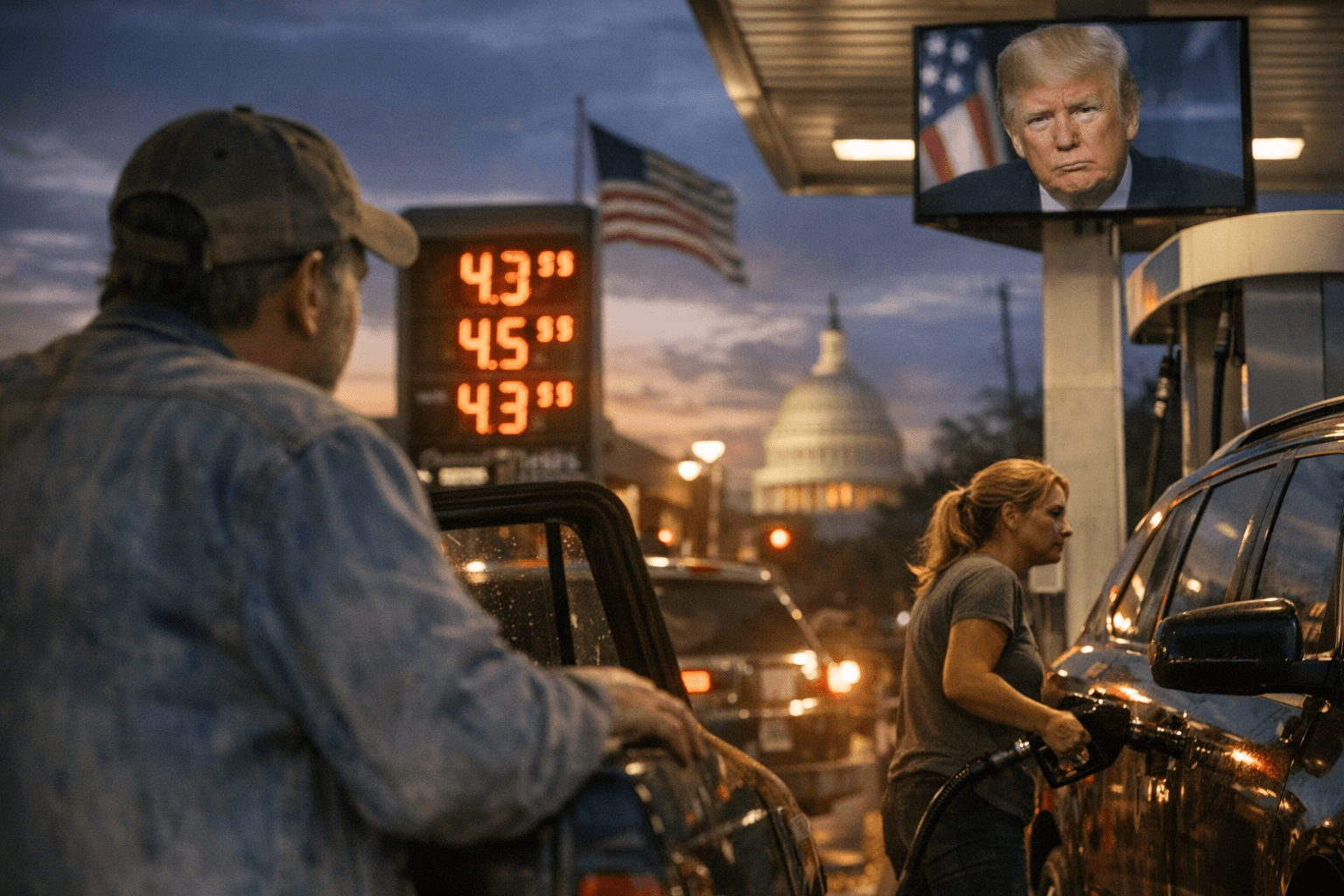
Gas prices topping $4 a gallon tied to the Iran war sent Trump's economy approval to a career-low 31%, with nearly 3 in 10 of his own Republicans saying his policies made conditions worse.
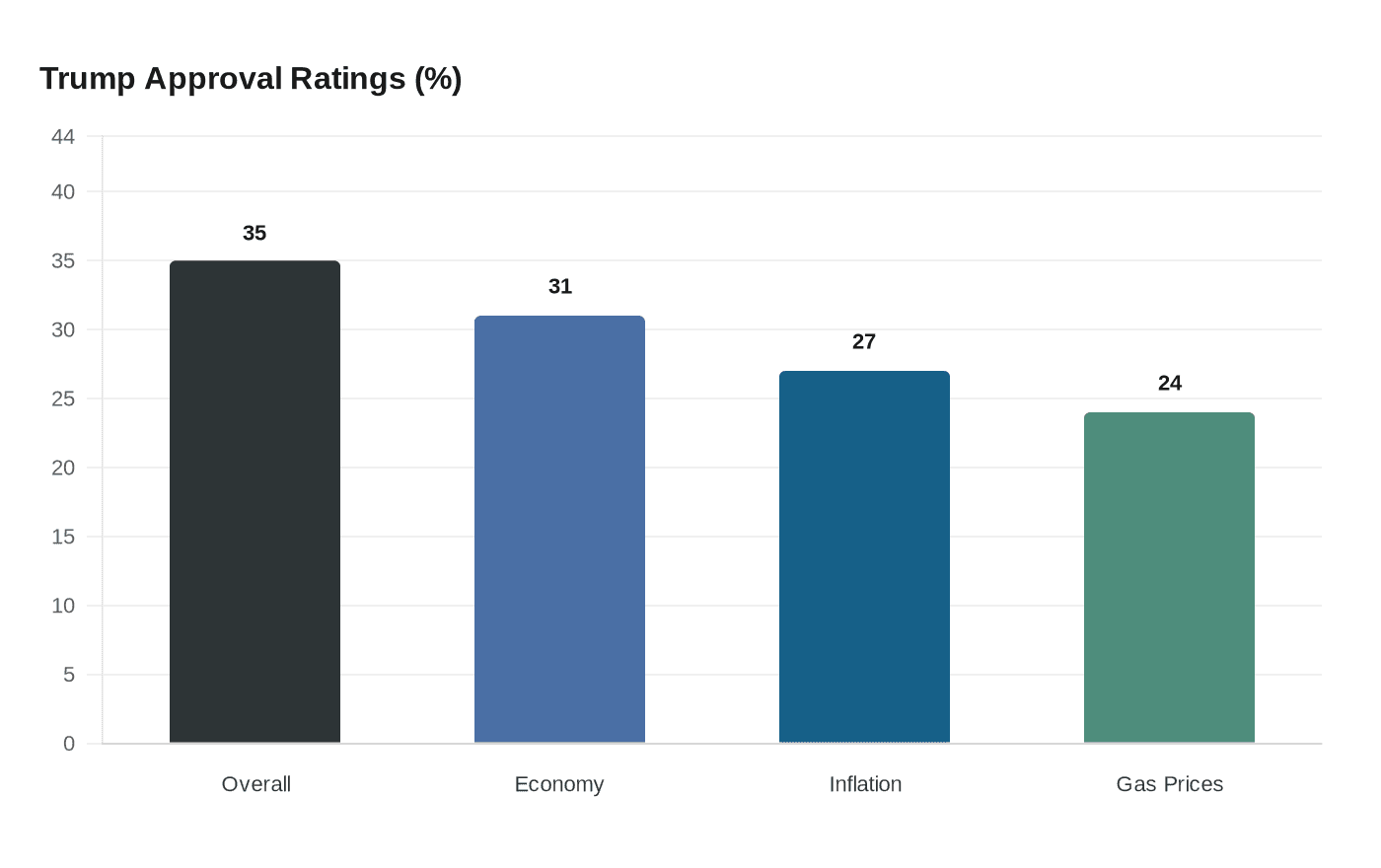
President Donald Trump's approval rating on the economy fell to 31 percent in a new CNN poll conducted by SSRS, a career low that crystallized a chain reaction running from the U.S.-Israeli war in Iran straight to kitchen tables across the country.
The poll, conducted March 26 through March 30 among 1,201 adults, found that roughly two-thirds of Americans said Trump's economic policies had worsened conditions, a figure that jumped 10 points since January. Approval of his handling of inflation collapsed to just 27 percent, down from 44 percent only one year ago. Seven in 10 respondents said Trump had no clear plan for dealing with gas prices, and only 24 percent approved of how he was managing the situation at the pump.
The numbers track directly to fuel costs. Gas prices surpassed $4 per gallon nationally for the first time since August 2022, after Iran closed the Strait of Hormuz in response to U.S. and Israeli strikes, choking off a shipping lane through which nearly one-fifth of the world's oil supply passes. Sixty-three percent of Americans told pollsters that higher gas costs had caused at least some financial hardship in their households; 15 percent described the hardship as severe. Forty-five percent said they had significantly cut back on driving, up five points in the past year.
Even within the Republican Party, the erosion was striking. Nearly three in 10 Republicans said Trump's policies had worsened economic conditions, compared to just 13 percent in January. Trump's overall approval rating held at 35 percent, one point above his all-time low in CNN polling.
The political geography of that discontent is giving Republican strategists genuine pause. Higher fuel prices hit hardest in commuter suburbs and rural districts where driving is not optional, and the electoral map for November is full of exactly those places. The clearest early warning came when Democrat Emily Gregory flipped a Florida state legislative district encompassing Trump's Mar-a-Lago estate in Palm Beach. Democratic National Committee chair Ken Martin wasted no time framing the result: "If Democrats can win in Trump's own backyard, we can win anywhere."
Republicans in competitive seats were calibrating their response carefully. Rep. Zach Nunn of Iowa, whose district Cook Political Report has rated a toss-up, argued the war in the Middle East did not have to swamp the GOP's economic message. "A more fulsome conversation would be, how do we make sure that we still deliver on affordability?" Nunn said, pointing to the tax and spending bill signed last year and domestic energy production efforts as evidence the party was still acting on costs.
Trump addressed the nation Wednesday night on the war, leaning on a justification rooted in national security rather than economics. "We had to cut out the cancer," he said. "The cancer was Iran with a nuclear weapon, and we've cut it out." CBS News correspondent Fin Gómez has been tracking what that posture means for Republicans heading into November, with analysts warning that the worst of the economic fallout, particularly the downstream surge in grocery and transport costs driven by higher diesel prices and tightened fertilizer supplies, may still be months away from reaching its political peak.
This article was produced by Prism’s automated news system from verified source data, official records, and press releases, then run through automated quality and moderation checks before publishing. The system is built and supervised by the people who set the standards it runs under. Read our full AI policy.
Did this article answer your question?

