Trump's Hormuz Remarks Signal Shifting U.S. Strategy, Raising Regional Concerns
Trump called the world's most critical oil chokepoint the 'Strait of Trump,' as Brent crude tops $120 and 150 tankers sit idle outside.
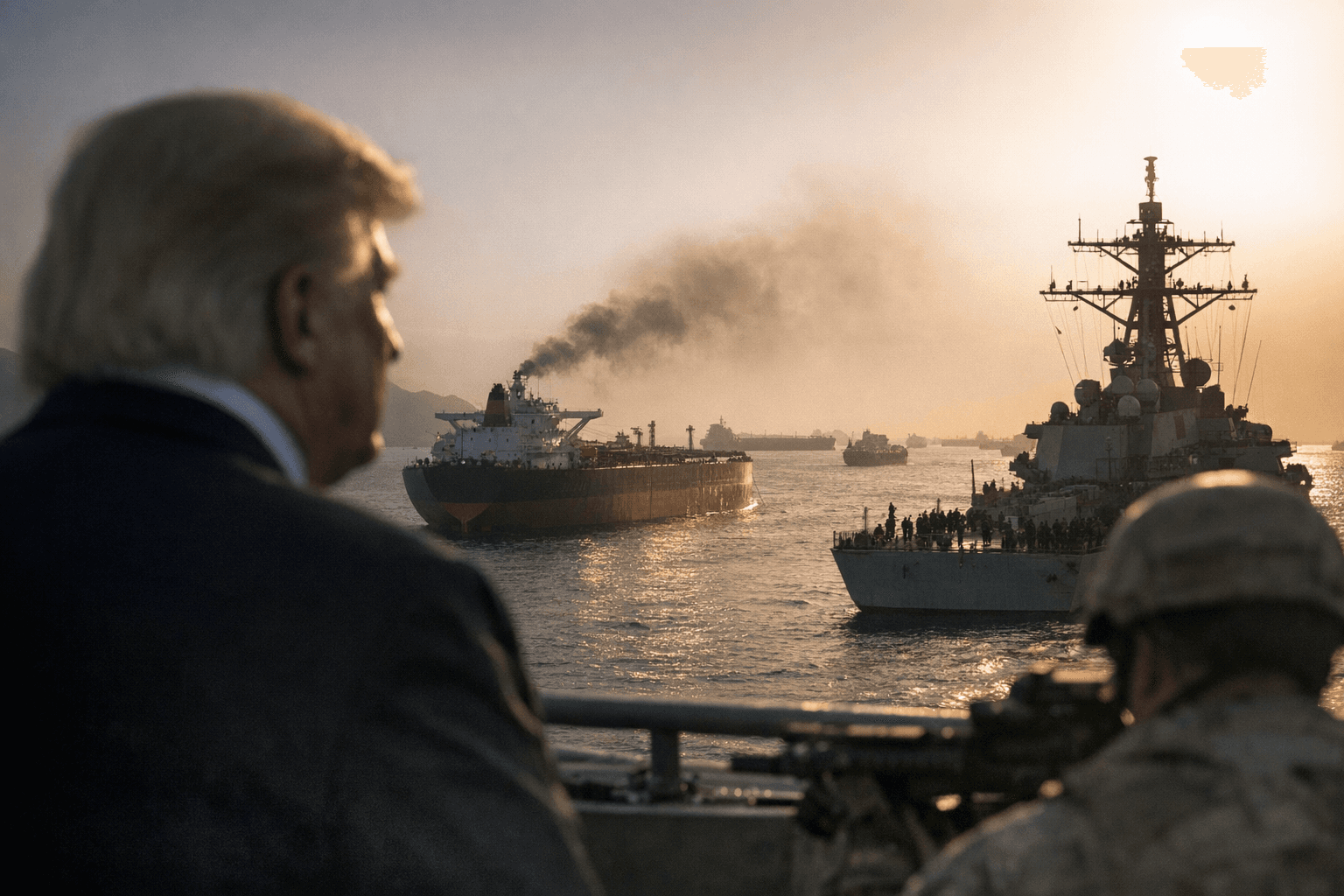
The 21-mile-wide passage between Iran and Oman carried nearly 15 million barrels of crude oil daily in 2025, representing 34 percent of global crude trade. Since Iran's IRGC officially sealed it on March 2, that flow collapsed to near zero, and President Donald Trump's shifting public statements about the waterway have added uncertainty rather than resolution to an already severe crisis.
Trump's posture changed markedly through March. On March 9, he announced his intent to seize control of the Strait and warned Iran against mining it. U.S. forces launched a military campaign to reopen it on March 19. At the Future Investment Initiative summit in Miami on March 27, he quipped that Iran must "open up the Strait of Trump, I mean, Hormuz." In his first national televised address, he declared that "the United States imports almost no oil through the Hormuz Strait and won't be taking any in the future," while pressing allied governments to "come in and take care of" a route their economies depend on far more heavily. He also floated what he called "me and the ayatollah" joint control as a peace settlement option, while insisting the Strait must be "open, free and clear" before any ceasefire talks begin.
The economic damage has been rapid. Brent crude surged past $120 per barrel, up 45 percent, with BlackRock CEO Larry Fink warning prices could reach $200. The Federal Reserve Bank of Dallas compared the disruption to the 1970s oil shock. U.S. gasoline crossed $4 per gallon for the first time since 2022. Gulf oil exports fell more than 60 percent in the week ending March 15, and QatarEnergy declared force majeure on all exports. More than 150 tankers sat anchored outside the strait.
The costs extended deeper into supply chains. War-risk insurance premiums rose from 0.125 percent to as much as 0.4 percent per transit, adding roughly $250,000 to a single large tanker voyage. Iran carried out 21 confirmed attacks on merchant vessels by March 12. Urea fertilizer prices at the New Orleans hub rose from $475 to $680 per metric ton, threatening Midwest planting schedules. Saudi Aramco's Ras Tanura refinery shut down after Iranian drone fire, and Dubai International Airport suspended flights after a separate drone attack. Seventy percent of Gulf Cooperation Council food imports transit the Strait, and Qatar, which derives 99 percent of its potable water from desalination, faces a water emergency alongside its energy crisis.
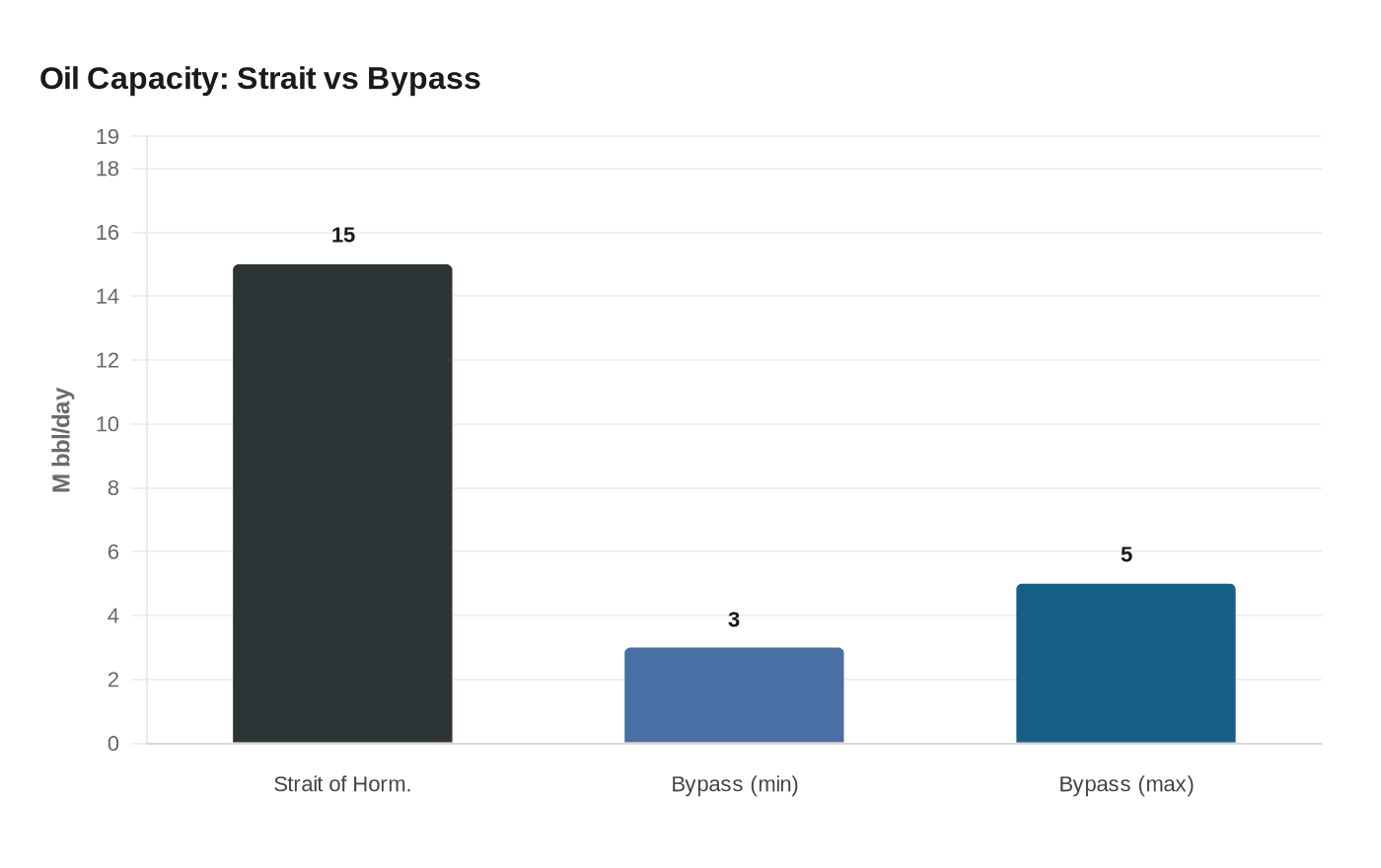
Saudi Arabia's Abqaiq-Yanbu Petroline holds 3 to 5 million barrels per day of spare bypass capacity, and Israeli Prime Minister Benjamin Netanyahu proposed rerouting Gulf state pipelines as a long-term structural fix. Neither option replaces the full 15 million barrels the Strait moved on an ordinary day.
Allied reaction to Trump's remarks ranged from skeptical to blunt. French junior army minister Alice Rufo stated NATO was not built for Hormuz operations. Wolfe Research analyst Tobin Marcus flagged the possibility that Trump might accept ending the conflict without actually reopening the Strait, a scenario that would leave energy markets in prolonged uncertainty. Saudi Aramco CEO Amin Nasser warned of "catastrophic consequences for the world's oil markets." White House Press Secretary Karoline Leavitt insisted prices would "plummet" once Operation Epic Fury concludes, a claim energy analysts greeted with wide skepticism.
Iran's Foreign Minister Abbas Araghchi said his country would fight as long as necessary, and foreign policy adviser Kamal Kharazi ruled out diplomacy entirely. Mojtaba Khamenei, named to succeed his slain father as supreme leader, brings an untested hand to any potential negotiation over a waterway that, for China, India, and much of Asia, has no practical alternative.
This article was produced by Prism’s automated news system from verified source data, official records, and press releases, then run through automated quality and moderation checks before publishing. The system is built and supervised by the people who set the standards it runs under. Read our full AI policy.
Did this article answer your question?


