Trump's Hormuz Silence Disappoints Markets as Iran War Drags On
Oil surged 8% after Trump's war speech offered no Hormuz reopening plan, extending a March price spike already bigger than any monthly gain since the 1980s.

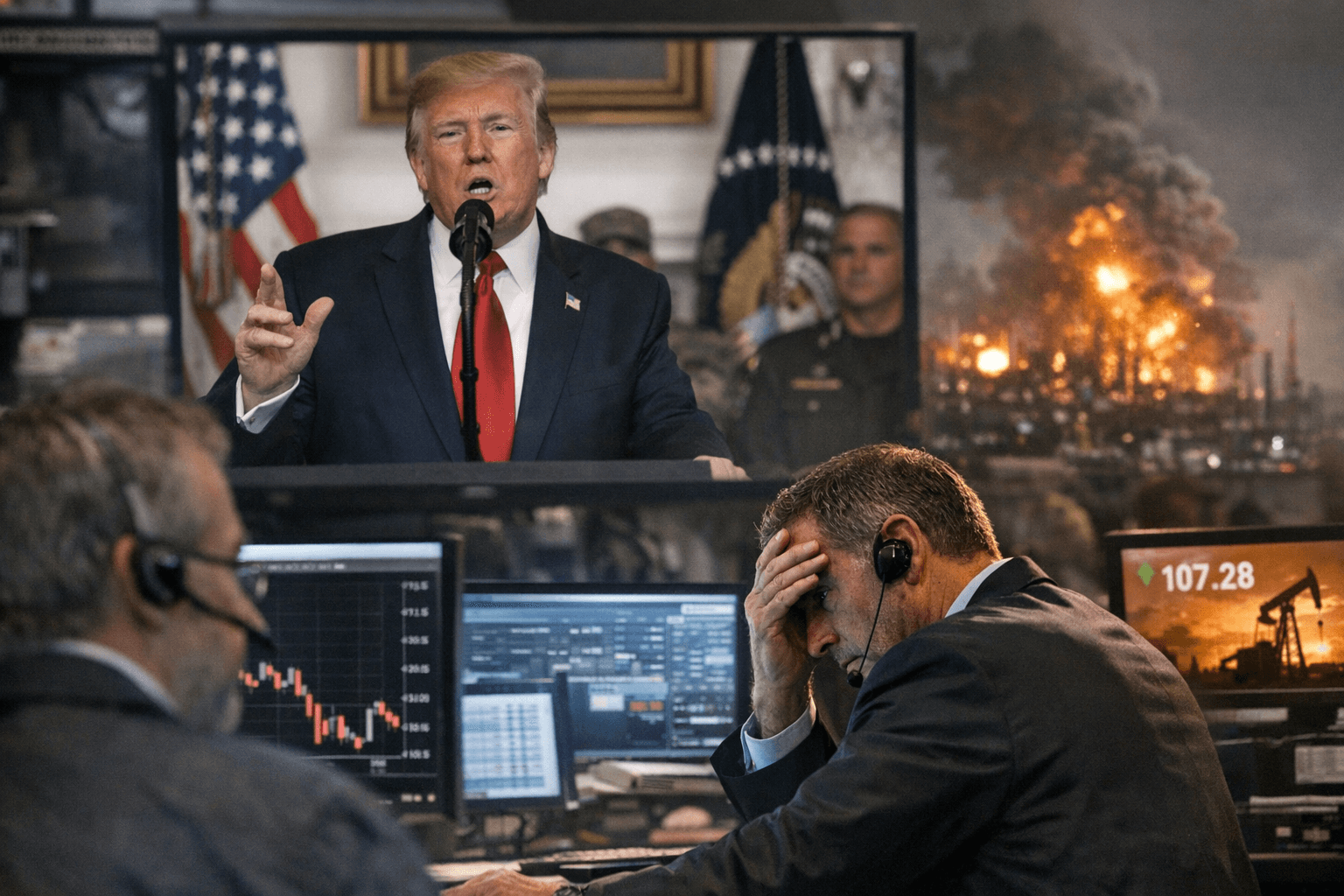
Trump's April 1 address from the Cross Hall of the White House, delivered on Day 33 of Operation Epic Fury, gave markets a timeline and a threat but not the one thing analysts said they needed: a credible plan to reopen the Strait of Hormuz. The 19-minute speech promised another two to three weeks of strikes on Iran and vowed to bring the country "back to the stone ages," but on the question of the world's most critical energy chokepoint, Trump offered only the assurance that it would "open up naturally" once the war is over. Economists and analysts widely disputed that claim within hours.
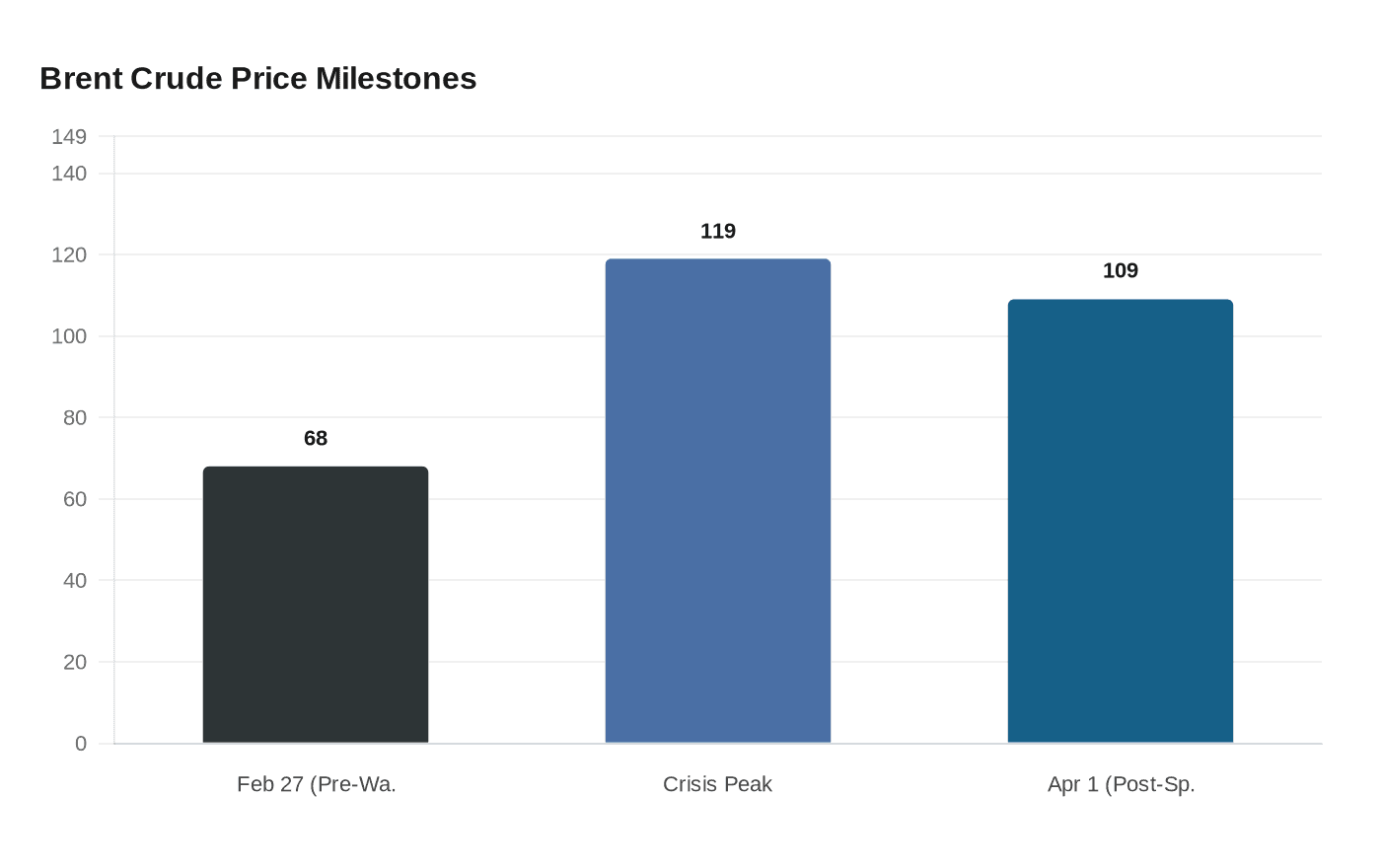
Oil markets answered the speech with an 8% surge. Brent crude climbed to approximately $109 per barrel and West Texas Intermediate jumped 8.2% to $108.36 per barrel. Those moves extended a March in which Brent had already risen more than 60%, the biggest single-month price gain since records began in the 1980s and a steeper percentage spike than anything seen during the 1990 Gulf War. The benchmark had been trading near $68 per barrel on February 27, the last session before U.S. and Israeli forces launched coordinated strikes on Iran that killed Supreme Leader Ali Khamenei. At the peak of the crisis, Brent briefly topped $119 per barrel; earlier this week it had reached $112 to $113.
The displeasure among market analysts was pointed. Matt Simpson, Senior Market Analyst at StoneX in Brisbane, said Trump "sounded pretty miserable for a man who has had so much winning in this war," adding: "With no plans to reopen the Strait of Hormuz that he effectively closed, oil prices are to remain high indefinitely." Jon Withaar, Senior Portfolio Manager at Pictet Asset Management in Singapore, said the address gave markets "no additional certainty or clarity around timeline," noting that the prospect of boots on the ground being left open and threats to hit infrastructure being reiterated "will put the market back on the defensive." Russel Chesler, Head of Investments at VanEck Australia, said simply: "There was no mention in Trump's speech about the details on when the war ends or when the passage of the Strait of Hormuz will become possible."
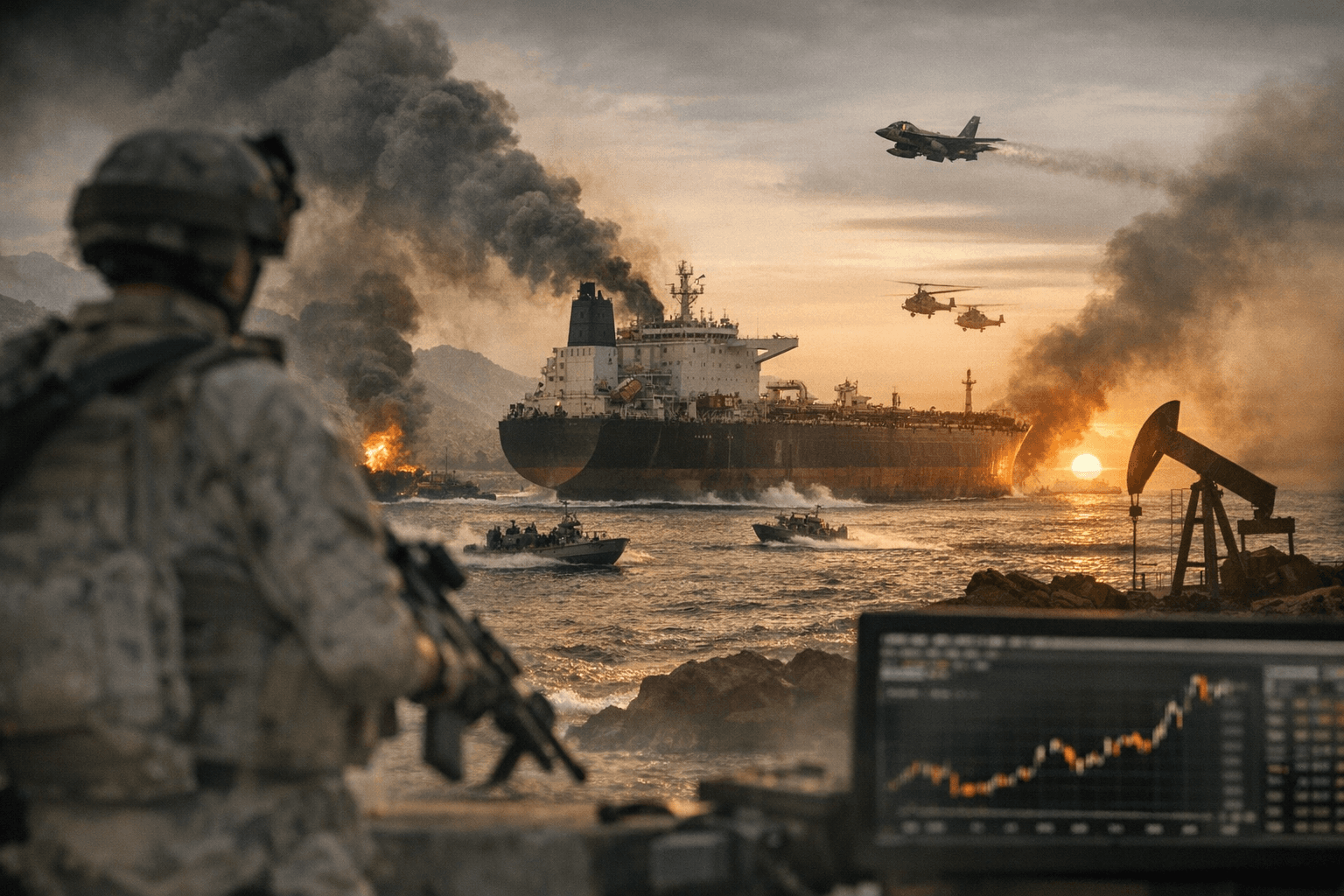
The reason the strait's status carries such weight is arithmetical. Roughly 20 million barrels of oil and petroleum products transit the Strait of Hormuz daily, representing approximately 20% of global oil and gas supply and about a quarter of all seaborne oil trade, with 84% of that volume flowing to Asian markets. Previous geopolitical crises in 1973, 1979, and 1990 each removed only 4 to 6% of global oil supply from the market; the Dallas Federal Reserve has noted the current closure threatens close to 20%. The historical daily average of ship transits through the strait is 138. On March 7, a single commercial vessel transited, with zero oil tankers.
Iran's Revolutionary Guard Corps shut the strait to Western-allied shipping in retaliation for the opening U.S.-Israeli strikes on February 28. Senior IRGC adviser Ebrahim Jabari declared on March 2 that the strait was closed and that any vessel attempting passage would be set ablaze. Giles Alston, political risk analyst at Oxford Analytica, said it is "becoming increasingly clear that the U.S. position on what you do to get your oil out of and through the Straits of Hormuz is now something which Washington has largely washed its hands of."
The price forecasts from major financial institutions reflect that uncertainty. Goldman Sachs raised its Brent forecast to an average of $110 per barrel across March and April, up from a prior estimate of $98, representing a 62% jump from the 2025 annual average. Bank of America forecast Brent remaining near $100 per barrel through the rest of the year. Societe Generale warned that prolonged supply disruption could push prices to $150 per barrel. BlackRock CEO Larry Fink echoed that ceiling, cautioning that oil at $150 could tip the global economy into recession if Iran retains the ability to threaten the strait after the war concludes. Some U.S. government officials and Wall Street analysts have begun weighing the prospect of crude reaching an unprecedented $200 per barrel.
The damage is already spreading well beyond futures markets. U.S. average gasoline prices crossed $4 per gallon for the first time since 2022, rising more than a dollar from $2.98 on February 27. Diesel surpassed $5 per gallon, a particularly acute pressure on an economy that depends on trucking and rail to move goods. QatarEnergy, the world's largest LNG producer, halted production. An Iranian attack struck an oil tanker off Dubai. A UK-hosted virtual summit drew representatives from more than 40 countries to address the Hormuz crisis; Foreign Secretary Yvette Cooper condemned Iran's "recklessness towards countries that were never involved in this conflict." The United States did not attend. South Koreans were told to take shorter showers, Thais to wear shorter sleeves to conserve energy, and the Philippines distributed cash aid to motorcyclists bearing the cost of surging fuel prices.
Equities reversed earlier gains after the speech. The S&P 500 remains down approximately 5% from its level the day before the war started, as investors who had priced in a swift resolution found instead that the administration's exit strategy amounts to waiting for the strait to open itself.
Sources:
Know something we missed? Have a correction or additional information?
Submit a Tip