Trump's Immigration Crackdown Shows No Measurable Jobs Boost for American Workers
A year into sweeping immigration enforcement, U.S.-born workers have seen little of the promised job gains, undermining a central economic argument for the crackdown.

A year of sweeping immigration enforcement, mass deportations, and border restrictions has failed to deliver the jobs windfall promised to American workers, according to a Bloomberg Law analysis published Monday.
The findings strike at the heart of the economic rationale the Trump administration used to justify its aggressive immigration policies. The central argument was straightforward: remove undocumented immigrants and restrict legal migration, and jobs would flow to native-born Americans willing to fill those roles. The labor market data, one year in, tells a more complicated story.
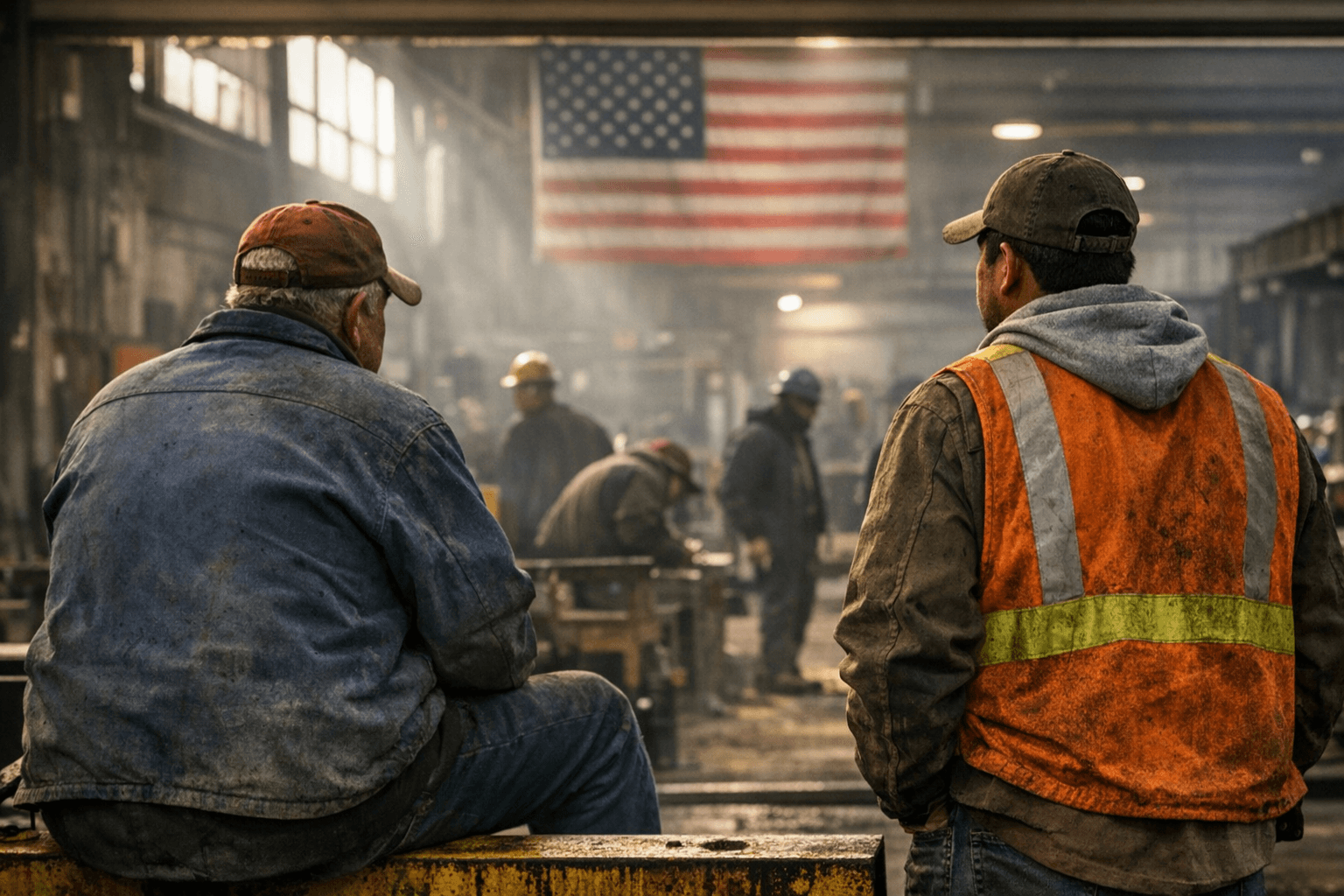
Employment gains for U.S.-born workers in sectors historically dominated by immigrant labor, including agriculture, construction, food processing, and hospitality, have not materialized at the scale the administration projected. Rather than a surge of domestic hiring, economists tracking the data found persistent vacancies in many of these industries, with some employers reporting significant disruption to their workforces without a corresponding pipeline of American applicants.
The disconnect exposes a fundamental tension in the administration's economic logic. Immigration restrictionists have long argued that immigrant workers suppress wages and crowd out native-born workers, particularly those without college degrees. But the evidence from comparable labor markets suggests the relationship is far more nuanced. Immigrant and native-born workers frequently occupy complementary roles rather than competing directly for the same positions, and removing one group does not automatically redirect demand toward the other.
The Bloomberg Law analysis arrives as the administration approaches its one-year mark with its enforcement apparatus still expanding. Immigration and Customs Enforcement deportation operations have intensified, the southern border has seen record-low unauthorized crossings, and the administration has curtailed multiple legal immigration pathways including work visas, asylum programs, and refugee admissions. The economic disruption from these policies has rippled well beyond undocumented workers.
Agricultural employers in California, Florida, and Texas have reported labor shortfalls during planting and harvest seasons. The construction sector, already strained by rising material costs, has faced mounting labor pressures in states where immigrant workers represent a substantial share of the workforce. Food processing plants in the Midwest have struggled to sustain operational capacity following targeted enforcement actions.
The wage picture is similarly inconclusive. While some analysts had forecast sharp wage increases in affected industries as employers competed for a reduced labor pool, the increases that have occurred remain modest and unevenly distributed, with some industries simply absorbing higher costs rather than passing them through as worker pay.
The political implications are significant. Many of Trump's strongest supporters were working-class Americans without college degrees who believed that reducing immigration would improve their economic prospects. If the promised labor market gains do not materialize by the time the midterm election cycle heats up, the administration faces the challenge of reconciling its enforcement record with an economic reality that has not confirmed its core promises.
Labor economists have pointed to structural barriers, including geographic mismatches between displaced workers and job vacancies, skills gaps, and wage levels that remain below what many domestic workers consider acceptable, as persistent obstacles that immigration enforcement alone cannot resolve.
The data represents an early verdict, not a final one. But with a full year elapsed and the policy machinery at full force, the burden of proof has shifted.
This article was produced by Prism’s automated news system from verified source data, official records, and press releases, then run through automated quality and moderation checks before publishing. The system is built and supervised by the people who set the standards it runs under. Read our full AI policy.
Did this article answer your question?

