Trump's Iran War Gamble Has Already Cost Americans at the Pump
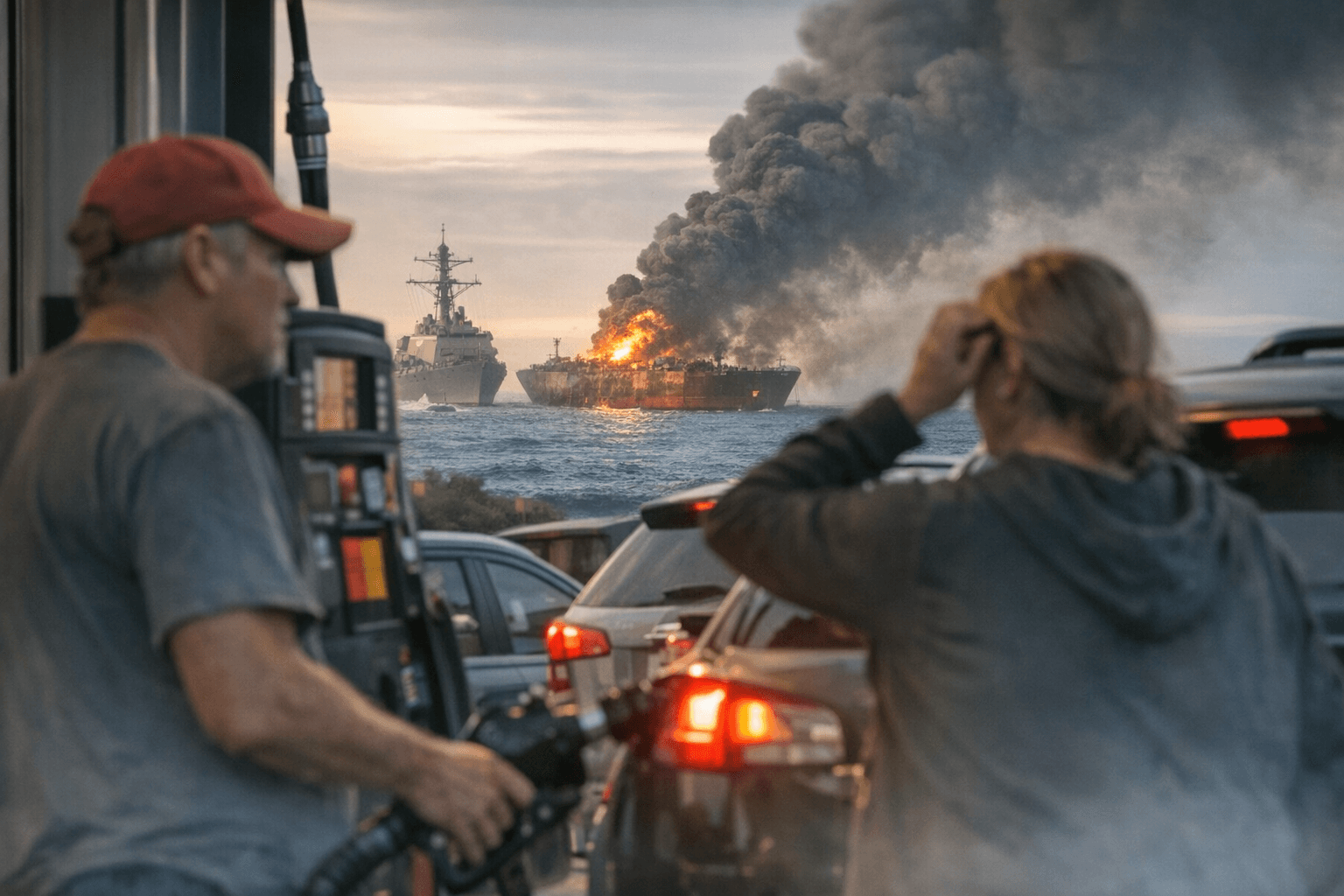
Commercial shipping in the Gulf has ground to a halt and gas prices are surging as analysts say Trump fatally misread Iran's willingness to fight back.
Senator Christopher Murphy walked out of a classified war briefing with a blunt verdict: the Trump administration had "NO PLAN" for the Strait of Hormuz and "did not know how to get it safely back open." That single admission, reported by the Times of India, cuts to the heart of what multiple outlets and analysts now describe as a fundamental strategic miscalculation, one that has frozen Gulf shipping, spiked global oil prices, and forced a White House scramble for an economic off-ramp it did not prepare.
The New York Times, in a March 10, 2026 report by Mark Mazzetti, Tyler Pager, and Edward Wong, documented how the administration designed what it believed would be a swift decapitation strike targeting Iran's top leadership and military infrastructure. The "quick strike" illusion, as the Times of India termed it, collapsed early, producing a larger, longer, and more economically damaging conflict than planners anticipated.
1. The Strike Plan and Its Collapse
The operation was conceived as a rapid decapitation campaign targeting Iran's senior leadership and military command structure. According to reporting across the New York Times, English Aawsat, and Times of India, the premise was that severing Iranian leadership would produce quick capitulation. Instead, the Times of India reported that "leadership decapitation did not break Iran," with regional escalation following almost immediately after the initial strikes. Iran absorbed the blow, reorganized rapidly, and escalated on multiple fronts simultaneously.
2. Iran's Far More Aggressive Response
Iran responded with a ferocity that outpaced its behavior during last June's 12-day war, which had produced comparatively limited market disruption. According to the New York Times and English Aawsat, Iran fired barrages of missiles and drones at U.S. military bases, cities in Arab nations across the Middle East, and Israeli population centers. Critically, Tehran threatened to fire on commercial oil tankers transiting the Strait of Hormuz, a chokepoint that carries roughly 20 percent of the world's oil supply, transforming a military conflict into a global economic crisis.
3. The Strait of Hormuz Becomes a Weapon
Iran's decision to use the Strait of Hormuz as leverage proved to be the conflict's most consequential escalation. Commercial shipping in the Gulf came to a standstill, according to the New York Times. The assets the United States needed to reopen the Strait were not positioned nearby, and analyst Benaim noted the delay plainly: "In terms of having the assets nearby to reopen the Strait... That took several days." Delays in securing shipping lanes and evacuating citizens underlined operational gaps that critics say should have been anticipated and planned for.
4. Oil Prices, Gas Costs, and Economic Fallout
The Strait shutdown triggered an immediate spike in global oil prices and higher gasoline costs for American consumers. The New York Times reported that the administration scrambled to find ways to tamp down an economic crisis of its own making. Energy Secretary Chris Wright offered a dismissive characterization, saying "Oil prices blipped up and then went back down," but that framing stood in contrast to the administration's own policy scramble, which included developing proposals to reduce gas prices. White House press secretary Karoline Leavitt acknowledged the disruption while defending it: "The purposeful disruption in the oil market by the Iranian regime is short term, and necessary for the long-term gain of wiping out these terrorists and the threat they pose to America and the world."
5. Misreading Iran's Psychology
Multiple analysts argue the foundational error was a failure to understand how Iran responds when it perceives an existential threat. Analyst Benaim, speaking via ANI, was direct: "I think that instinct really failed him (Trump) in this case in understanding Iran's psychology and the fact that when pushed to a wall, they wouldn't capitulate." The New York Times described the episode as "emblematic of how much Mr. Trump and his advisers misjudged how Iran would respond to a conflict that the government in Tehran sees as an existential threat." Rather than collapsing, Tehran fought on, converting a presumed American advantage into what the Times of India called "a protracted quagmire."
6. No Strategic Preparation, No Contingency Plans
Danny Citrinowicz, a senior researcher on Iran at the Institute for National Security Studies, told NBC News that the core failure was not operational scale but strategic preparation: "What we are seeing is really a flawed campaign, not in terms of operational size, but from the strategic preparation for the campaign itself." He added a sharper verdict still: "The U.S. is funding a war against itself." The New York Times confirmed that U.S. officials had to adjust plans on the fly, from hastily ordering embassy evacuations to devising emergency economic policy, moves that signal a planning process that did not adequately model Iran's likely retaliation.
7. Internal Divisions Over War Aims
Even within the administration, the war's objectives were never fully unified. English Aawsat reported that Trump laid out maximalist goals, including insisting Iran name a leader who would submit to him, while Secretary of State Marco Rubio and Defense Secretary Pete Hegseth described narrower and more tactical objectives that could provide an off-ramp in the near term. That internal divergence, between maximalist rhetoric from the top and more limited aims from cabinet officials, left U.S. strategy without a coherent endpoint, a problem now compounded by economic pressure to end hostilities quickly.
8. The JCPOA Withdrawal's Long Shadow
The Belfer Center's analysis connects the current crisis to the strategic consequences of Trump's earlier withdrawal from the Iran nuclear deal. That decision, the Belfer analysis argues, "greatly undermines U.S. national interests by eroding its credibility, by splitting the United States from its European allies and the international community, by upending an agreement that effectively blocked Iran's nuclear aspirations at the weapons level." By withdrawing, the U.S. discarded leverage it spent years and billions of dollars acquiring, while simultaneously pushing Iran toward nuclear brinkmanship and diplomatic alignment with Russia and China.
Citrinowicz's observation may serve as the conflict's most damning summary: "The oil price is becoming much more important than eliminating this regime in Iran." When economic self-harm overtakes strategic purpose, a campaign's original rationale becomes difficult to defend, and the path to any off-ramp grows significantly more costly.
Know something we missed? Have a correction or additional information?
Submit a Tip