Trump's Shadow Shapes Off-Year Contests, Shutdown Risks Loom
Voters head to the polls Tuesday in the first major election since President Donald Trump's return to the White House, with his leadership and policies steering debates across contests even as he remained off the campaign trail. How candidates handle alignment with Trump, Democratic efforts to define those ties, and the potential political fallout from governance disruptions will determine whether national trends or local voting patterns decide results.
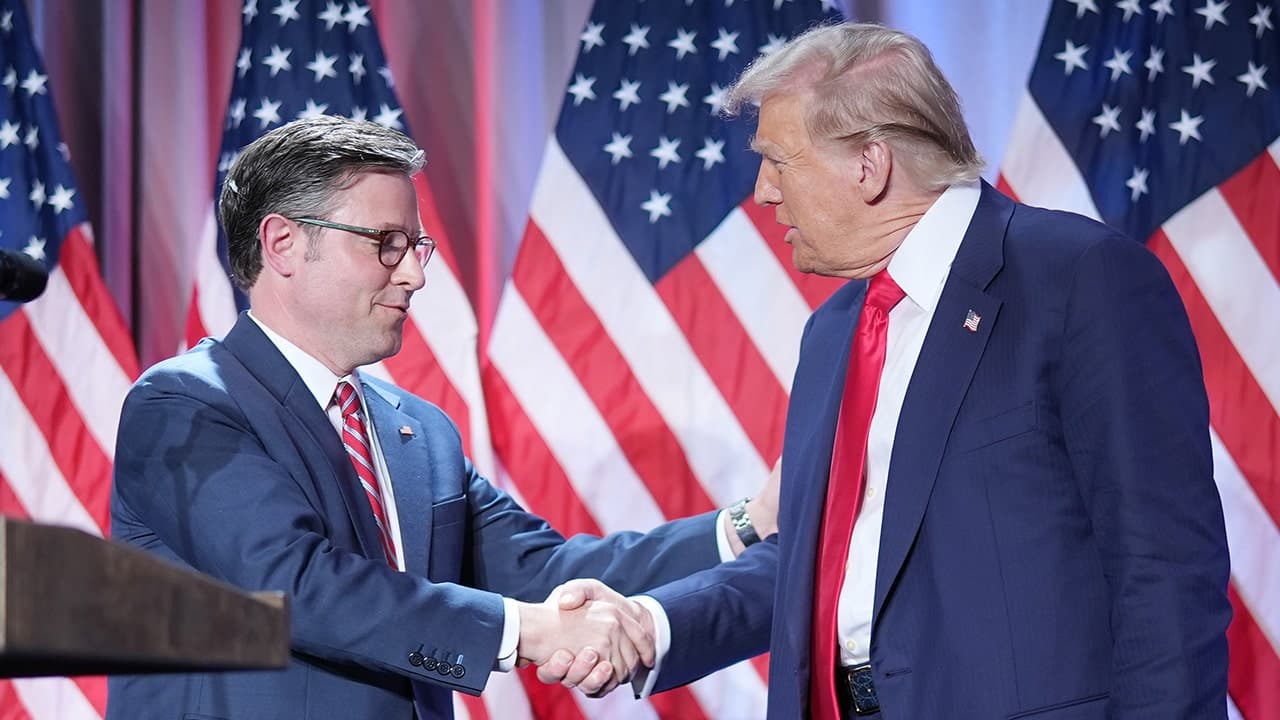
Tuesday’s ballots present a test of competing dynamics: the gravitational pull of President Donald Trump’s agenda on local and statewide races, and the historical tendency for the party in the White House to lose ground in off-year elections. Though the president has not been campaigning in person, his leadership and policies have dominated debate in almost every contest, shaping both Republican strategy and Democratic counterattacks.
GOP nominees in several key races have closely aligned themselves with the president, betting that Mr. Trump’s decisive victory last year can still translate into victories down the ballot. That calculation rests on two assumptions: first, that his coalition remains motivated and intact; and second, that voters in these jurisdictions, described in pre-election analyses as places with histories of electing Republicans to statewide office, will revert to familiar partisan patterns even after recent fluctuations.
Democratic campaigns have sought to make those alignments a liability, emphasizing governance consequences when national policy and rhetoric are projected at the state level. The interplay between national brand and local priorities has produced contests where policy details are often subordinated to questions of allegiance and institutional competence. For voters, the choice may hinge less on discrete policy proposals than on whether they trust candidates to deliver steady administration of public services and to represent state interests effectively in a polarized federal environment.
A complicating variable for Election Day is the so-called shutdown effect: real or perceived disruptions in government functioning can alter voter calculations. When federal or state institutions appear stalled, whether through budget impasses, executive actions, or administrative churn, voters can react in unpredictable ways. For incumbents or the dominant national party, such disruptions often become ammunition for opposition narratives about mismanagement. Conversely, they can also energize supporters who view political turmoil as a necessary corrective or who prioritize ideological outcomes over short-term stability.
Institutional consequences matter beyond single races. State-level offices control redistricting oversight, election administration, and regulatory regimes that can shape policy implementation and civic participation. Winning or losing these posts affects the capacity of both parties to govern and to influence the 2026 and 2028 cycles. Analysts watching Tuesday’s returns will be attentive to turnout patterns in suburban and rural precincts, changes in margins compared with previous cycles, and whether Democrats’ efforts to nationalize the vote neutralize Republican advantages in historically conservative statewide electorates.
Civic engagement will be decisive: off-year contests typically attract a narrower, more engaged slice of the electorate, amplifying the organizational strengths of parties and interest groups. For voters, Tuesday is a reminder that state and local outcomes can recalibrate national politics, for better or worse, by shifting institutional control and setting policy priorities for years to come.
This article was produced by Prism’s automated news system from verified source data, official records, and press releases, then run through automated quality and moderation checks before publishing. The system is built and supervised by the people who set the standards it runs under. Read our full AI policy.
Did this article answer your question?

