Trump’s triumphal arch plan stirs backlash over monument history
Trump’s Paris-inspired arch is drawing backlash for more than its size. The fight is really about who monuments honor, and how power tries to write memory in stone.

The Paris arch is the warning sign
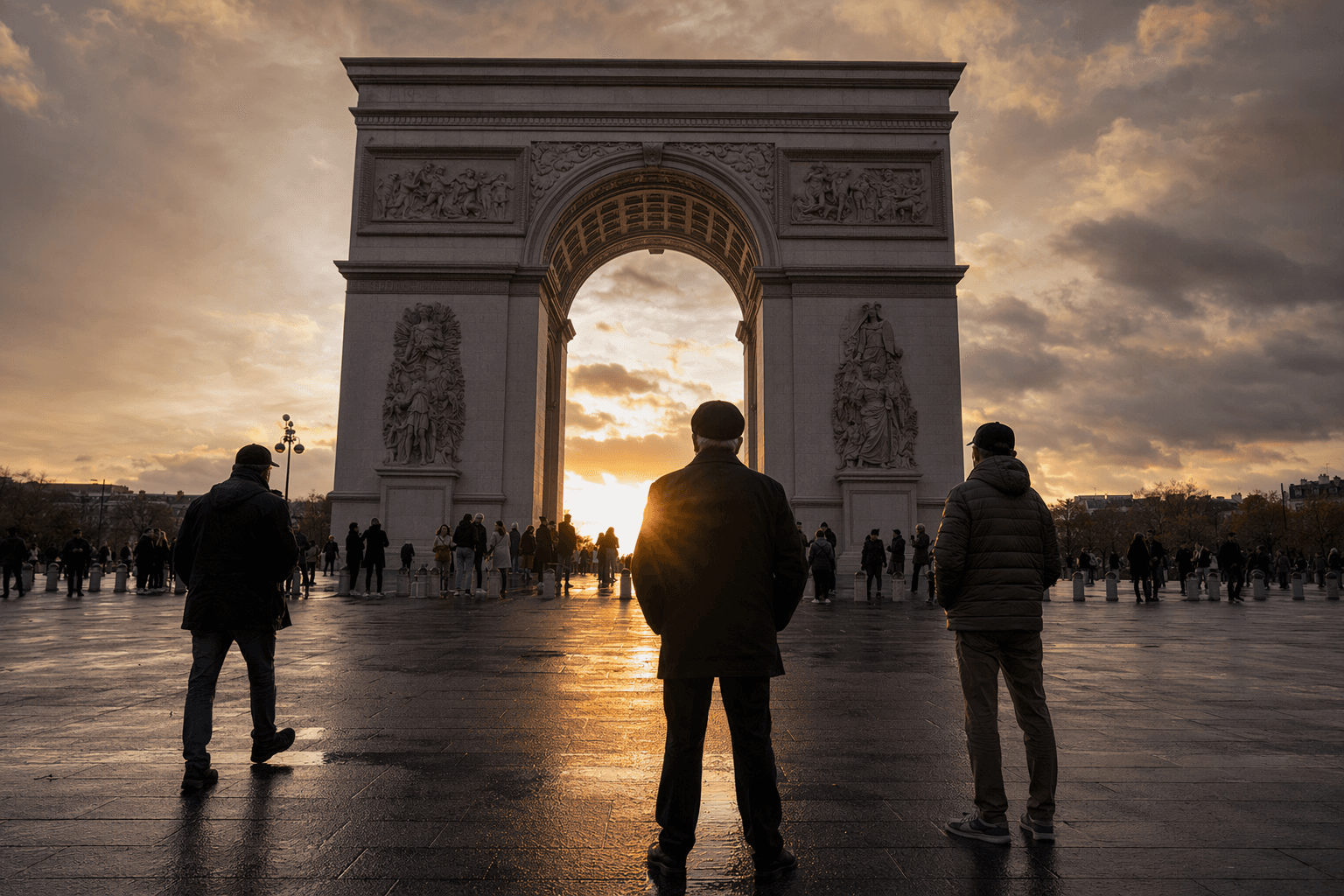
The Arc de Triomphe in Paris was never just a postcard landmark. It was conceived as a declaration of victory, then absorbed into a far larger national story, the kind that outlives the ruler who ordered it and often complicates the message he meant to send.
That is the reality check now hanging over Donald Trump’s plan for a 250-foot Triumphal Arch in Washington, D.C. The proposal, meant to mark the United States’ 250th anniversary in 2026, is directly inspired by the Paris monument and has already ignited backlash, eye rolls, and a familiar argument about whether grandeur can be designed from the top down.
A monument built for victory became a place of memory
Napoleon I commissioned the Arc de Triomphe in 1806 after his victory at Austerlitz in 1805, intending it as a tribute to French military triumph. The project took decades to finish, and the monument was not completed and inaugurated until 1836 under Louis-Philippe. That gap matters: by the time the arch was finished, the political order had changed, and the meaning of the structure had already begun to widen beyond the emperor who imagined it.
The arch stands at Place Charles de Gaulle, at the western end of the Champs-Élysées, and rises about 162 feet, or 50 meters. It is large enough to dominate the avenue, but its power is not only in scale. The monument became a layered site of national memory, with engravings of generals and battles and the Tomb of the Unknown Soldier beneath it. What began as a celebration of military conquest gradually became a place where sacrifice, loss, and collective identity are all folded together.
That transformation is the lesson Washington is now confronting. Monuments rarely stay frozen in the language of their commissioning. They accumulate grief, ceremony, protest, and revision, until the public reads them for more than triumph alone.
Trump’s arch is meant to outdo Paris, not just echo it
Trump’s proposed monument would be even larger than the Paris original, at 250 feet tall. The scale is not accidental. It is meant to signal national strength and, in Trump’s telling, to become a signature project for a second term. The design is framed as a tribute to the country’s 250th anniversary, but it is also a deliberate attempt to top the Paris arch in stature and cultural gravitas.
That ambition has sharpened the criticism. For opponents, the structure looks less like a civic memorial than a self-congratulatory gesture, a monument to power wearing the language of patriotism. Architecture commentators have noted that Trump has admired the Arc de Triomphe for years, including after his 2017 state visit to Paris, and that admiration now reads as both inspiration and provocation.
The comparison is awkward for another reason. The Paris arch was tied to a specific military era and later domesticated by public memory. The Washington version would arrive in a country already saturated with monumental symbolism, from the National Mall to Arlington National Cemetery and the Lincoln Memorial. In that landscape, new stone does not simply add meaning. It competes with older claims about who matters and what the nation chooses to honor.
Federal review has started, and the public has already answered
The proposal has moved into federal review, where the Commission of Fine Arts gave the concept initial approval but asked for revisions. That step matters because it signals the project is not merely rhetorical. It has entered the machinery that shapes the built environment of the capital, where design, symbolism, and politics are inseparable.
But the public response has been unusually blunt. Nearly 1,000 comments submitted before the commission vote were reported as unanimously opposed. That degree of resistance suggests the arch is being judged not just as an object, but as a statement about presidential vanity, national identity, and the uses of public space. In Washington, where monuments carry civic weight for generations, a project can become politically radioactive long before the first stone is cut.
The backlash also reflects a broader discomfort with monumental overreach. Americans often support memorials that feel earned, commemorative, and open-ended. They are far less forgiving when a structure looks like an attempt to stage greatness in advance. The issue is not only taste. It is who gets to define the nation’s story, and whether architecture can do that honestly.
What the Arc de Triomphe teaches about power and remembrance
The Paris monument shows how public art outgrows its original politics. Napoleon wanted military victory made permanent in stone. Louis-Philippe inherited the project, completed it, and helped turn it into a broader national symbol. Over time, the arch came to hold not just imperial ambition, but mourning and collective remembrance, especially through the Tomb of the Unknown Soldier.
That evolution matters because it reveals a hard truth about monuments: they rarely preserve a single meaning. They become battlegrounds over memory, nationalism, and who gets commemorated. The larger and more triumphant the structure, the more likely it is to be argued over by later generations who inherit it without having chosen it.
Trump’s arch sits squarely in that tradition. Even before it rises, if it rises at all, it is already being read as a test case for what American grandeur now means. Is a monument an expression of shared memory, or a theatrical claim to power? The history of the Arc de Triomphe suggests that the answer is never settled at the unveiling. It is negotiated for decades after the ribbon is cut.
This article was produced by Prism’s automated news system from verified source data, official records, and press releases, then run through automated quality and moderation checks before publishing. The system is built and supervised by the people who set the standards it runs under. Read our full AI policy.
Did this article answer your question?