TSA Lines Back Up as Congress Heads Home Without Funding Deal
Thirty-six days into a DHS funding shutdown, TSA workers are skipping shifts over missed paychecks while Congress headed home on a two-week recess with no deal in sight.
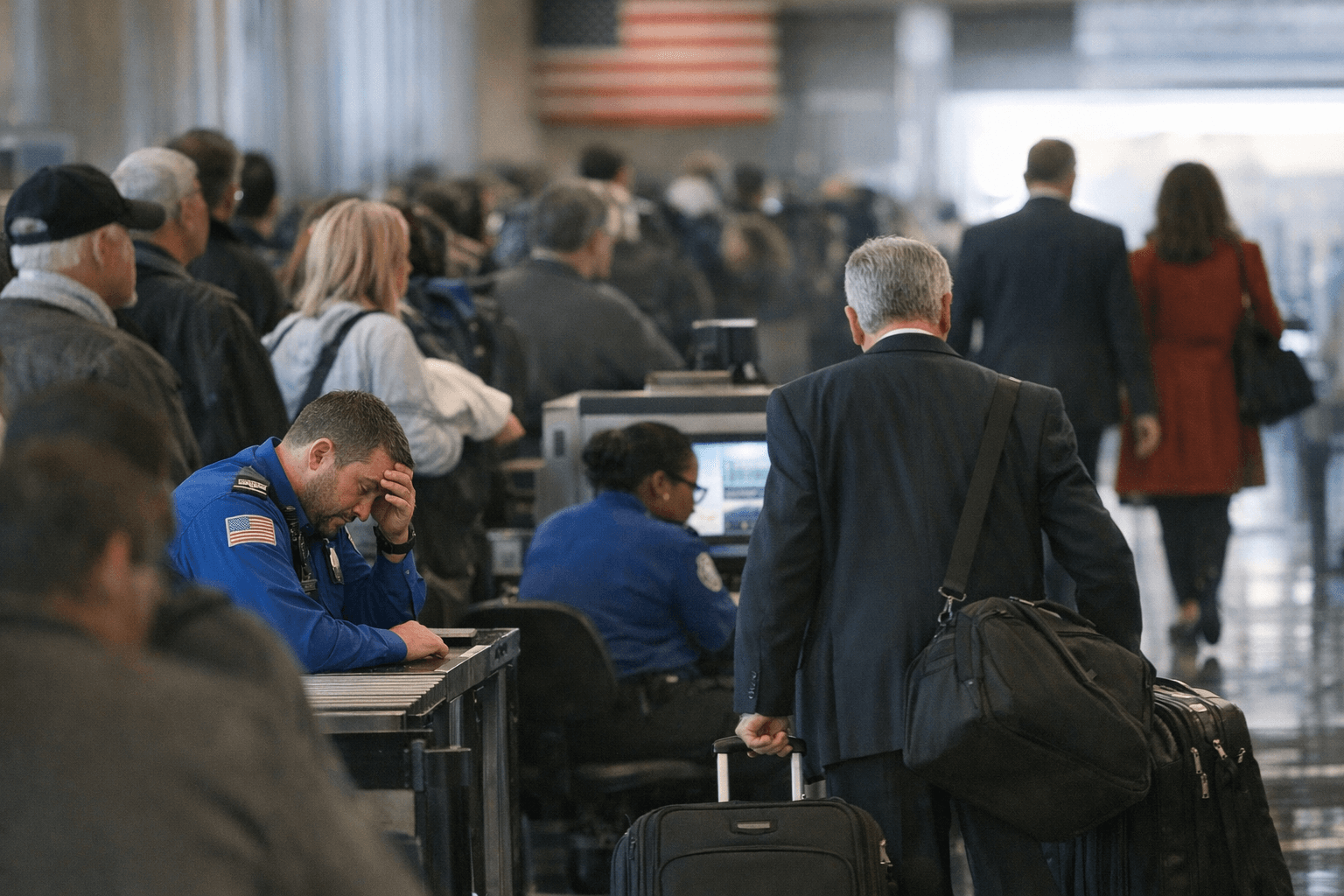
Security lines stretching for blocks outside terminals in Houston, Atlanta, New Orleans and New York tell a story that 36 days of congressional deadlock has written in missed connections and mounting frustration. TSA employees, unpaid and calling in absent in growing numbers, have left checkpoints understaffed through the first peak weekend of spring travel season, and Congress responded by going home for two weeks.
President Donald Trump issued an emergency directive on March 27 to restore pay for roughly 60,000 TSA employees, a move framed as urgently necessary after chaotic scenes overtook major airports. The order aims to temporarily stabilize operations, but it does not address the broader structural issues behind the shutdown, and the disruptions are likely to remain a defining feature of the spring travel season regardless.
The underlying funding impasse remains exactly where it was when the shutdown began. The House approved a bill that would extend DHS financing only until late May, a short-term measure that Senate Democrats have already signaled they will reject. With lawmakers now on a two-week recess, no vote is scheduled and no resolution is in sight. The chaos could reset entirely in just a few weeks when even that limited extension expires.
On March 22, travelers at Louis Armstrong New Orleans International Airport and Hartsfield-Jackson Atlanta International Airport faced hours-long waits, with security queues snaking outside terminal buildings. The TSA, unlike airlines or airports, operates with no commercial flexibility: it depends entirely on federal funding, and when that funding stops, the effects move fast, from checkpoint staffing to flight schedules.
Delta Air Lines drew the clearest line between political failure and private consequence. The Atlanta-based carrier confirmed it suspended specialty services for members of Congress flying Delta, stripping lawmakers of their dedicated congressional desk service until the shutdown ends. Members of Congress will now be treated like any other passenger based on their SkyMiles status.
The Senate, meanwhile, passed the End Special Treatment for Congress at Airports Act unanimously, a bill pushed by Sen. John Cornyn of Texas that would permanently bar lawmakers from skipping standard screening or receiving priority treatment at checkpoints, while still allowing participation in TSA PreCheck. The bill now moves to the House, where its fate is uncertain.
Proposals to break the broader impasse have been noisier than decisive. Sen. John Kennedy of Louisiana, addressing the Senate's stalled negotiations, put it plainly: "We've been debating the SAVE Act for, I don't know, 10 days. I guess we're stuck. I'm a big believer that when you're stuck, you ought to try to plow around the stump, not through it." Kennedy also floated withholding senators' pay as leverage. Elon Musk publicly offered to cover TSA salaries, a proposal that Sen. Ashley Moody of Florida praised while blasting the gridlock that has left essential workers without paychecks.
Senate Minority Leader Chuck Schumer and Senate Democrats attempted to pass a standalone TSA funding bill and failed, with each side maneuvering to assign blame while travelers stood in line. Trump's pay order buys time. It does not buy a solution, and unless Congress acts when it returns from recess, the same lines that stretched for blocks this past weekend will be waiting for the next wave of spring travelers.
Know something we missed? Have a correction or additional information?
Submit a Tip

