TU Delft SkyDreamer AI Drone Wins A2RL, Defeats Elite Human FPV Pilots
SkyDreamer, an autonomous MAVLab drone, beat three former DCL champions at the A2RL in Abu Dhabi, hitting speeds approaching 100 km/h while flying on one forward camera and an IMU.
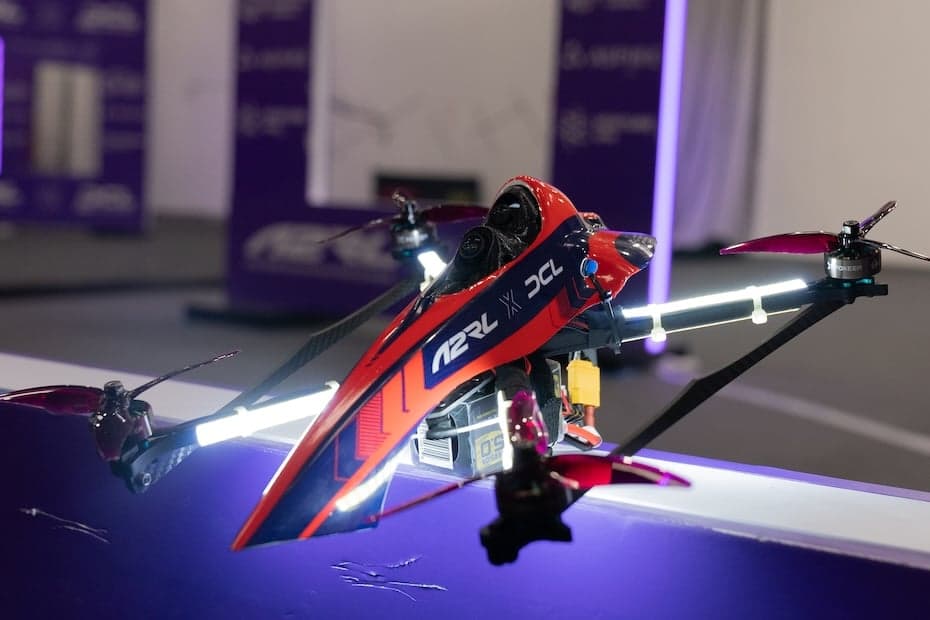
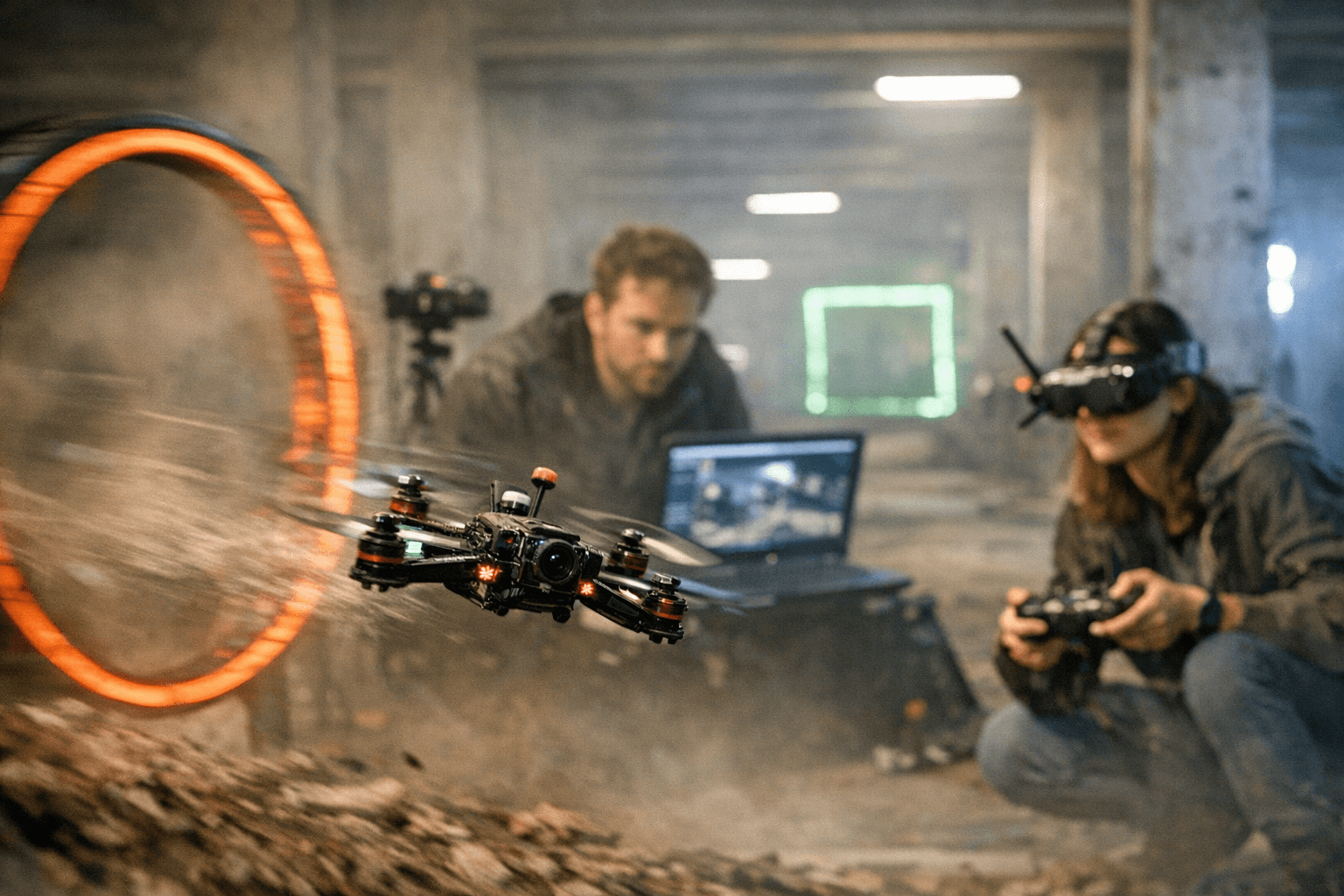
Inside the neon-charged arena in Abu Dhabi, pilots without goggles watched a machine that handled the same visual feed they rely on - a single forward-looking camera and IMU gyros - and outflew them. TU Delft’s MAVLab entry, identified in early technical notes as SkyDreamer, won the A2RL Drone Championship in April 2025 by beating three former Drone Champions League world champions in head-to-head knockout rounds.
The victory came in a stacked field: 13 autonomous drones entered the A2RL autonomous bracket, while the event program included Falcon Cup Finals for human pilots and an A2RL Grand Challenge designed to pit the best humans against the best AIs. TU Delft’s MAVLab took first place in the autonomous championship after knockout races against elite human FPV pilots and other autonomous systems inside the tight, technical indoor course.
Technically the entry was notable for an end-to-end neural network trained in simulation that outputs motor commands directly rather than routing through a conventional human-style controller. Tomshardware described the architecture as sending commands straight to each motor, an approach TU Delft and technical summaries say helped the model exploit the platform’s physical limits while working within limited on-board compute. Early notes name the reinforcement learning backbone as Dreamer-v3 and state the network runs at 500 Hz; TU Delft materials stress the single-camera constraint as a human-like perception challenge and the Original Report notes the system is “self-calibrating mid-flight for split-second decisions.”
Performance numbers underscored the engineering leap. Linked social posts and MAVLab commentary cite speeds approaching 100 km/h on the indoor course and repeated that the autonomous system handled the same sensory input human pilots use. Christophe De Wagter, MAVLab team lead, said: “I always wondered when AI would be able to compete with human drone racing pilots in real competitions. I’m extremely proud of the team that we were able to make it happen already this year. I hope that this achievement and this type of competition in general forms a springboard for real-world robot applications.”

The algorithmic lineage traces back to the European Space Agency’s Advanced Concepts Team, where neural-network control research for spacecraft guidance began a few years prior. ESA and MAVLab sources credit the ACT’s work, and ESA coordinator Dario Izzo has described the team’s earlier neural-network experiments as the seed for the winning control systems.
Beyond trophies, the win carries industry and security implications that commentators flagged at the event: the race was framed by some observers as an AlphaGo-style inflection for physical robotics, and analysts noted parallels between high-performance FPV racing and some battlefield FPV profiles. TU Delft positions the technical gains toward broader robotics uses, citing potential spillovers into self-driving cars and humanoid control. Organizers and MAVLab have not yet published full lap times, telemetry, or raw hardware specs, leaving technical follow-ups and formal verification as the next step for teams and engineers tracking this milestone.
Know something we missed? Have a correction or additional information?
Submit a Tip