Tunisia reels as unprecedented storms kill four and inundate cities
Torrential rains, the heaviest in some regions since 1950, killed four and flooded wide areas, exposing infrastructure gaps and raising economic and policy pressures.
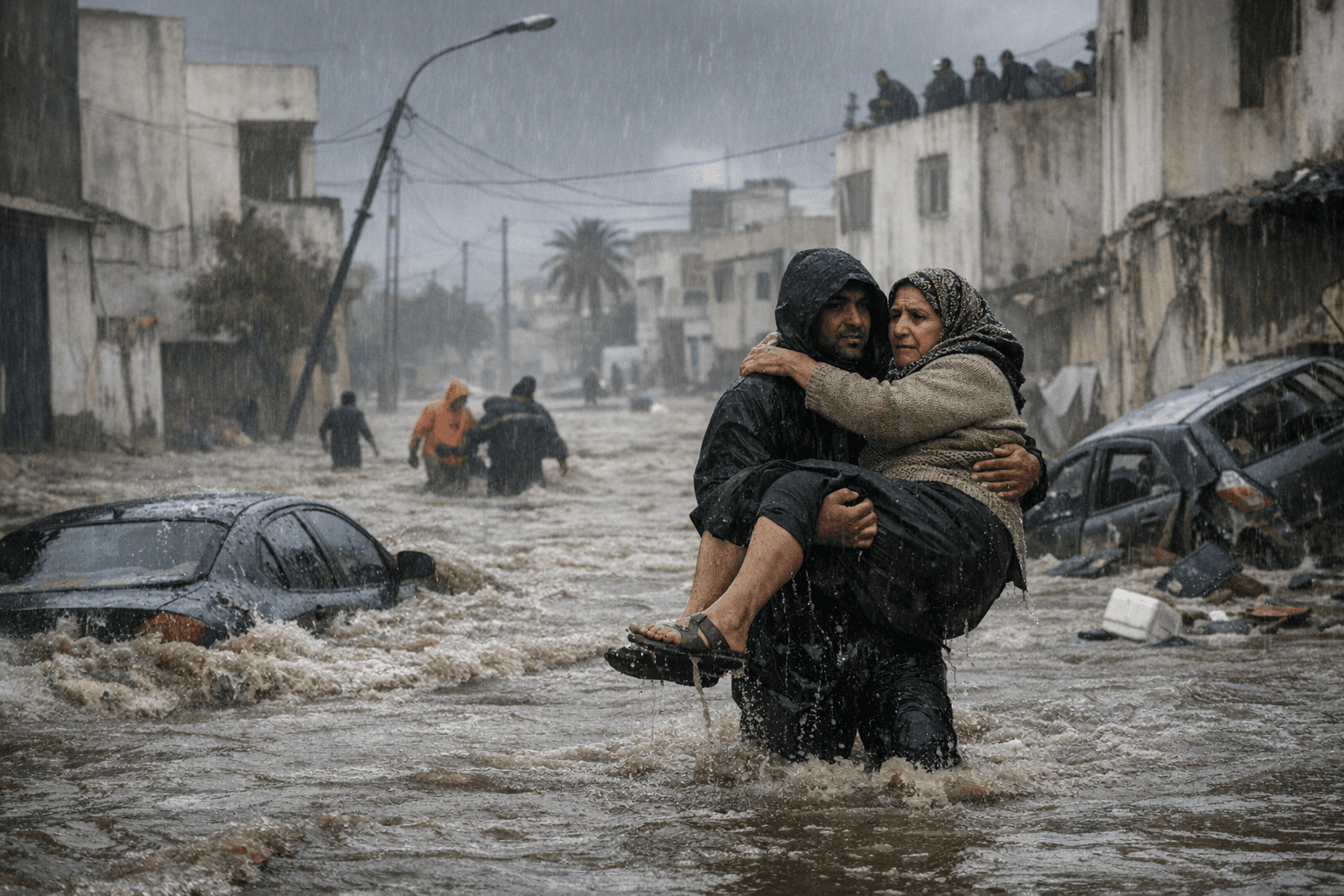
Torrential rainfall and flash floods swept through coastal and central Tunisia on Jan. 20–21, killing at least four people and inundating neighbourhoods, roads and public services in what national forecasters called some of the worst January precipitation since 1950. Civil defence officials said all four fatalities occurred in Moknine in Monastir governorate; Khalil Mechri said in remarks reported by authorities that “two people were swept away by floodwaters, while a woman drowned in her home.”
The National Institute of Meteorology recorded exceptional totals in key population centres, with Sidi Bou Said on the outskirts of Tunis receiving 206 mm (8.1 inches) of rain since Monday evening. Abderazak Rahal, head of forecasting at the institute, said “we have recorded exceptional amounts of rainfall for the month of January,” naming Monastir, Nabeul and greater Tunis among the hardest-hit areas. Another meteorological official, Mahrez Ghannouchi, described conditions as “critical” in some regions.
Floodwaters swept cars from streets, cut off neighbourhoods and left rescue teams scrambling for access. Images and video circulating from affected governorates show fast-moving currents carrying debris, vehicles submerged to door height and seawater breaching coastal districts such as Menzel Temime. Civil protection authorities reported multiple areas isolated by rising waters and said emergency services were overwhelmed; a defence ministry source confirmed the army was assisting rescue operations.
The immediate human toll and disruption to services are stark: schools and universities were suspended in 15 of the country’s 24 governorates, courts halted sessions, and public and private transport networks were crippled in parts of Tunis and other towns. Authorities warned the death toll could rise as teams reach cut-off communities.
Beyond the humanitarian emergency, the floods sharpen economic risks for a country already contending with prolonged water stress and infrastructure deficits. Tunisia has experienced a seven-year drought that left dam reserves depleted and prompted summer water cuts in several regions. Those long-term pressures, combined with ageing or clogged drainage networks and rapid urban expansion that reduces ground absorption, help explain why intense rainfall translated rapidly into urban flooding.
The economic implications are immediate and medium term. Coastal tourist enclaves and transport corridors suffered disruptions at a time when tourism revenues remain central to public finances and employment. Agricultural areas in central and northeastern governorates face damage to winter crops and local irrigation systems, compounding losses from prior drought years. Municipal and national budgets will likely absorb emergency relief and repair costs, adding pressure to fiscal plans already constrained by public debt and borrowing needs.
Markets that track climate and sovereign risk will watch for the government's response: rapid deployment of disaster relief, requests for international assistance, or reallocation of investment toward repairs and resilience. Insurers and reinsurers may face elevated claims from property and commercial losses in urban and coastal zones, although Tunisia’s limited insurance penetration will blunt immediate private-sector payouts and shift burdens toward the public purse.
Policy choices now will shape longer-term costs. Improving stormwater drainage, upgrading coastal defenses, investing in integrated water management and enforcing urban planning to preserve natural absorption zones offer high returns against future events but require sustained financing. The floods underline the interaction between acute weather shocks and chronic resource stress, underscoring the need to price climate resilience into infrastructure and fiscal planning.
Authorities continue rescue and damage assessments, and officials cautioned figures and on-the-ground details may evolve as access improves. The immediate priority remains relief and search efforts, but the broader economic calculus is becoming clear: climate-driven extremes are already imposing recurring, costly demands on Tunisia’s public finances and growth outlook.
This article was produced by Prism’s automated news system from verified source data, official records, and press releases, then run through automated quality and moderation checks before publishing. The system is built and supervised by the people who set the standards it runs under. Read our full AI policy.
Did this article answer your question?


