Turkey backs Ukraine as Russia’s decline reshapes the region
Russia’s weakening has given Ankara room to squeeze Moscow and deepen support for Kyiv, reshaping Black Sea security, grain routes, and NATO politics.
Russia’s decline is changing Turkey’s room to maneuver
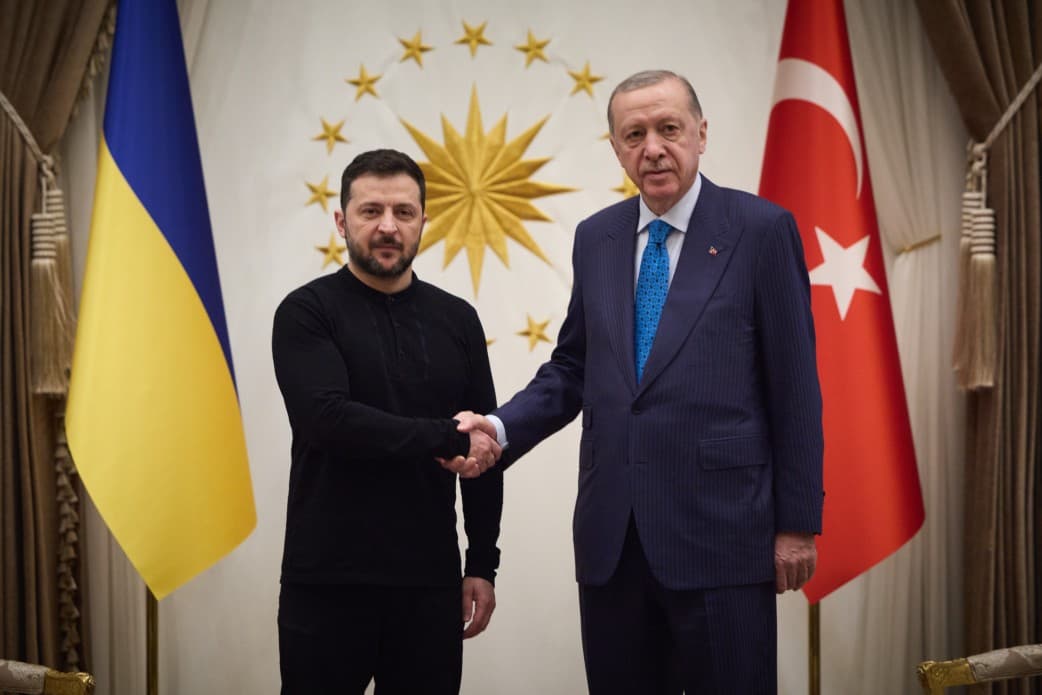
Russia’s battlefield strain and economic isolation have done more than weaken Vladimir Putin’s hand. They have given Recep Tayyip Erdogan more space to act like an independent regional power, less constrained by Moscow and more willing to lean toward Ukraine when it suits Turkey’s interests. That shift matters far beyond bilateral politics: it affects NATO cohesion, Black Sea shipping routes, and the strategic calculus in Washington.
For Ukraine, the payoff is visible. Turkey has become one of the few states able to keep talking to both sides, while also increasing practical support for Kyiv. For Russia, the same pressure that once made Turkey a useful partner is now reducing Moscow’s leverage over Ankara.
A decade of pragmatic partnership is starting to unravel
Turkey and Russia were not always moving in opposite directions. About a decade ago, after Turkey shot down a Russian Su-24 near the Syria border in 2015, the two countries repaired relations and built an unlikely partnership across military, energy, and diplomacy. That cooperation stretched from Turkey’s purchase of Russia’s S-400 air defense system to the TurkStream gas pipeline, the Akkuyu nuclear power project, and joint roles in Syria and Black Sea grain talks.
The relationship was never warm in a traditional sense. It was transactional, built on overlapping interests and mutual suspicion of the West. But the scope of cooperation was broad enough to matter strategically, especially because it gave Erdogan leverage with both Moscow and NATO capitals.
That balance is now shifting. Russia’s declining ability to project power, combined with sanctions pressure and war fatigue, has made Turkey less dependent on keeping Moscow constantly appeased. The result is not a clean break, but a slow repositioning.
Turkey’s balancing act after the full-scale invasion
After Russia’s full-scale invasion of Ukraine on February 24, 2022, Turkey tried to preserve its ties with both sides. Ankara did not join Western sanctions against Russia, and it quickly became a hub for Russian trade, investment, and energy flows. That choice gave Turkey short-term economic benefits and diplomatic leverage, especially as Russian businesses and capital sought ways to move through a friendlier environment.
Turkey also used that position to mediate on Black Sea issues. The Black Sea Grain Initiative began on July 22, 2022, and ended on July 17, 2023, creating a mechanism for exports of Ukrainian grain through wartime shipping lanes. Turkey’s role was central to that arrangement because it could speak credibly to Kyiv, Moscow, and the United Nations at the same time.
The stakes were not abstract. Grain routes through the Black Sea shape food security well beyond the region, especially for import-dependent countries. When those routes are stable, Turkey strengthens its image as a diplomatic broker; when they collapse, it highlights how much regional commerce still depends on power politics.
Black Sea diplomacy has become a test of leverage
The fragility of that diplomacy was exposed again in March 2024, when Russia and Ukraine negotiated for two months with Turkey on a new Black Sea shipping deal. According to Reuters, the possible agreement would have secured the safe movement of cargo ships, but Kyiv suddenly withdrew at the last moment.
That episode shows both Turkey’s relevance and its limits. Ankara can host talks, manage channels, and propose arrangements, but it cannot force either side to accept terms when the military and political balance shifts. Even so, the fact that both Moscow and Kyiv spent months negotiating through Turkey underscores how much the Black Sea remains a Turkish arena of influence.
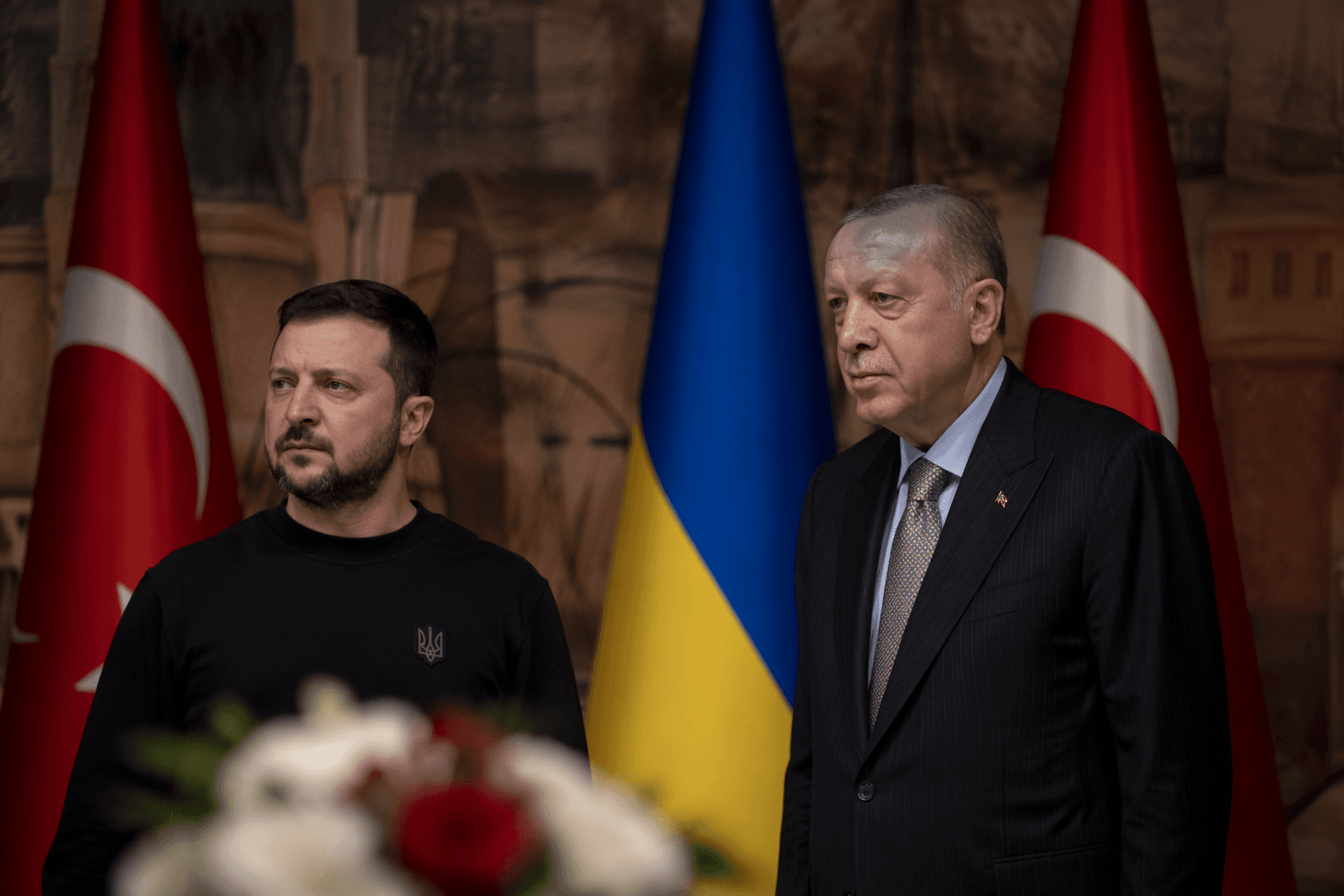
In that arena, Russia’s weakening matters. As Moscow’s battlefield position and economic posture deteriorate, it has less ability to dictate terms. That gives Turkey more freedom to act aggressively in the Black Sea without fearing the same level of retaliation or coercion it once faced.
Ukraine has become the clearest beneficiary
Turkey’s support for Ukraine has also become more visible. Bayraktar drones supplied by Turkey became a symbol of Ukrainian resistance early in the war, giving Ankara a high-profile role in Kyiv’s defense without direct military confrontation with Russia. That symbolism matters because it ties Turkish industry, especially Baykar, to Ukraine’s wartime resilience and to a broader idea of strategic support that is both practical and political.
At the same time, Turkey has not abandoned caution. It still relied heavily on Russian energy in 2024, including a large share of its natural gas imports, and trade between Russia and Turkey surged after the invasion before later cooling from record levels. That dependency limits how far Ankara can go, but it does not erase the trend: Turkey is hedging less in Russia’s favor than it once did.
The bigger picture is that Turkey can now support Ukraine while preserving enough economic contact with Russia to protect its own interests. That combination gives Erdogan more room than many NATO leaders have managed, and it makes Turkey harder for Moscow to pressure into obedience.
Why NATO and Washington are adjusting too
Turkey’s repositioning has also influenced its standing inside NATO. Ankara ratified Sweden’s NATO membership in January 2024, and the United States later advanced the long-delayed F-16 sale to Turkey. Those moves reflected more than routine alliance management. They showed how Turkey’s strategic importance, especially after Russia’s 2022 invasion, could help unlock concessions from Washington.
A Congressional Research Service report noted that Turkey’s role for NATO amid Europe’s evolving security crisis may have contributed to the administration’s decision to move ahead with the F-16 transaction. That is a sign of the larger bargain at work: Turkey is using its position between East and West to extract benefits from both.
The implications are broader than one arms deal. Carnegie Endowment analysis has argued that Turkey’s deepening entanglement with Russia, alongside setbacks with the United States and some European allies, muddied its image as a fully reliable member of the Western security architecture. Yet the current moment suggests a more complex reality. Turkey is not leaving that architecture; it is trying to exploit it.
A regional power shift with global consequences
What is unfolding is not a personality clash between Erdogan and Putin. It is a structural realignment shaped by Russia’s weakening and Turkey’s determination to capitalize on it. Moscow’s reduced leverage has opened space for Ankara to press harder in the Black Sea, remain active in Syria, and deepen support for Ukraine without paying the same strategic price it once would have faced.
For the United States, that creates both opportunity and risk. A more independent Turkey can help keep Black Sea routes open, support Ukraine, and complicate Russian strategy. But it also means Washington must manage a NATO ally that is skilled at extracting concessions while avoiding full alignment with any bloc.
The second-order effects of the war are now clearer: Russia’s decline has not only weakened Moscow. It has also loosened the regional order around it, giving Turkey more freedom to shape the Black Sea, influence grain corridors, and define its own place between NATO and the Kremlin.
This article was produced by Prism’s automated news system from verified source data, official records, and press releases, then run through automated quality and moderation checks before publishing. The system is built and supervised by the people who set the standards it runs under. Read our full AI policy.
Know something we missed? Have a correction or additional information?
Submit a Tip