Two arrested after four Pakistani farm workers found burned in Italy
CCTV showed a van blocked from outside before it was torched, killing four Pakistani farm workers near Amendolara. Police say the blaze fits a wider pattern of fear.
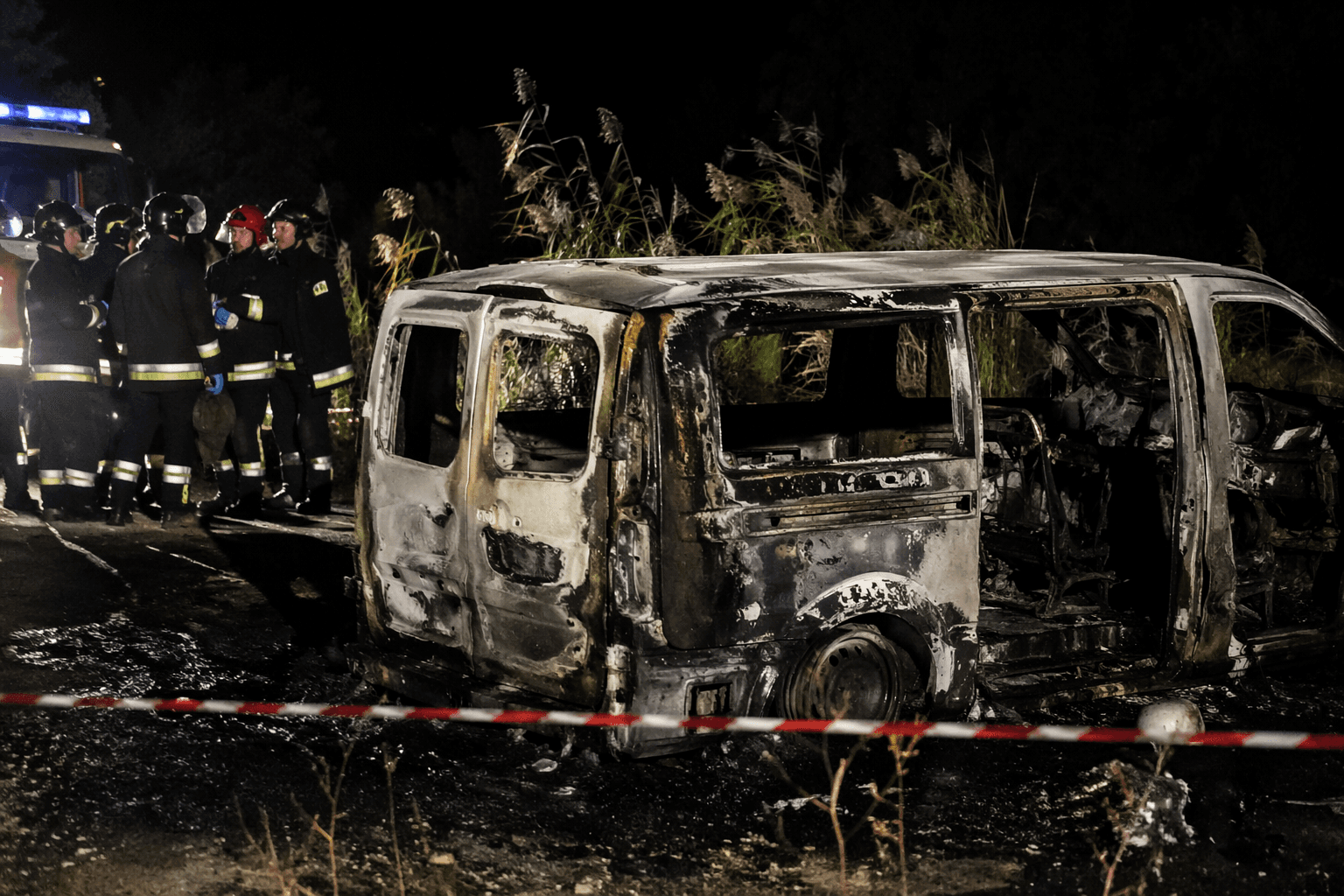
Italian police arrested two Pakistani nationals after four Pakistani farm workers were found dead inside a burnt-out minivan at a petrol station near Amendolara in Calabria, a sprawling farm region in southern Italy where migrant labor powers much of the harvest season.
Investigators said CCTV from the station showed two people blocking the van’s doors from the outside, throwing liquid inside and running away as the fire broke out. Firefighters pulled the bodies from the vehicle after putting out the blaze. Antonio Borelli, the local police chief, described the case in blunt terms: "This is definitely murder, we just have to work out the details."
The dead men’s identities had not been made public, and authorities had not yet disclosed a motive. But the case has already been linked to tensions among migrant workers over farm jobs, residency papers and accommodation, pressures that can become especially dangerous when workers live in unstable housing and depend on informal arrangements to keep working. In that setting, a dispute over work or documents can spill into threats, arson and, now, homicide.

The Calabria arrests also come against a troubling backdrop: investigators said there had been 14 arson incidents involving cars and minivans carrying Pakistanis in recent months in the same area. That pattern raises hard questions about whether migrant workers were adequately protected in a region that depends heavily on their labor, and whether repeated warning signs were missed before the violence escalated. For communities built around migrant farm work, the fire in Amendolara exposed more than a murder. It exposed how quickly exploitation, insecurity and isolation can turn fatal when workers are left with little protection.
This article was produced by Prism’s automated news system from verified source data, official records, and press releases, then run through automated quality and moderation checks before publishing. The system is built and supervised by the people who set the standards it runs under. Read our full AI policy.
Did this article answer your question?