UAE Seeks U.S. Financial Backstop as Iran War Threatens Oil Revenues
Washington is weighing a financial safety net for the UAE as war damage threatens oil flows, dollar revenues and the future of Gulf security guarantees.
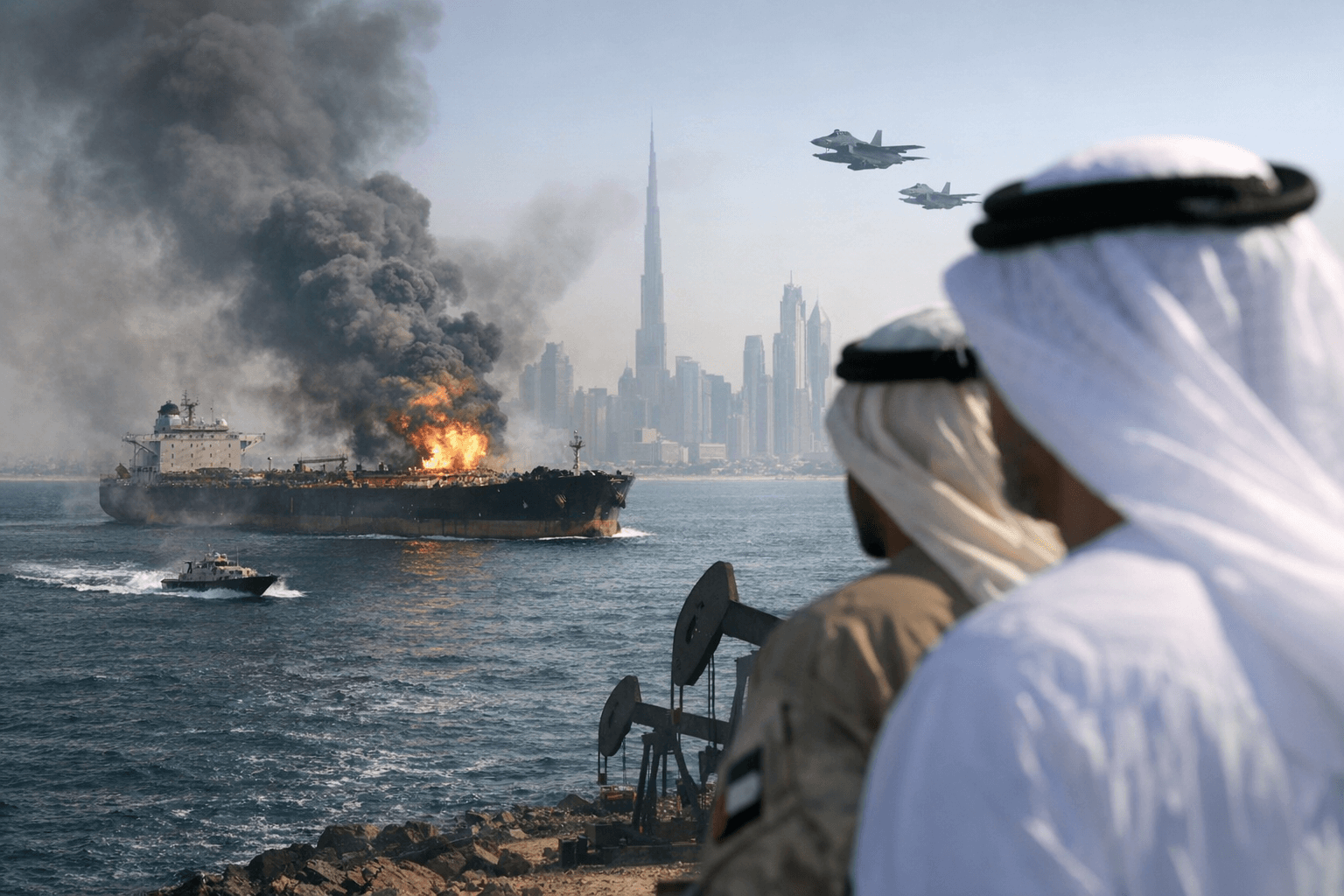
What does it mean when Washington considers backstopping one of the Gulf’s richest states after war damage? For the United Arab Emirates, a U.S. currency-swap line would be more than a liquidity tool: it would signal that American security commitments in the Persian Gulf may now extend to protecting oil revenues and reserve buffers as well as military assets.
Khaled Mohamed Balama, the governor of the UAE Central Bank, raised the idea with Treasury Secretary Scott Bessent and Federal Reserve officials in Washington last week. Emirati officials have not made a formal request, describing the proposal as preliminary and precautionary, but they warned that the war with Iran could still push the country into a deeper financial squeeze if it drags on. President Donald Trump has acknowledged that the Gulf state suffered significant damage during the conflict.
The immediate worry is the oil trade. Officials said the fighting has damaged Emirati oil-and-gas infrastructure and hindered exports through the Strait of Hormuz, cutting off a key source of dollar revenues. If dollar liquidity tightens, UAE officials warned they may have to turn to Chinese yuan or other currencies for oil sales and other transactions, an implicit challenge to the dollar’s central role in global energy trade. The talks also reflect concern that reserves could be depleted and investors could pull back from Dubai, one of the region’s main financial hubs.

The stakes extend beyond the UAE. Iranian drone and missile strikes have rattled multiple Gulf Cooperation Council states, deepening alarm across the region even as Gulf governments tried to keep public distance from U.S. and Israeli military action while still relying on American security ties. Mohamed bin Hadi Al Hussaini, the UAE finance minister, met Bessent in Washington on April 16 during the IMF and World Bank spring meetings, with Balama present, to discuss financial and economic cooperation and broader international financial stability. The UAE is also a guest country in the G20 finance track this year, according to its finance ministry.
Abu Dhabi has already positioned itself as a regional financial backstop. Last week it agreed to provide Bahrain up to 20 billion dirhams, about $5.4 billion, over five years in a currency-swap arrangement. That makes the question facing Washington sharper: if the United States is willing to stand behind a wealthy Gulf ally under wartime pressure, what limits would it set, and would any support come with political or military conditions attached?
Know something we missed? Have a correction or additional information?
Submit a Tip