UConn Freshman Hits 35-Foot Buzzer-Beater to Stun No. 1 Duke, Reach Final Four
Mullins, 0-for-4 from three all game, drained a 35-footer with 0.3 seconds left as UConn erased a 19-point deficit to stun No. 1 Duke 73-72.
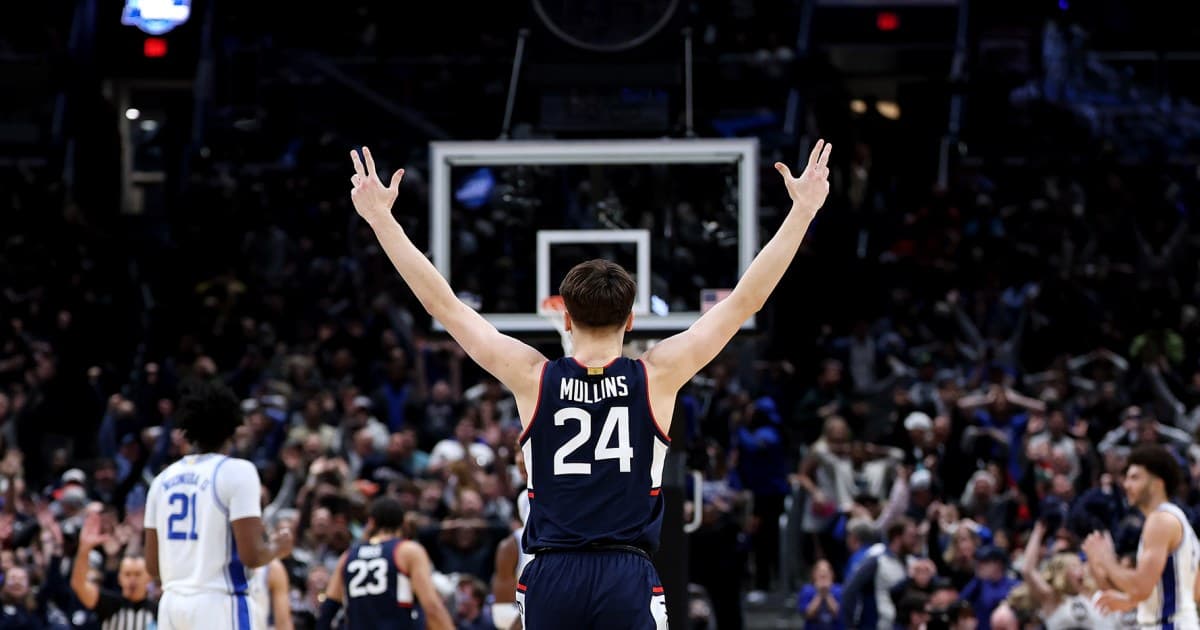
Braylon Mullins had not made a single 3-pointer all night. He had four misses from beyond the arc, and Duke's inbounds passer, with 10.0 seconds on the clock and a two-point lead, had only to keep the ball alive to end Connecticut's season. The pass was tipped. And then, from 35 feet, the UConn freshman launched one anyway.
It went in. The clock read 0.3 seconds. No. 2 Connecticut, which had trailed since the 18:26 mark of the first half, was going to the Final Four.
The Mullins buzzer-beater at Capital One Arena in Washington, D.C., capped one of the most improbable finishes in recent NCAA Tournament history, sending the Huskies to their third Final Four in four seasons while ending Duke's season in collapse for the second consecutive year. The Blue Devils entered as a 5.5-point favorite and -240 on the money line. Every predictive model had those numbers well-priced. No. 1 seeds had gone 134-0 all-time when leading by 15 or more points at halftime; Duke itself was 27-0 in NCAA Tournament games when holding such a margin.
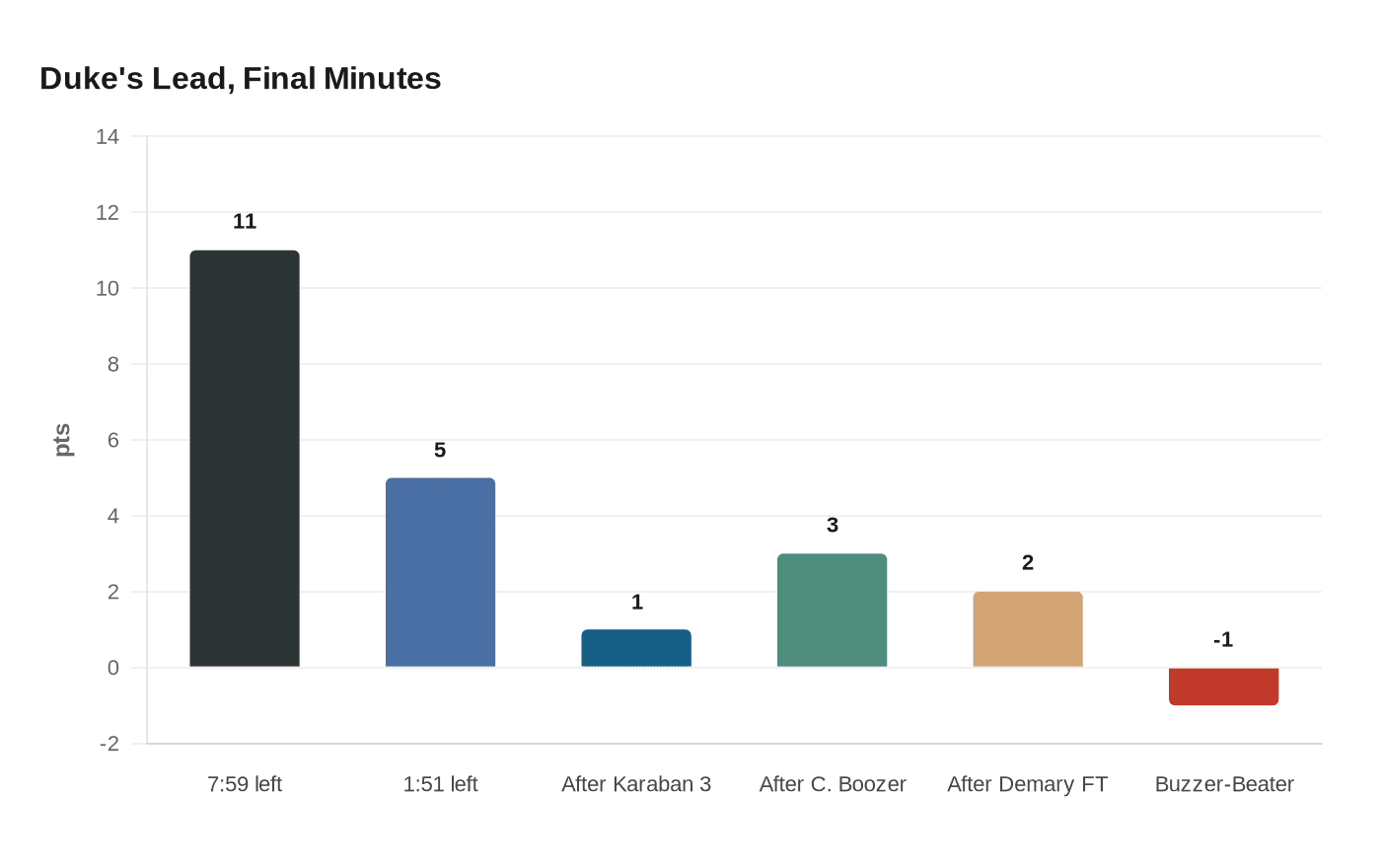
By those measures, this game was settled long before Mullins touched the ball. Duke led by as many as 19 points and still held an 11-point cushion with 7:59 remaining in the second half. UConn's 19-point comeback stands tied for the third largest in Elite Eight history or later in the NCAA Tournament, a figure that the sportsbooks processing that final possession in real time were not designed to accommodate.
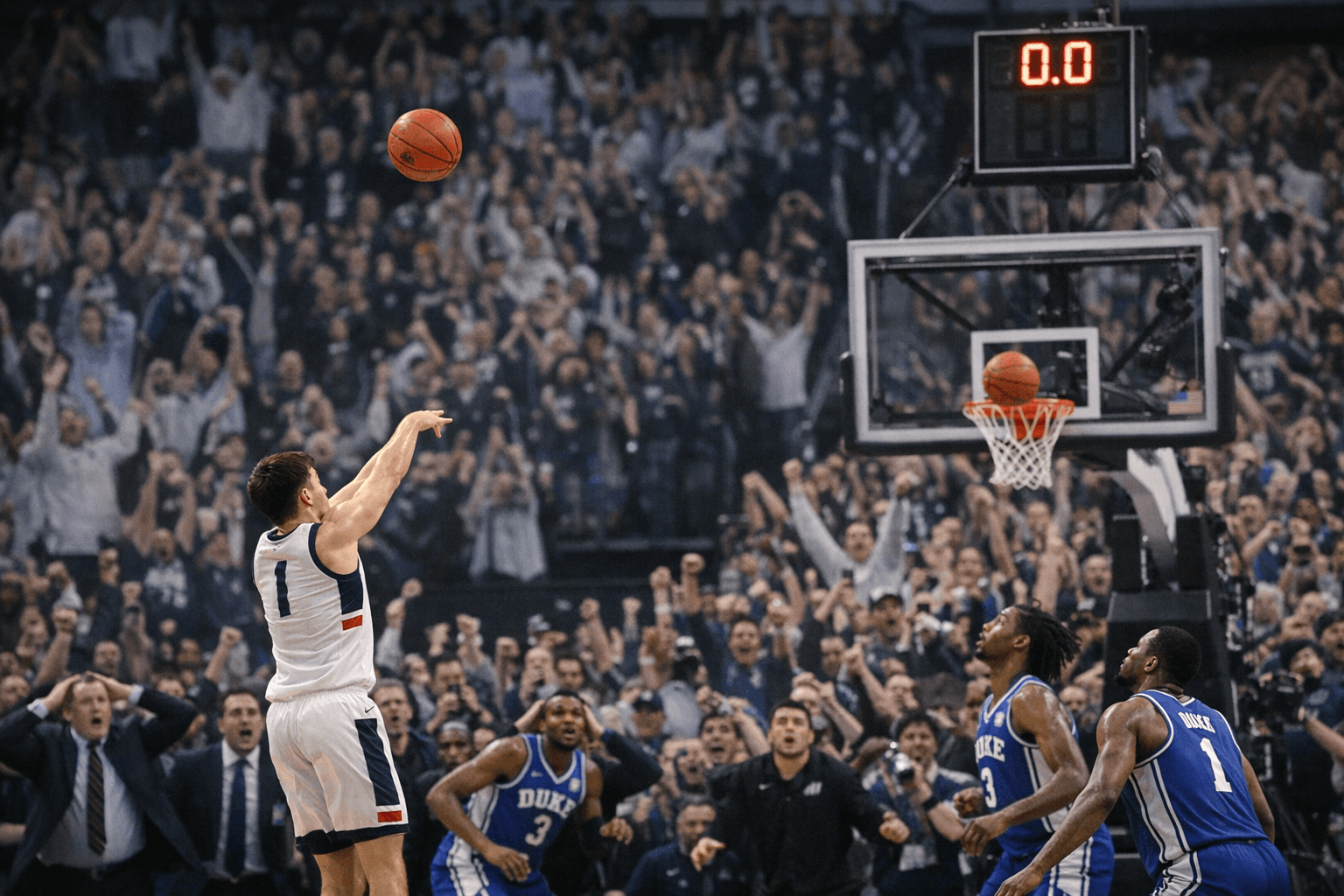
The closing minutes unraveled for Duke in specific, painful increments. With 1:51 left, Patrick Ngongba II hit a free throw to put the Blue Devils ahead 70-65. A steal by Tarris Reed Jr. led to an Alex Karaban 3-pointer that cut the deficit to one, 70-69. Cameron Boozer answered with a basket to push Duke's lead back to three. Then Boozer fouled Silas Demary Jr., who converted only one of two free throws to leave Duke ahead 72-70.
What happened next is where analytics and human decision-making collide. With 10.0 seconds left and the ball, Duke needed only to maintain possession; the Huskies would have been forced to foul, since the Blue Devils were not in danger of a 10-second backcourt violation. Instead, Cayden Boozer's inbounds pass near midcourt was tipped and stolen by Mullins. A quick hit-ahead pass returned the ball to him, and Mullins released from 35 feet.
UConn finished 1-for-18 from 3-point range before the final minute, then made four of its last five attempts, including the winner. Mullins entered that final possession 0-for-4 from deep. In sportsbooks, in win-probability models, and in the lived experience of anyone watching, the shot he made should not have gone in.
The Indiana native will return home for the Final Four in Indianapolis, a detail that no algorithm priced in.
For UConn, the program and financial calculus is significant. Three Final Fours in four seasons compound recruiting leverage, NCAA distribution revenue, and national brand value at a program still operating below Power Five media contract levels. Duke's late-game implosion mirrors last season's semifinal collapse against Houston, when the Blue Devils led by six with 1:14 remaining. Two seasons, two leads surrendered in the final two minutes; the recruiting and roster-construction questions that follow tend to be as costly as the losses themselves.
Sources:
Know something we missed? Have a correction or additional information?
Submit a Tip