UK defence chief warns Russian incursions risk crossing a line
Russian patrols and spy-ships have pushed Britain toward a sharper security line, with Sir Richard Knighton warning this is the most dangerous period of his career.
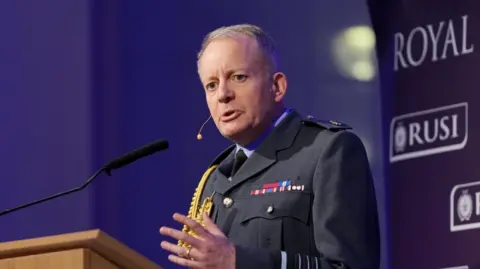
Russian patrols, spy-ships and undersea pressure have brought Britain closer to a line officials say cannot be crossed without a wider response at home. Sir Richard Knighton, the Chief of the Defence Staff and the UK armed forces’ professional head, said the country was in the “most dangerous” period he had known in his 30-plus-year career.
Knighton, who took over in 2025 and now leads the service chiefs under defence reform, said the threat was no longer something the armed forces could handle alone. In remarks at the Royal United Services Institute in December 2025, he called for the “whole nation” to step up, a warning that now sits behind a growing list of Russian actions Britain sees as testing its limits.
Those actions have been concrete. On 24 November 2025, the Ministry of Defence said Royal Navy patrol ship HMS Severn intercepted the Russian corvette RFN Stoikiy and tanker Yelnya in the Dover Strait and the English Channel. The government also said the Russian spy ship Yantar threatened UK waters between 5 and 11 November 2025. RAF P-8 maritime surveillance aircraft were deployed to Iceland to patrol the North Atlantic, underscoring how far British planners now have to reach to monitor the threat.

The threshold question in London is not just whether Russia is signalling, but whether it is probing British defences in ways that could escalate. The 2025 National Security Strategy said Russia was menacing Europe, hostile state activity was taking place on British soil, and the UK had to “defend our territory” and “make the UK a harder target.” The Strategic Defence Review 2025 went further, saying Russia was “probing our defences at home” and that warfare itself was changing.
That has turned into spending and readiness choices. The UK government has said defence spending will rise to 2.6% of GDP from 2027, a historic increase meant to strengthen deterrence and resilience. Ministers have also pointed to new cooperation with Norway, including a combined fleet of at least 13 warships backed by autonomous systems to counter the Russian undersea threat in the North Atlantic.

The message from Britain’s military leadership is that the danger is no longer confined to Ukraine or NATO’s eastern flank. It now reaches the Dover Strait, British waters, undersea infrastructure and the country’s ability to absorb pressure without panic, disruption or delay.
This article was produced by Prism’s automated news system from verified source data, official records, and press releases, then run through automated quality and moderation checks before publishing. The system is built and supervised by the people who set the standards it runs under. Read our full AI policy.
Did this article answer your question?


