UK fuel prices begin to fall after Iran conflict spikes ended
Pump prices have started to ease, but diesel still sits 49p above pre-conflict levels and a family fill-up is about £105.

UK drivers are finally seeing the first sign of relief at the forecourt after 43 days of successive fuel price rises, but the drop is modest and far from enough to undo the shock that hit pumps across the country.
The RAC said average fuel prices had levelled off and begun to fall for the first time since the conflict with Iran began on 28 February. Unleaded petrol had risen 25.5p to an average of 158.3p a litre, while diesel was 49p higher at 191.54p a litre. At those levels, the RAC said filling a family diesel car cost about £105, a stark reminder of how quickly geopolitical risk can feed through to household budgets.
The immediate trigger was the jump in wholesale oil costs after the US-Israeli strikes on Iran and the disruption that followed in the Middle East. Sky News reported that wholesale petrol prices had fallen by as much as 4p a litre and diesel by as much as 20p, although some of those gains had already been cut in half as markets turned volatile again after peace talks broke down and the Strait of Hormuz was effectively blocked. That chokepoint usually carries about a fifth of the world’s oil and natural gas flows, so any interruption there can ripple through global energy markets almost immediately.
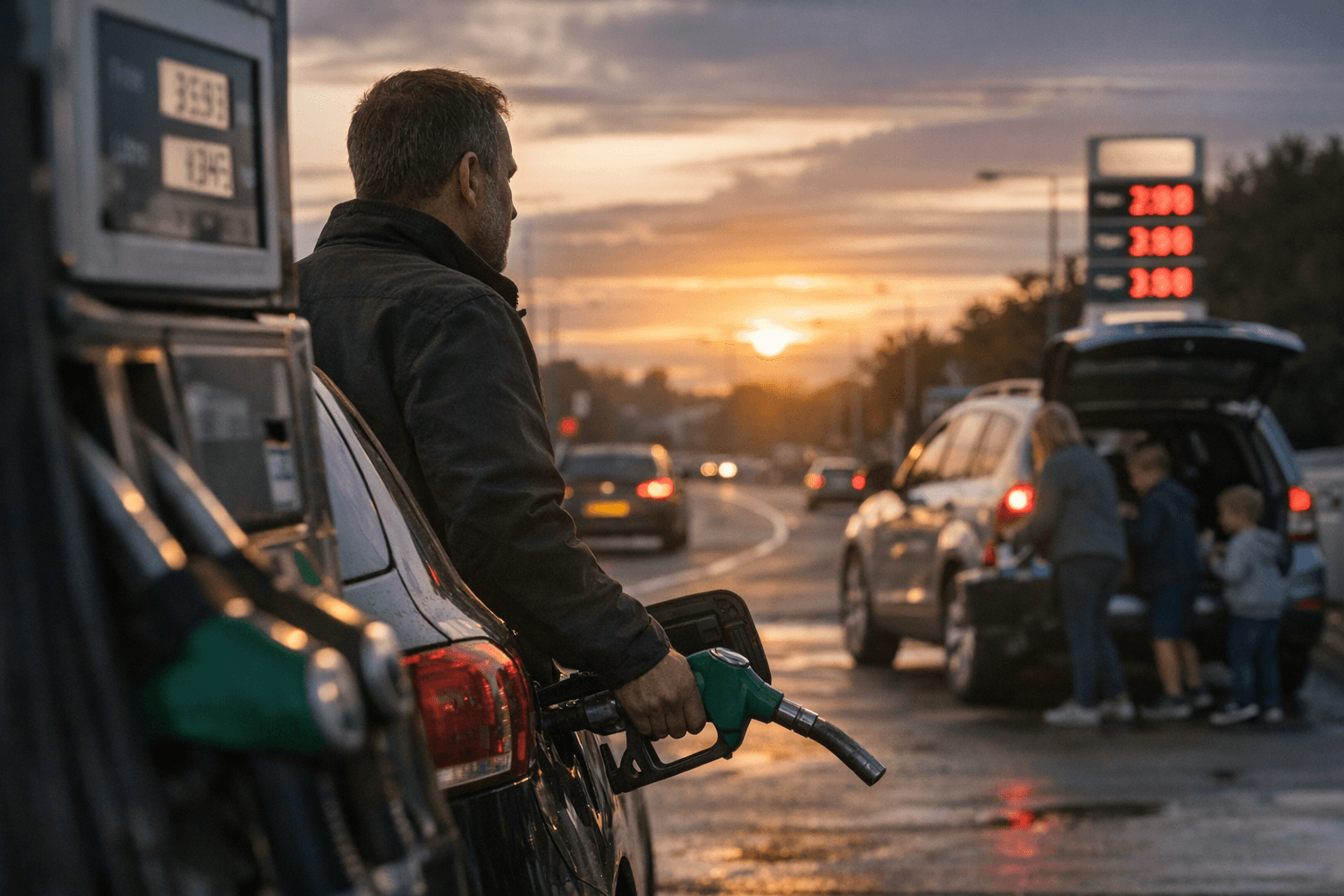
The speed of the earlier surge showed up clearly in pump data. PetrolPrices said average diesel prices climbed from 141.8p a litre to 181p by 2 April 2026, while unleaded rose from 132p to above 150p over the same period. Fuel Finder’s live index, updated on 12 April, put average UK petrol at 158.4p and diesel at 191.4p, with supermarket petrol at 155.5p and supermarket diesel at 188.7p. Those supermarket prices were still cheaper than premium forecourts, but the gap, about 5p a litre for petrol, showed how uneven the relief remained.
That unevenness is the reality check for motorists expecting an immediate, full pass-through from the wholesale market. Retailers have been under pressure to rebuild margins after weeks of sharp volatility, and the first savings are likely to appear fastest where competition is fiercest, especially at supermarket sites. Independent forecourts, which often buy later and in smaller volumes, may lag behind. For drivers, the direction is finally better. The scale, and the speed, are likely to disappoint anyone hoping the crisis premium will vanish as quickly as it arrived.
This article was produced by Prism’s automated news system from verified source data, official records, and press releases, then run through automated quality and moderation checks before publishing. The system is built and supervised by the people who set the standards it runs under. Read our full AI policy.
Did this article answer your question?