UK Government Bans Al Quds Day March to Prevent London Disorder
Home Secretary Shabana Mahmood approves Met Police request to ban Sunday's Al Quds Day march, marking the first such ban in London since 2012.

Home Secretary Shabana Mahmood has approved a Metropolitan Police request to ban Sunday's Al Quds Day march in London, citing the risk of serious public disorder in the context of the ongoing conflict in the Middle East.
"I am satisfied doing so is necessary to prevent serious public disorder, due to the scale of the protest and multiple counter-protests, in the context of the ongoing conflict in the Middle East," Mahmood said. The ban, which took effect from 16:00 on Wednesday and will remain in place for one month, covers the Al Quds march and any associated counter-protest marches. It marks the first time the Metropolitan Police has banned a protest march since 2012.
Metropolitan Police Assistant Commissioner Ade Adelekan, who leads public order policing, described the march as "uniquely contentious having originated in Iran and in London is organised by the Islamic Human Rights Commission, an organisation supportive of the Iranian regime." He said previous Al Quds marches had resulted in arrests for supporting terrorist organisations and antisemitic hate crimes, and framed the ban as a risk-based decision rather than a political one. "We do not police taste or decency or prefer one political view over another, but we will do everything we can to reduce violence and disorder," he said.
The threshold to ban a protest march is legally high, and the Met acknowledged the decision was not taken lightly. Under existing law, police and government cannot ban a stationary demonstration outright. Mahmood confirmed a static protest could still proceed, but warned: "Should a stationary demonstration proceed, the police will be able to apply strict conditions. I expect to see the full force of the law applied to anyone spreading hatred and division instead of exercising their right to peaceful protest."
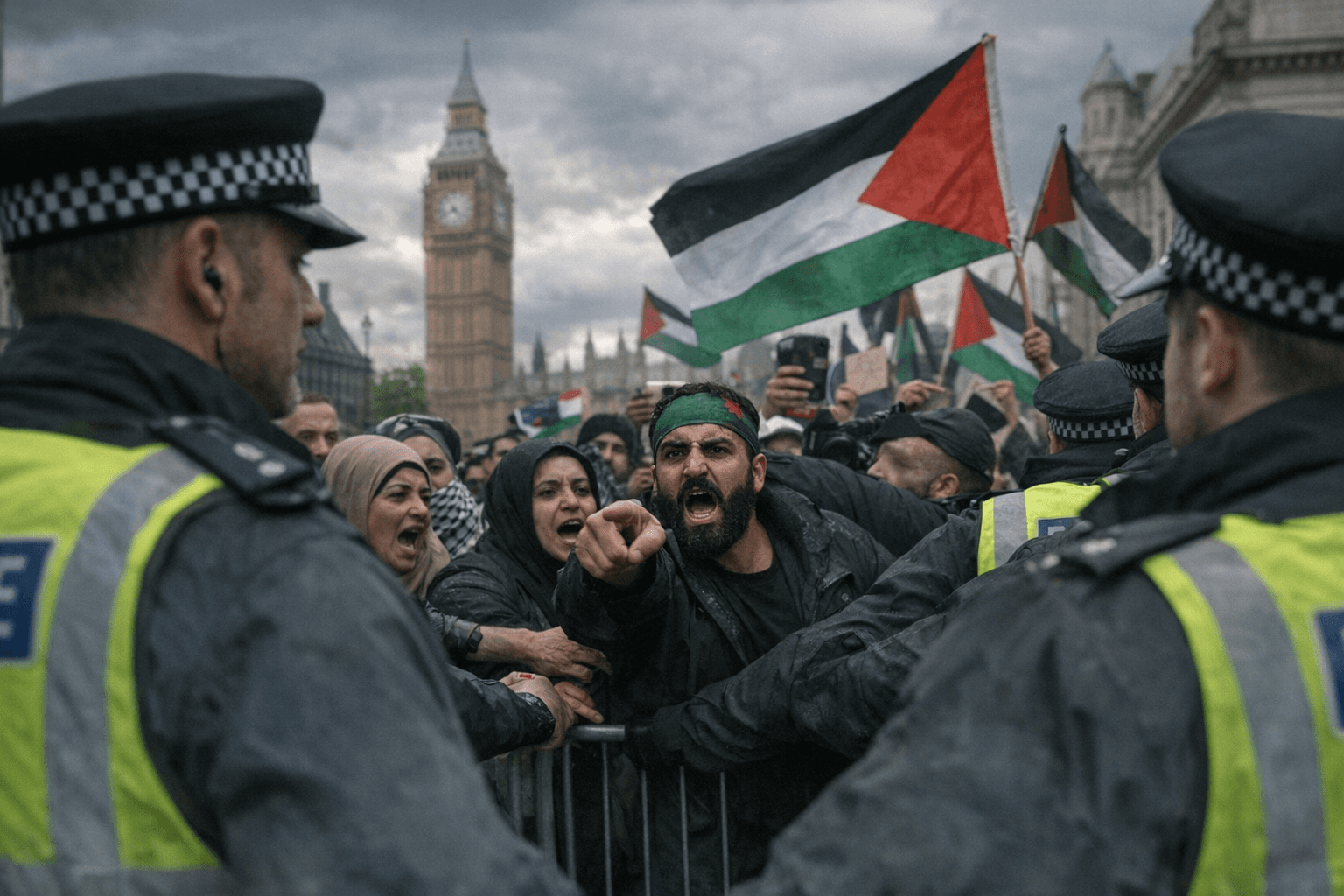
The Islamic Human Rights Commission (IHRC), which organises the London march, described Al Quds Day as an "international demonstration in support of Palestinians and all the oppressed around the world." Spokesman Faisal Bodi called the ban "a sad day for freedom of expression" and noted the event "has taken place for the last 40 years peacefully." The IHRC has previously expressed support for the late Ayatollah Ali Khamenei, a fact cited by critics and referenced in the government's broader concerns about the march's character.
The decision followed cross-party parliamentary pressure. Courts minister Sarah Sackman said people expressing support for "the malign regime in Iran" should not be "on the streets of London calling for hate and hostility against this country." Shadow Home Office minister Alicia Kearns stated there was "no place in our country for the celebration of terrorists." The Campaign Against Antisemitism welcomed the move, calling it "a positive development and a move that CAA and others, including a number of MPs, have been calling for."
The ban's scope, covering both the primary march and any associated counter-protests, reflects the Met's assessment that the principal disorder risk stems not from any single group but from the volatile combination of competing demonstrations on a charged political subject. Whether the IHRC will mount a legal challenge to the prohibition, and what conditions police impose on any stationary event that proceeds, will determine how Sunday's events ultimately unfold.
This article was produced by Prism’s automated news system from verified source data, official records, and press releases, then run through automated quality and moderation checks before publishing. The system is built and supervised by the people who set the standards it runs under. Read our full AI policy.
Did this article answer your question?


