UK Secures Zero Tariffs on British Medicines in US Pharmaceutical Deal
Britain locked in zero-tariff access to the US pharmaceutical market for at least three years, making it the only country in the world with that guarantee — at a cost to NHS drug budgets.
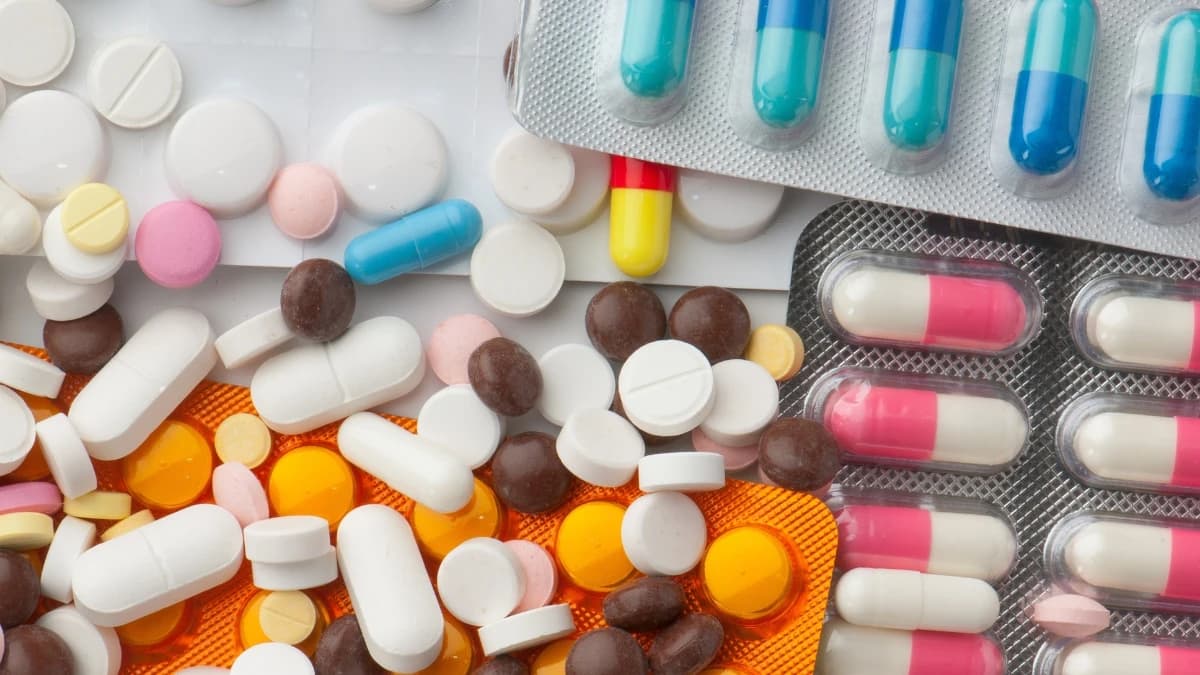
Britain locked in zero-tariff access to the US pharmaceutical market for at least three years, making it the only country with such a guarantee — while agreeing to pay significantly more for newly launched medicines at home. The arrangement carries real consequences in both directions, depending on which side of the medicine cabinet you're standing on.
The deal, part of the broader UK-US Economic Prosperity Deal and finalized on April 2, covers a sector that accounts for roughly a fifth of all British exports to the United States by value. Alongside pharmaceuticals, the agreement secures preferential terms for UK medical technology products, with no new tariffs on medtech exports. The US also agreed not to invoke Section 301 of the Trade Act of 1974 against British pharmaceutical pricing practices for the duration of President Trump's term, neutralizing a legal threat that had shadowed the industry.
The domestic trade-off is substantial. The National Institute for Health and Care Excellence (NICE) revised its cost-effectiveness threshold on March 31, raising the quality-adjusted life year benchmark by 25 percent, from a band of £20,000-£30,000 to £25,000-£35,000. That threshold had not moved since NICE was established in 1999. The Voluntary Scheme for Branded Medicines Pricing rebate rate, which pharmaceutical companies pay back to the Treasury to offset NHS branded-medicine spending, was simultaneously cut by more than a third, falling from 22.9 percent in 2025 to 14.5 percent for newer medicines in 2026. The Department of Health and Social Care estimates these combined changes will increase NHS spending on medicines by £1.5 billion over three years, lifting Britain's innovative medicines share of GDP from 0.3 percent to roughly 0.35 percent by 2028. The government's stated long-term target is to double that share to 0.6 percent within a decade.
Industry responded quickly. Bristol Myers Squibb linked a commitment of more than $500 million over five years directly to the new policy framework. Moderna and BioNTech also announced multi-billion-pound investment pledges tied to the deal's tariff certainty and reformed pricing environment. The UK government and the life sciences sector jointly launched a Joint Taskforce to accelerate commercial conditions for medicines, with pilot schemes expected to begin by September 2026. The official ambition, set out in the government's 10 Year Health Plan, is for the UK to rank as the third most important life sciences economy globally by 2035.
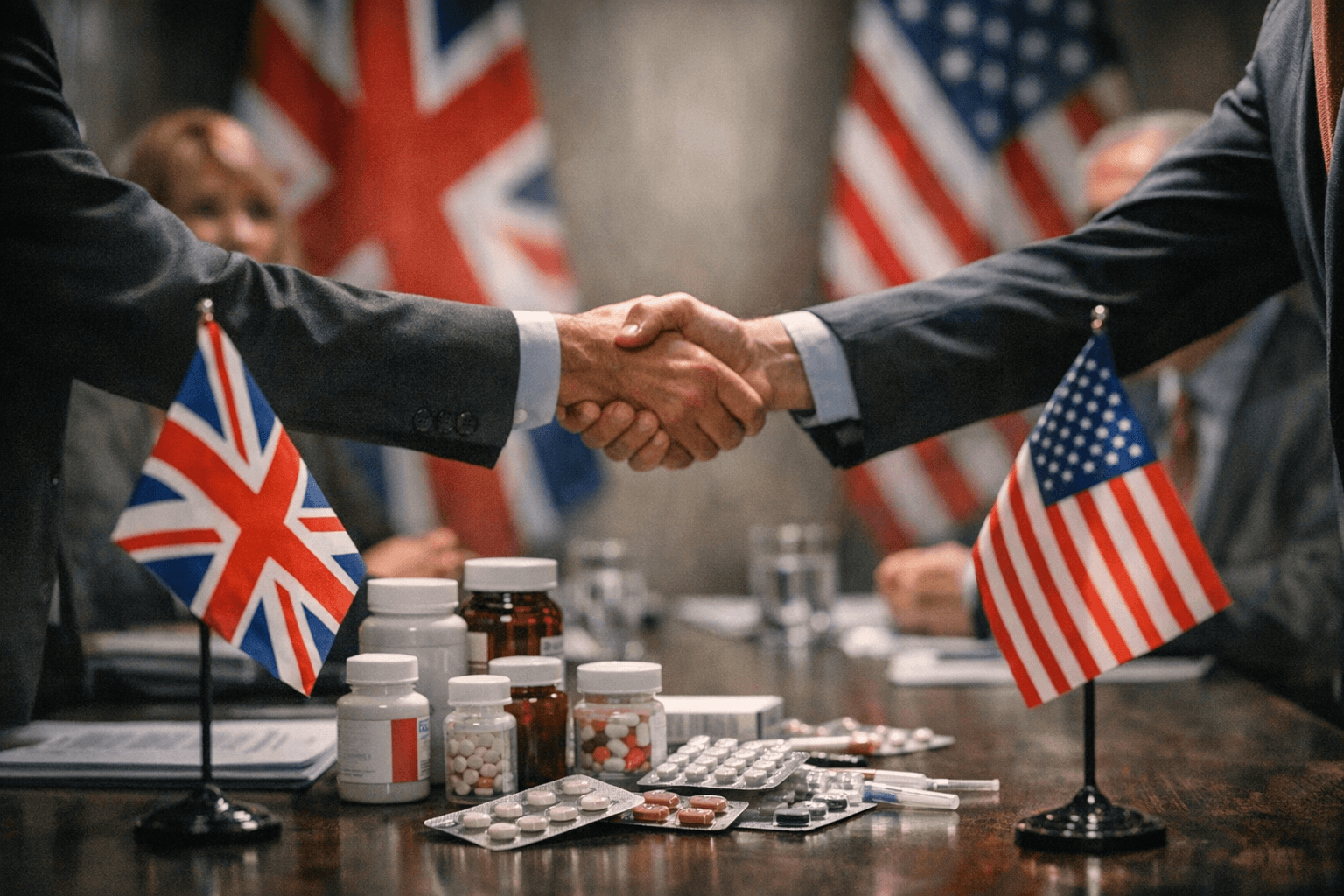
Timing mattered. On the same day Britain announced the finalized legal text, the US administration tightened tariffs on pharmaceutical imports from countries that had not concluded comparable pricing or manufacturing commitments. Having secured its arrangement first, the UK escaped that escalation. The GOV.UK announcement described the pact as arriving at "an era of preventions and cures" that would position British patients as being "among the first in the world" to access new treatments.
NHS advocates welcomed faster approvals for drugs that might previously have failed NICE's cost threshold on financial grounds alone, particularly in oncology. But critics noted the harder arithmetic: the £1.5 billion spending increase falls on a health system already under acute budgetary pressure, and the chief beneficiaries of higher prices and lower rebate rates are pharmaceutical manufacturers, not patients. The Joint Taskforce's September 2026 pilot report will be the first real test of whether the agreement's gains land where ministers have promised they will.
This article was produced by Prism’s automated news system from verified source data, official records, and press releases, then run through automated quality and moderation checks before publishing. The system is built and supervised by the people who set the standards it runs under. Read our full AI policy.
Did this article answer your question?