UK workers take second jobs as unemployment rises and pay stays tight
More than 1.27 million UK workers held second jobs as unemployment hit 4.9%, a sign that pay and hours are not covering basic costs.

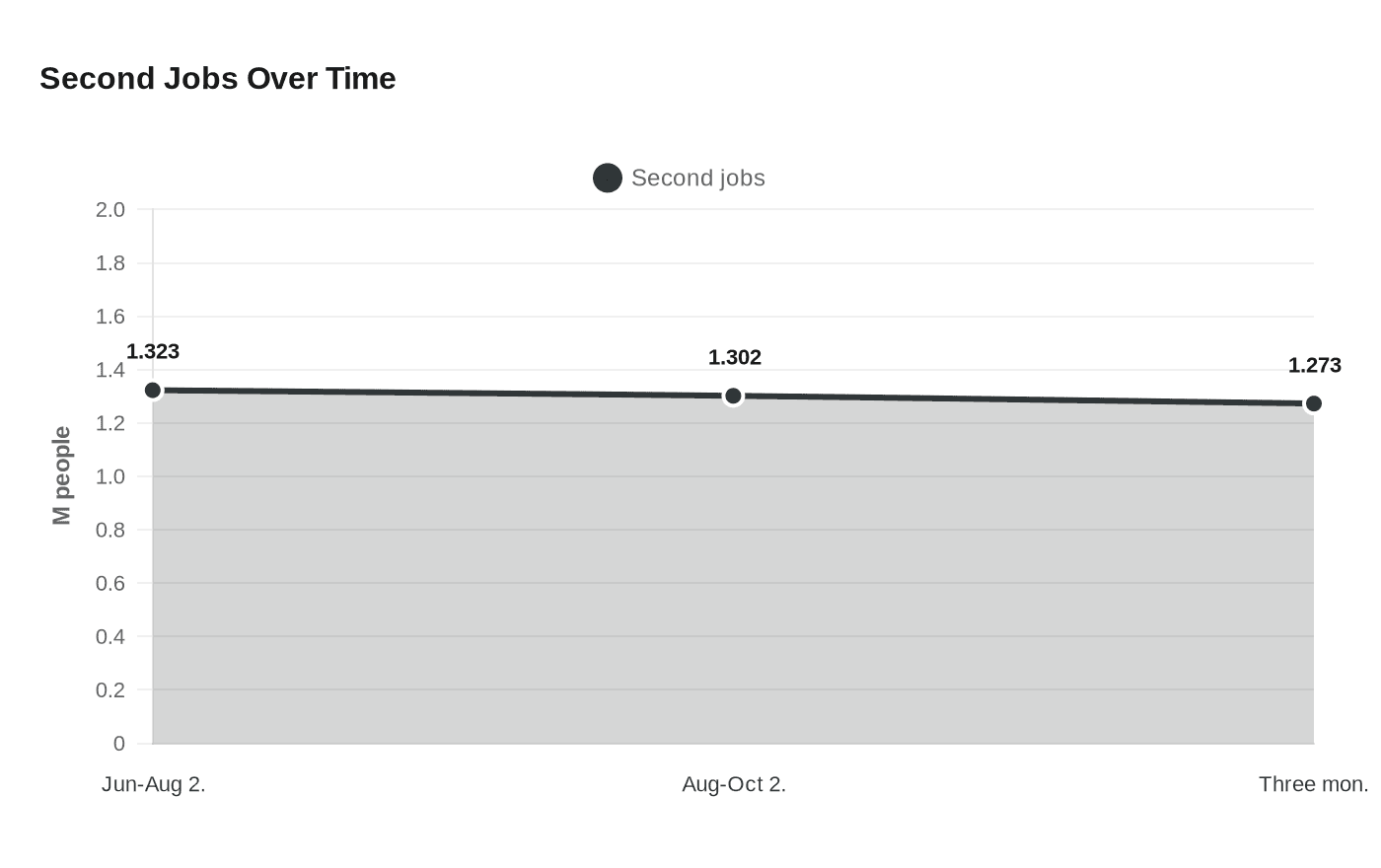
Having a job no longer guaranteed stability in Britain. The unemployment rate stood at 4.9% in the three months to February 2026, while 1.273 million people held second jobs, equal to 3.7% of everyone in work, as more workers tried to stitch together enough hours and pay to get by.
The Office for National Statistics said the number of people with second jobs had risen through 2024 and early 2025 before easing slightly in the latest quarter. It was 1.323 million in June to August 2025 and 1.302 million in August to October 2025, leaving the latest figure still well above where it had been a year earlier. The ONS has also cautioned that its Labour Force Survey-based labour market estimates remain official statistics in development because of response-rate problems, a warning that matters as investors, employers and policymakers read the labour market for signs of strain.
The broader trend is not just about more people looking for work. The unemployment rate had climbed to 5.2% in November 2025 to January 2026 before easing back to 4.9% in the latest reading, but economists at the Resolution Foundation say the deeper problem is a weaker labour market that is short of jobs as well as jobseekers. The group says the UK’s working-age employment rate was 1.0 percentage point below its pre-pandemic level in October 2025 compared with January 2020, a gap that points to reduced bargaining power for workers and less room to demand better pay or steadier hours.
That pressure is visible in London, where multiple job holding rose from 147,000 workers in 2014 to 201,000 in 2024. The share of the workforce with more than one job increased from 3.6% to 4.3% over the same period, and a London Datastore note says the main reasons were a desire for more hours of work and financial constraints. In other words, second jobs are not simply a sign of ambition or hustle culture. For many workers they are a response to pay packets that do not stretch far enough.
The burden falls hardest on younger workers. Research from the Resolution Foundation found that workers aged 20 to 24 experienced an average absolute monthly earnings change of 22%, compared with 13% for workers aged 55 to 59. That volatility helps explain why people in their 20s are more exposed to income shocks, and why the rise in second jobs now looks less like a side story than a warning about the quality of work itself.
This article was produced by Prism’s automated news system from verified source data, official records, and press releases, then run through automated quality and moderation checks before publishing. The system is built and supervised by the people who set the standards it runs under. Read our full AI policy.
Did this article answer your question?
%3Amax_bytes(150000)%3Astrip_icc()%2FCertificate-of-deposit-2301f2164ceb4e91b100cb92aa6f868a.jpg&w=1920&q=75)
