Ukraine and Russia Race to Deploy AI-Powered Drone Swarms in War
Ukraine's drone chief calls the race to AI-powered swarm warfare an arms race, warning: "Both countries are close. None got there yet."
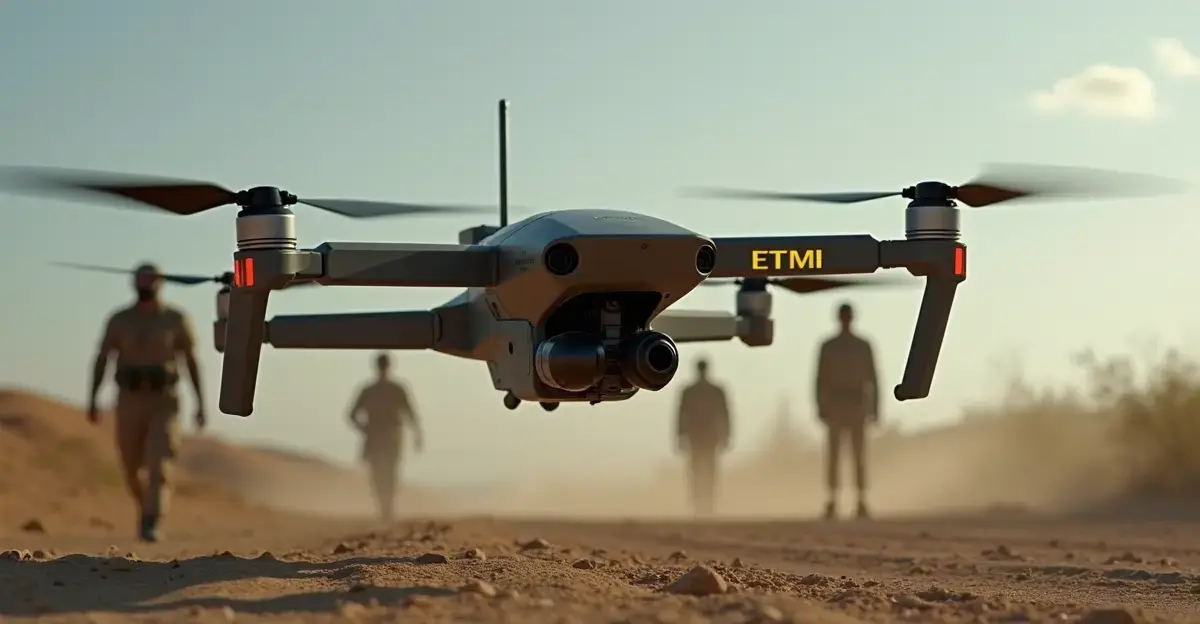
Both countries are close. None got there yet." That assessment from Oleksandr Kamyshin, the architect of Ukraine's drone program, cut to the heart of one of modern warfare's most consequential technological races: who will deploy the world's first fully operational AI-powered drone swarm.
Speaking to 60 Minutes correspondent Holly Williams, Kamyshin said drone swarm technology that uses AI would provide a major advantage in the war with Russia, and characterized the development as an arms race. His two-sentence summary captured a standoff that has quietly reshaped how both nations calculate battlefield superiority.
Neither side has crossed the threshold of full-scale deployment. Russian forces have been in a testing phase, conducting limited rollouts of swarm systems with what Ukrainian reporting described as "isolated successes," but no operational swarm capability at scale. Ukraine's trajectory runs parallel: integrating AI elements into combat UAVs, scaling up mass drone operations, and moving incrementally toward the capability Kamyshin described.
The markers of that progress are already visible on the front. Since spring 2024, Ukrainian forces have been receiving FPV drones equipped with machine vision systems, upgrades designed to help bypass Russian electronic warfare and improve strike accuracy against both enemy equipment and personnel. One concrete example is the VGI-9 drone guidance system, which uses machine vision to allow an operator to visually detect a target, lock onto it, and issue a strike command. Once that command is given, the drone continues toward the target without further operator input, rendering enemy electronic warfare systems ineffective.
That autonomous behavior in a single drone hints at what a coordinated swarm would represent. In a fully realized swarm architecture, individual drones carry distinct roles: reconnaissance, strike, relay, or electronic warfare. Artificial intelligence algorithms handle the coordination underneath, managing task distribution, collision avoidance, route optimization, and real-time adaptation to changing battlefield conditions.
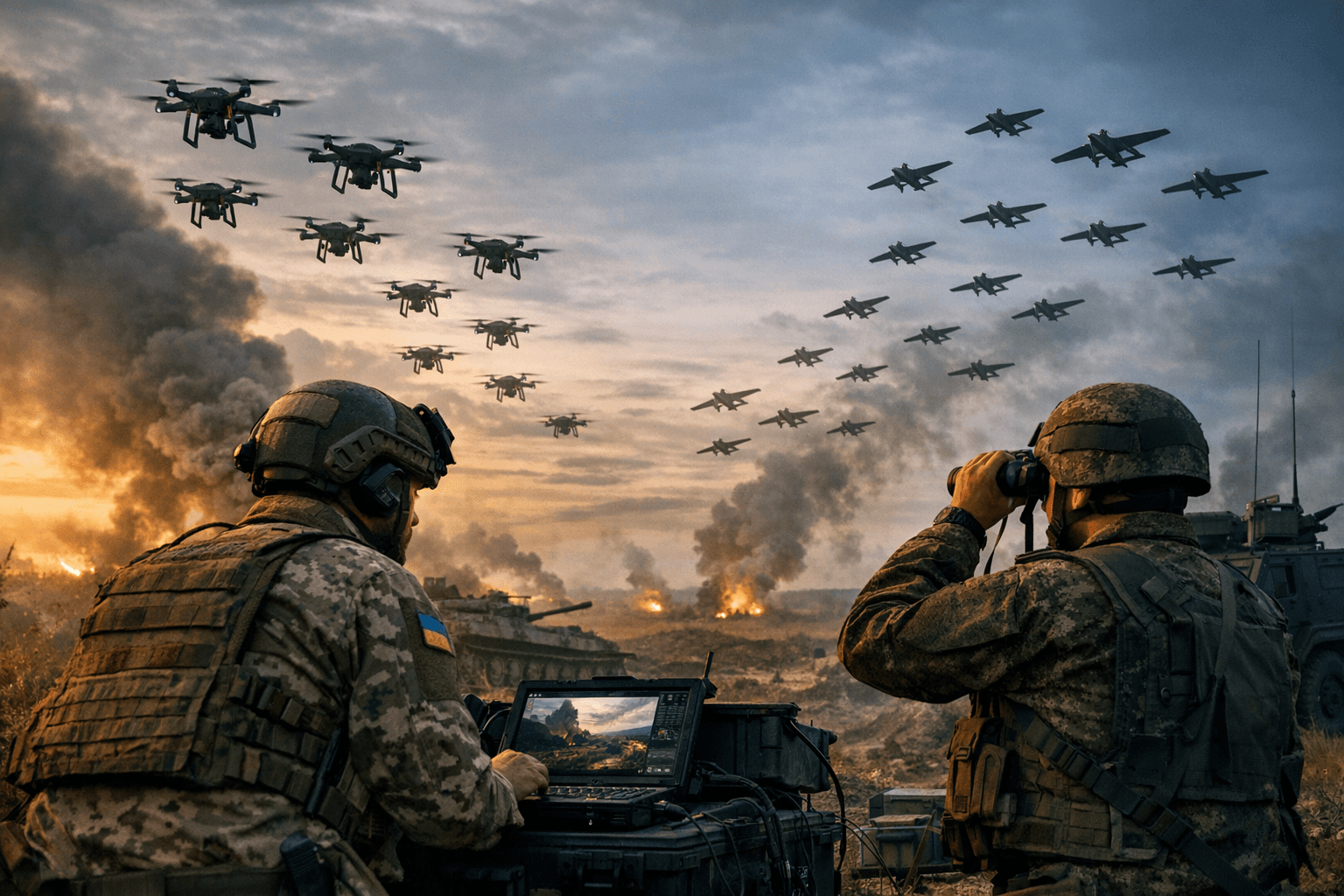
Ukraine's government has been explicit about its intent. In February 2025, Minister of Digital Transformation Mykhailo Fedorov announced plans to deploy "drone swarms," placing swarm development among the country's stated priorities for the future of warfare.
The strategic stakes extend well beyond the current conflict. Analysis from National Defense Magazine argued that early adopters of autonomous swarm technology stand to gain a decisive edge in both direct combat effectiveness and the psychological dimensions of warfare. A meticulously coordinated, autonomous drone swarm, the analysis noted, carries potential not just to dominate combat scenarios but to deter aggression before it begins. That framing positioned swarm development within a broader convergence of artificial intelligence, robotics, and space technology, with the argument that such synergy, if harnessed correctly, could lead to a safer, more stable world where conflicts are less frequent and far less devastating.
Whether that outcome materializes may depend on which side reaches full-scale deployment first. Kamyshin built the program; his read on the race carries weight precisely because he knows the distance left to run.
This article was produced by Prism’s automated news system from verified source data, official records, and press releases, then run through automated quality and moderation checks before publishing. The system is built and supervised by the people who set the standards it runs under. Read our full AI policy.
Did this article answer your question?