Ukraine and Russia trade drone strikes on refineries, railways and power grids
Drone strikes hit Russia’s TANECO refinery and Ukraine’s Sumy rail lines, underscoring a war increasingly fought through fuel, power and transport systems.
Drones hit the infrastructure that keeps the war and daily life running: refineries in Tatarstan, rail lines in Sumy and electrical substations inside Ukraine. The overnight exchange showed how both sides are now trying to raise the economic and logistical cost of the conflict, not just damage frontline positions.
Ukraine’s military said it struck Tatneft’s TANECO refinery in Nizhnekamsk, one of Russia’s biggest, with an annual design capacity of more than 16 million tons. It also said it hit the TAIF-NK refinery and the Tolyattikauchuk plant in Tolyatti, a petrochemical site that produces synthetic rubbers, monomers, fractions and high-octane gasoline additives. Ukrainian officials have said those materials are used in the production chain for solid rocket propellant and other military applications, giving the strike a significance that goes beyond fuel output alone.
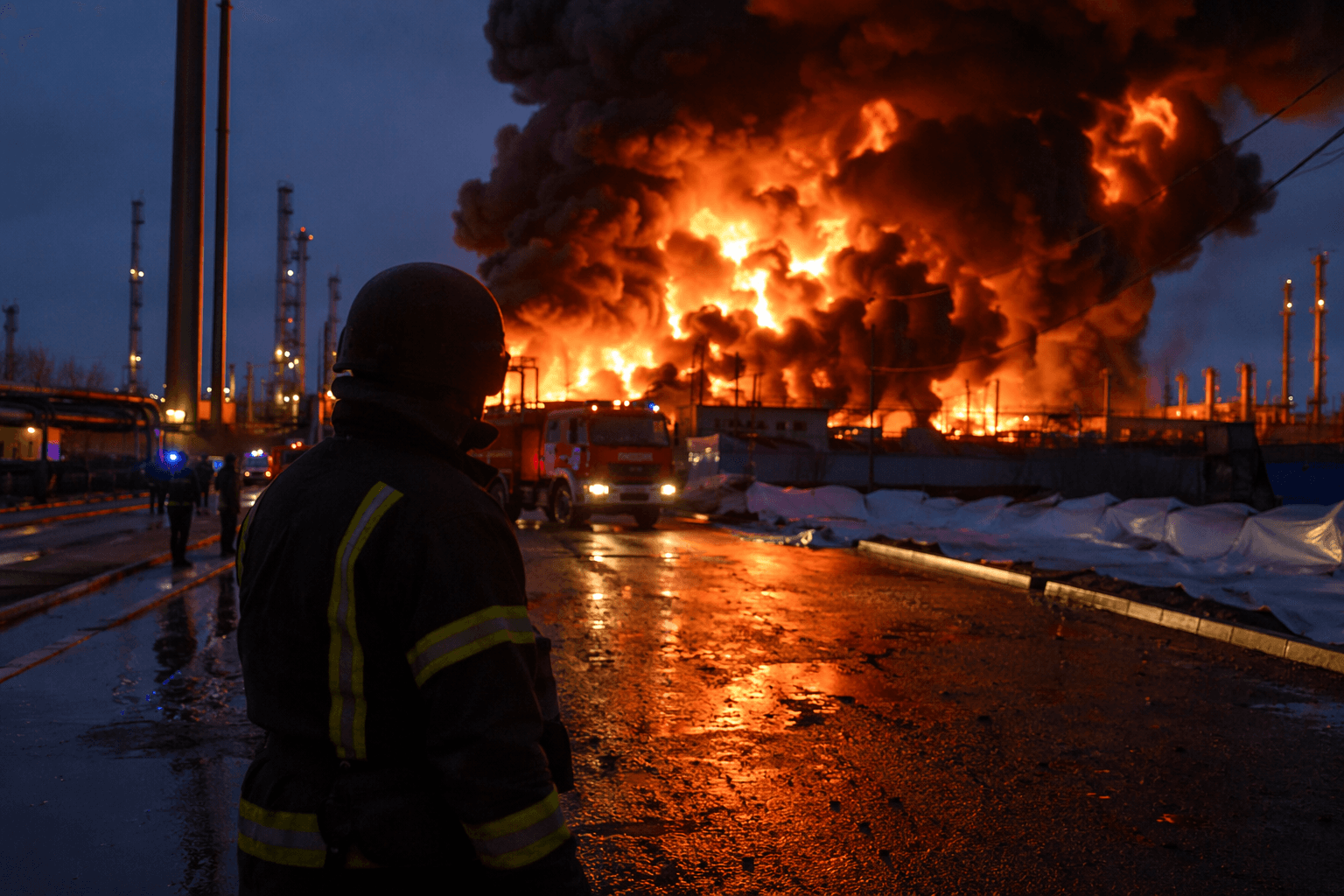
Russian local authorities in Tatarstan said industrial sites were targeted and that one apartment block was hit, injuring three people. Nizhnekamsk canceled public events on Russia Day as a precaution, a sign that the impact of the strikes extends into domestic security and public life. The attacks also fit a broader pattern in which Ukrainian long-range drone strikes on Russian energy assets have already contributed to fuel shortages in Crimea and other areas.
Russia answered with its own wave of drone attacks on Ukraine, including repeated strikes on railway infrastructure in Sumy region. Ukrzaliznytsia, Ukraine’s state railway company, said one railway worker was killed and another injured. Separate reporting around the same period said Russian drones also hit a locomotive depot and a passenger train in Sumy Oblast, showing that rail assets have become a sustained target rather than an isolated one.
The scale of the overnight exchange was large. Russia said it downed 231 Ukrainian drones, while Ukraine’s air force said it detected 117 incoming Russian drones and neutralized most of them. The numbers reflect a conflict increasingly fought through air defenses, interception rates and the resilience of energy and transport networks.
The strategic logic is clear. Refinery strikes can disrupt fuel supply, rail attacks can slow military resupply and civilian movement, and hits on substations can ripple through regional power systems. As Moscow keeps up larger air attacks, Kyiv is pressing its campaign against Russian oil infrastructure, aiming to force higher costs on the war machine by striking the systems that keep it moving.
This article was produced by Prism’s automated news system from verified source data, official records, and press releases, then run through automated quality and moderation checks before publishing. The system is built and supervised by the people who set the standards it runs under. Read our full AI policy.
Know something we missed? Have a correction or additional information?
Submit a Tip