Ukraine Deploys Drone Crews to Hunt Russia’s Shahed Attacks
Four soldiers in northeast Ukraine chased Shaheds with interceptor drones, betting cheap hardware and night shifts can blunt a far costlier Russian assault.
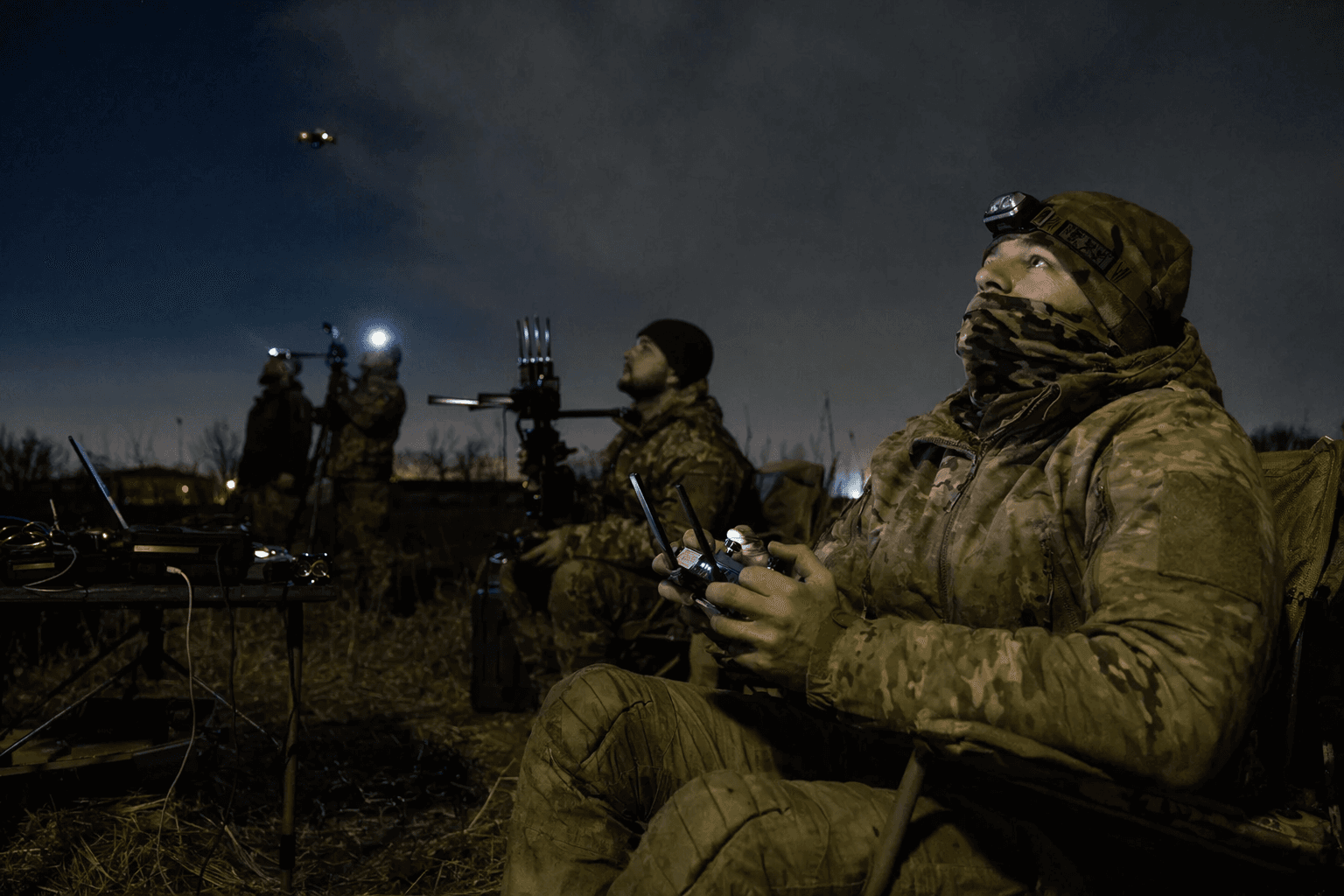
In a foggy field in the Kharkiv region of northeast Ukraine, four soldiers sat in the back of a van and watched red and yellow dots on a screen, carrying interceptor drones and energy drinks through the night in a race against one of Russia’s most destructive weapons. Their task captured the new economics of war in Ukraine: use improvised, relatively cheap systems to knock down Shahed attack drones that can cost more to launch and can destroy far more valuable targets if they get through.
About 1,000 Shahed-interceptor crews are now deployed across Ukraine, forming a fast-moving defensive network built around speed, persistence and low-cost hardware. The crews try to hit Russian drones before they can reach cities, power facilities or military sites. Borys, one of the commanders, put the logic bluntly: “Even if you use 50 drones to shoot down one Shahed, it’s worth it,” he said, because a single drone that slips past can destroy something much more expensive.
That calculation has become urgent because Russia has steadily improved the Shahed, which it originally developed in Iran and now uses as the Geran. Moscow has added better navigation, stronger engines and larger warheads, and about 15% to 20% of the drones it launches are now powered by jet engines, making some of them harder to intercept. Shahed-type drones first appeared over Ukraine in 2022, and they have since become a persistent pressure tool against the power grid and civilian infrastructure.
The scale of the threat remains high. Ukrainian air force data showed that more than 1,000 of about 6,500 drones launched last month still got through, hitting military sites, cities and energy infrastructure and leaving millions without heating or lighting. Ukrainian officials have said the interception rate has climbed as high as 90%, though that figure has not been independently verified. In February, then-new Defence Minister Mykhailo Fedorov set a goal of neutralizing 95% of all Shaheds and other long-range attack drones. Data compiled by Come Back Alive, a Ukrainian military charity, showed the interception rate that month was just over 85%.
The contest has become a test of industrial stamina as much as battlefield skill. Ukraine’s crews work night after night to stay ahead of Russian adaptations, while Moscow keeps refining the drone design and adding numbers. The result is a form of air defense built on iteration rather than glamour, where success may be measured less by perfect protection than by how much damage can be prevented before dawn.
This article was produced by Prism’s automated news system from verified source data, official records, and press releases, then run through automated quality and moderation checks before publishing. The system is built and supervised by the people who set the standards it runs under. Read our full AI policy.
Did this article answer your question?


