Ukraine drones hit Moscow region in largest assault in over a year
Drones reached deep into the Moscow region, killing civilians and exposing how Ukraine’s air campaign now threatens Russia’s sense of distance and safety.
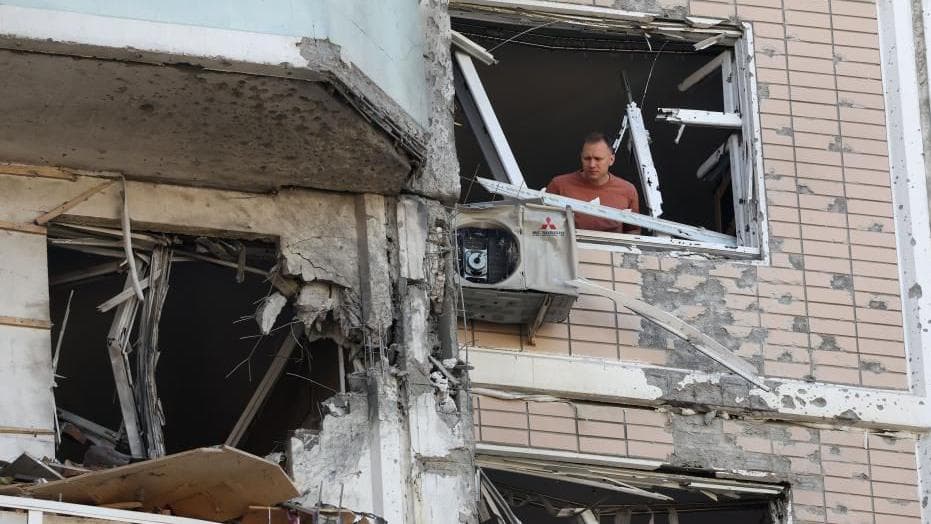
Ukraine’s drones struck the Moscow region in the largest assault on the capital area in more than a year, killing civilians, damaging apartment buildings and infrastructure, and showing how the war has moved into the political heart of Russia. Moscow region governor Andrei Vorobyov said a woman died when a drone hit a house in Khimki, north of Moscow, while the Indian embassy in Russia said one Indian worker was killed and three others were injured.
Across Russian regions, at least four people were killed in the wider wave of attacks, including three in the Moscow region and one in Belgorod. Russia’s defence ministry said more than 1,000 Ukrainian drones were downed over the country in the previous 24 hours, underscoring the scale of the overnight campaign even by the standards of a war that has increasingly turned to long-range strikes.
The numbers that emerged from different Russian authorities pointed to a massive air-defense effort but also to its limits. Sergey Sobyanin said 586 drones were shot down over Russian territory overnight, while Moscow-region officials said 81 were intercepted during the night and more than 120 over 24 hours. Even where drones were destroyed, the attack still landed hard enough to kill civilians and leave visible damage in the capital region, the place the Kremlin has spent years presenting as insulated from the war.

Volodymyr Zelenskyy called the strike “entirely justified,” framing it as retaliation for Russian attacks on Ukrainian cities and communities. That language reflected the escalation cycle now defining the conflict: Ukraine is trying to make Russian leaders and residents feel the costs of the war, while Russia continues to pound Ukrainian targets far from the front lines.
For Moscow, the strikes carried a message beyond the physical damage. Ukraine has shown it can press farther into Russian territory, including the Moscow region, despite dense layers of air defenses and constant interception claims from Russian officials. The result is a changing geometry of the war, one in which ordinary Russians can no longer be kept entirely separate from the conflict, even in and around the capital. The psychological and political effect may prove as important as the wreckage on the ground.
This article was produced by Prism’s automated news system from verified source data, official records, and press releases, then run through automated quality and moderation checks before publishing. The system is built and supervised by the people who set the standards it runs under. Read our full AI policy.
Did this article answer your question?