Ukraine expands robot warfare to offset manpower shortage, reduce losses
Ukraine’s army is sending armed ground robots into assaults, logistics runs and casualty evacuations as manpower runs short and Russian drones make the front far deadlier.
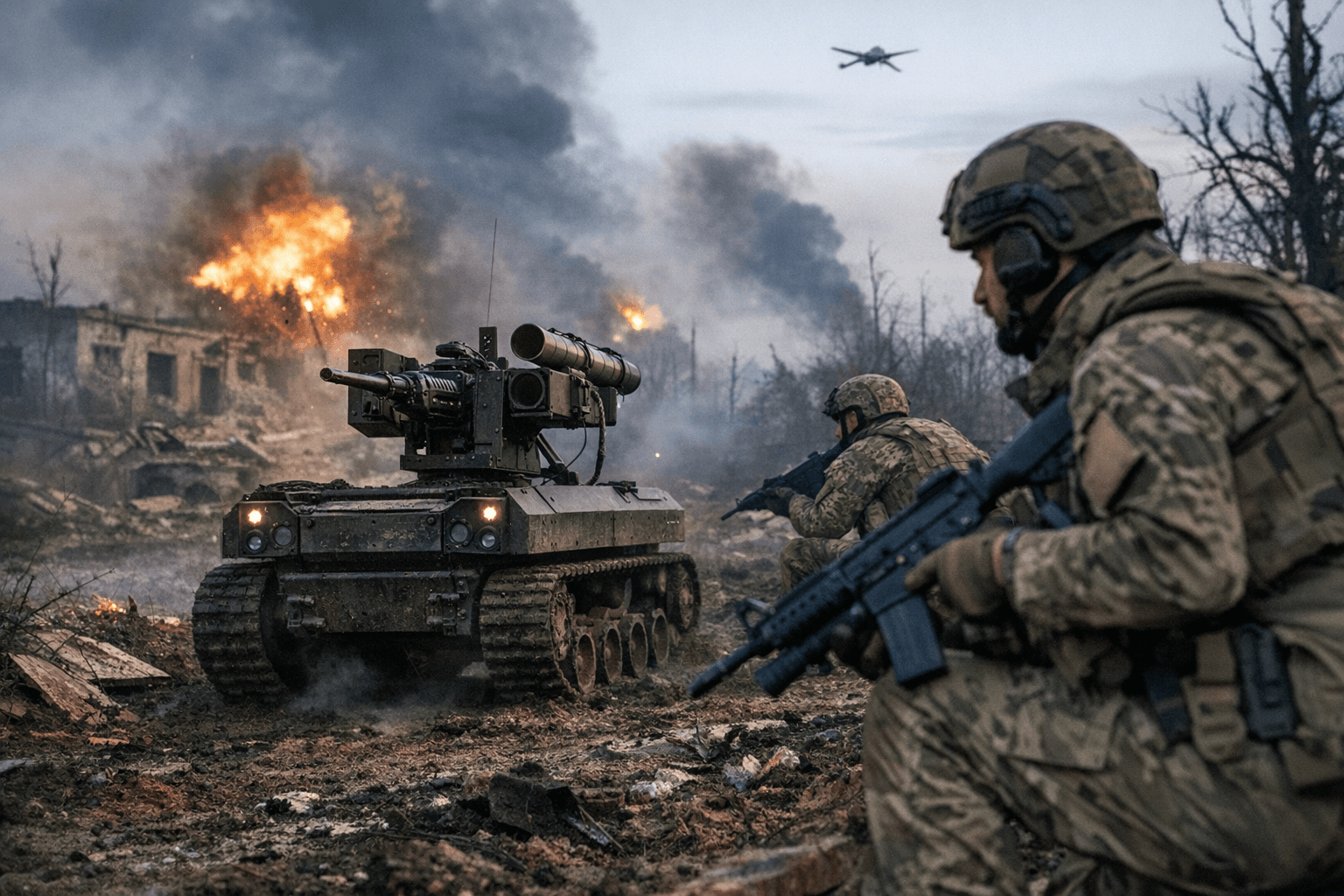
Ukraine is sending armed ground robots into assaults, logistics runs and casualty evacuations as manpower runs short and Russian drones make the front far deadlier. The machines, fitted with bombs, guns or rockets, are being used to move into positions that would put infantry in the line of fire, especially in areas where Russian surveillance and strike drones make movement through the kill zone perilous.
The shift reflects a battlefield problem that Kyiv can no longer ignore. Frontline infantry units are under intense strain, and the answer has been to replace some soldier movement with machines wherever possible. Ukraine created its Unmanned Systems Forces by presidential decree on February 6, 2024, turning robotic warfare into a separate branch rather than a collection of one-off experiments. The defense ministry says the force combines advanced technology with modern asymmetric warfare strategies, and it describes the branch as the world’s first military formation to bring airborne, sea, underwater and ground robotic systems into combat operations.
The scale-up has been rapid. In March 2025, Ukrainian officials said the defense ministry planned to supply 15,000 robotic systems for combat use that year, a large jump from the earlier, more limited use of ground robots. Hlib Kanevskyi later said Ukraine aimed to deliver 15,000 ground robots for combat use by the end of 2025, underscoring how quickly the program moved from niche testing to industrialized deployment. Ground systems are now hauling ammunition, water, fuel and generators, while also laying mines, evacuating casualties and carrying out reconnaissance.
Ukraine has increasingly paired aerial drones with ground robots in combat operations. In April 2026, President Volodymyr Zelensky said Ukrainian forces captured a Russian position using only unmanned systems, without infantry and without losses on the Ukrainian side. That episode captured the larger logic of the program: use machines to absorb risk, preserve manpower and force Russian units to contend with a more distributed, harder-to-target assault pattern.
Still, the robots are not replacing soldiers. Analysts at the Center for Strategic and International Studies and other observers say the systems are valuable because they reduce risk and widen Ukraine’s tactical options, but they cannot yet do everything infantry can. Human troops are still needed to hold terrain, make judgment calls in chaotic conditions and complete many tasks that remain beyond current machine capability. For Ukraine, the near-term model is clear: robots are not futuristic extras, but a necessary layer of warfighting in a conflict where manpower is scarce and the front is saturated with drones.
This article was produced by Prism’s automated news system from verified source data, official records, and press releases, then run through automated quality and moderation checks before publishing. The system is built and supervised by the people who set the standards it runs under. Read our full AI policy.
Did this article answer your question?


