Ukraine Fights Fierce Russian Offensive as Iran Conflict Diverts Global Attention
Russia's near-1,000-drone assault on Ukraine unfolded as the world watched Iran; Ukrainian troops say they are holding but hope Washington is still paying attention.
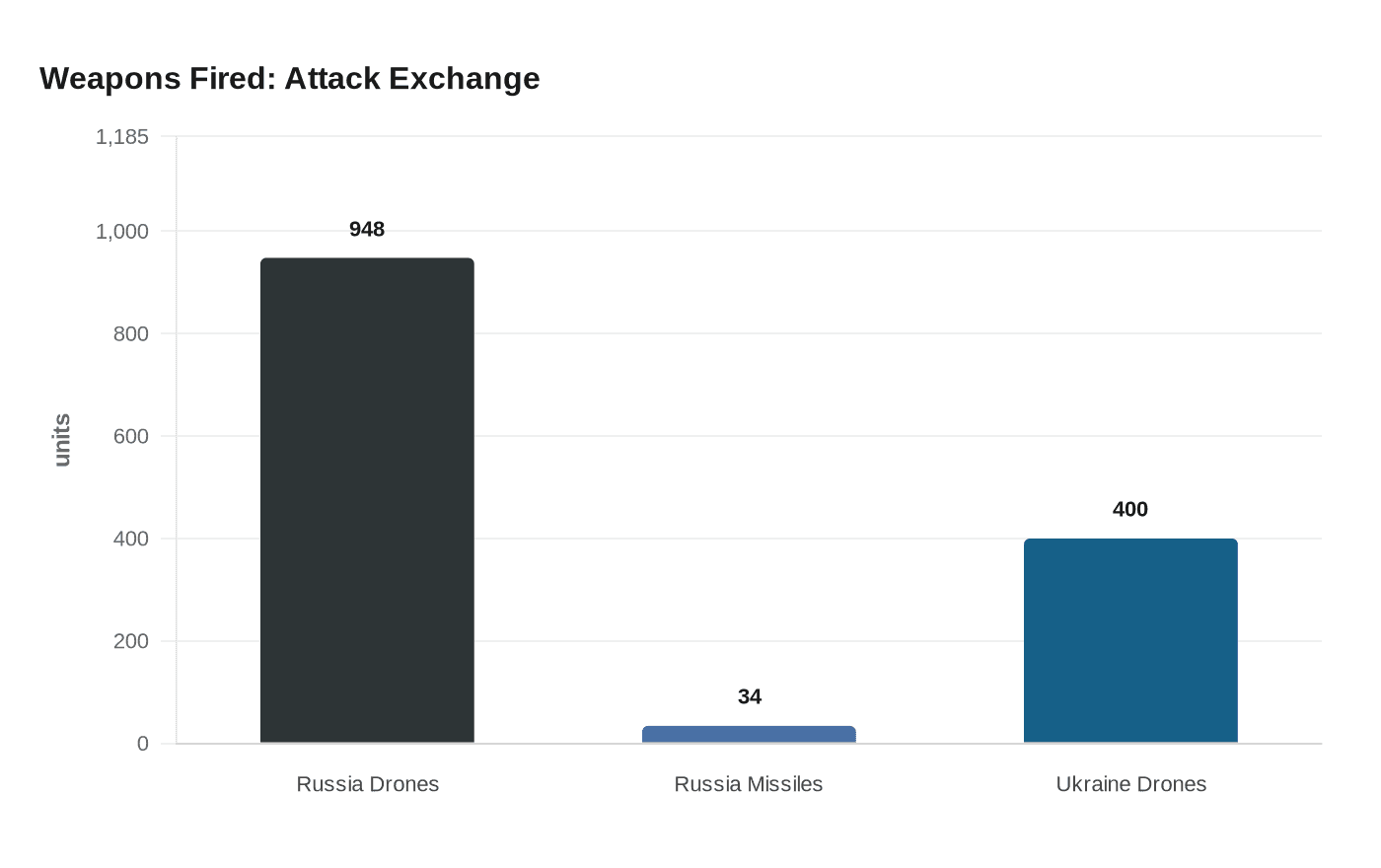
Rescue workers were still fighting fires in Zaporizhzhia when the overnight count came in: Russia had fired about 948 drones and 34 missiles at Ukraine in a single bombardment, one of the largest the war had produced in four years. The world, for the most part, was watching Tehran.
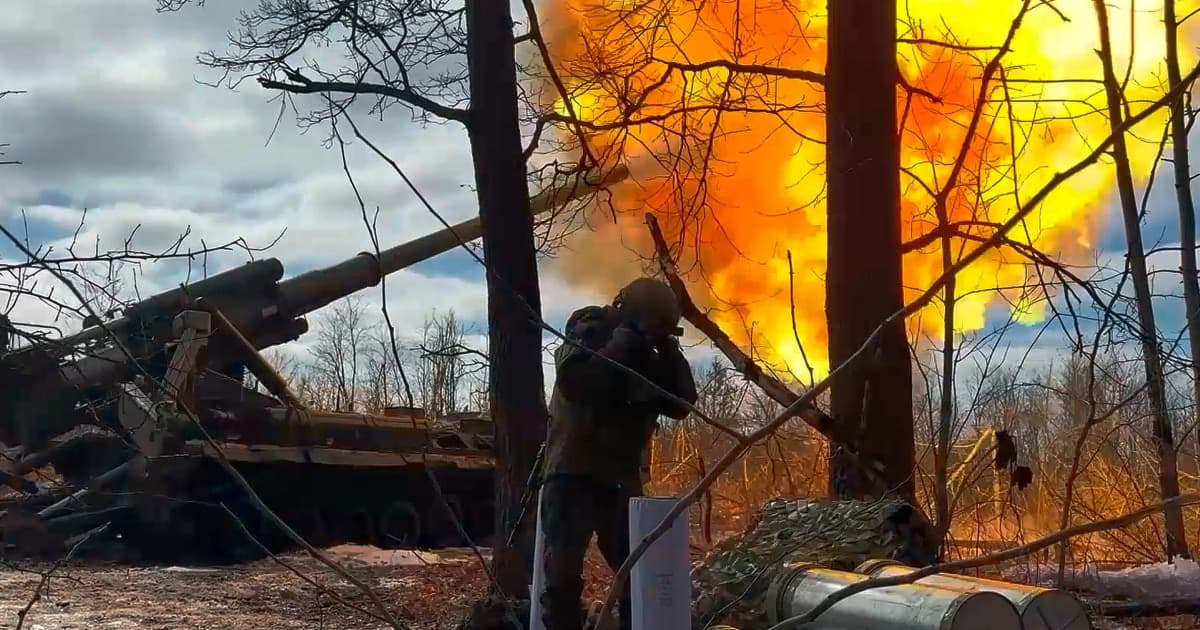
Europe's biggest conflict since World War II entered its fifth year this month against the backdrop of an escalating Middle East war that has pulled diplomatic bandwidth, military attention, and front-page real estate away from the Ukrainian front. Russia's spring offensive, grinding forward across a 1,250-kilometer (750-mile) line snaking through the country's east and south, continued regardless, pressing hard against the fortified cities of the Donbas industrial heartland that Russian President Vladimir Putin has long coveted.
The cost of that quiet week in Ukraine was steep. Ukraine's commander-in-chief, Col. Gen. Oleksandr Syrskyi, said more than 8,710 Russian troops were killed or seriously wounded in a single week as Moscow intensified what he described as "offensive actions." His Russian counterpart, Gen. Valery Gerasimov, offered his own accounting, claiming his forces were on the offensive "across the entire front line" and had captured 12 Ukrainian settlements in just the first two weeks of March. Those figures stand in tension: an assessment from the Associated Press described Moscow's territorial advances as only incremental gains across rural areas.
In Washington's strategic calculus, Ukraine has slipped down the queue. Ukrainians caught in the conflict said their hopes that President Donald Trump would prioritize settling their war, while simultaneously waging one in Iran, are dwindling. The months of peace negotiations that had kept some in Kyiv cautiously optimistic no longer appear to be Washington's primary concern.
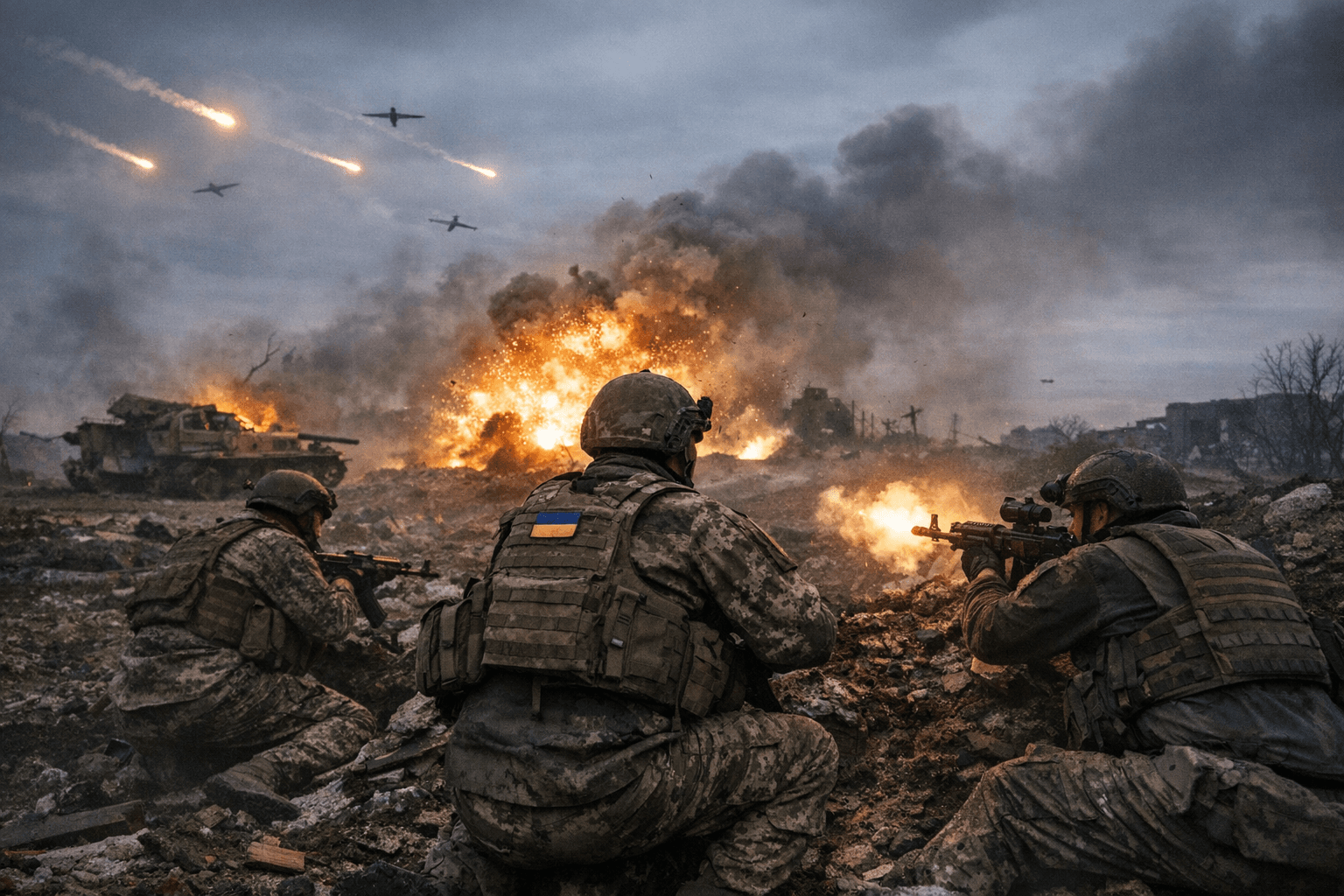
Elina Beketova, of the Center for European Policy Analysis in Washington, did not soften her assessment of what the spring offensive means on the ground. "Over the past weeks, the Russians have intensified pressure on the battlefield and in the air," she said. In the Donbas, the situation is "critical," she added, though Ukrainian troops maintain they are holding firm. Russian forces are in the early phase of an assault on what analysts call the Fortress Belt: a chain of fortified eastern cities that has successfully resisted Moscow's advances for years. The Kyiv Post and the Institute for the Study of War confirmed that Russia's latest attempt to crack the Donetsk fortress belt stalled, a result analysts described as one of several recent struggles for the Kremlin in that sector.
Robert Murrett, a retired U.S. Navy vice admiral and deputy director of Syracuse University's Institute for Security Policy and Law, noted that Russia has adapted. "Russia is trying, on the tactical level, some new approaches," he said, pointing to new combinations of mechanized infantry and armor in the offensive push.
Ukraine hit back hard the day after Russia's mass bombardment, launching almost 400 drones at Russian regions and Crimea in the largest reported overnight Ukrainian drone attack of the war. That retaliatory strike capped a week in which neither side showed any sign of pulling back. Ukraine also claimed its missile program destroyed a Russian Zircon hypersonic missile launcher based in Crimea, a strike that, if confirmed, would mark a significant degradation of one of Moscow's longer-range strike assets.
Ukraine's battlefield durability has increasingly become an export. Volodymyr Zelenskyy confirmed that Ukraine is sharing its drone expertise with five countries working to counter Iran's Shahed drone threat, the same weapons Kyiv has spent years learning to jam, intercept, and destroy at low cost. The United States and other nations in Europe and the Middle East have sought Ukrainian assistance countering Shahed technology specifically because Kyiv's anti-drone capability has evolved into some of the most operationally tested in the world. The Ukrainian military's 7th Rapid Reaction Corps has even been testing exoskeletons that allow soldiers carrying combat loads to run at 12 mph, a development that speaks to the pace of wartime innovation being forced by a conflict that receives less attention than it once did.
Sviatoslav Yurash, a member of Ukraine's parliament who is also a serving soldier, framed the Iran conflict not purely as a distraction but as a strategic opportunity. Tehran is Russia's ally, he said, and any damage to its political regime is "good news" for Ukraine. Kyiv should concentrate on helping its allies contain "the evil multiplied by countries like Iran and Russia." Yet Yurash was candid about what that silver lining cannot obscure. He said he is "hoping against hope" that negotiations will ultimately succeed, but argued that Russia has never demonstrated it can be trusted to honor a peace agreement. "I can't focus on optimism when I understand that Putin continues to talk about his desires and dreams to take all of Ukraine," he said.
Russia currently occupies approximately 20 percent of Ukraine, including the Crimean Peninsula it seized in 2014. Whether that figure shifts in the weeks ahead may depend less on what happens along the 750-mile front line than on whether the capitals that once promised to make Ukraine's survival a priority find their way back to the map.
This article was produced by Prism’s automated news system from verified source data, official records, and press releases, then run through automated quality and moderation checks before publishing. The system is built and supervised by the people who set the standards it runs under. Read our full AI policy.
Did this article answer your question?


