Ukraine intensifies strikes on Crimea to disrupt Russian supply lines
Ukraine’s strikes have choked Crimea’s fuel supply, damaged the Kerch Bridge and forced Russian-installed authorities to suspend civilian fuel sales and summer tourism.
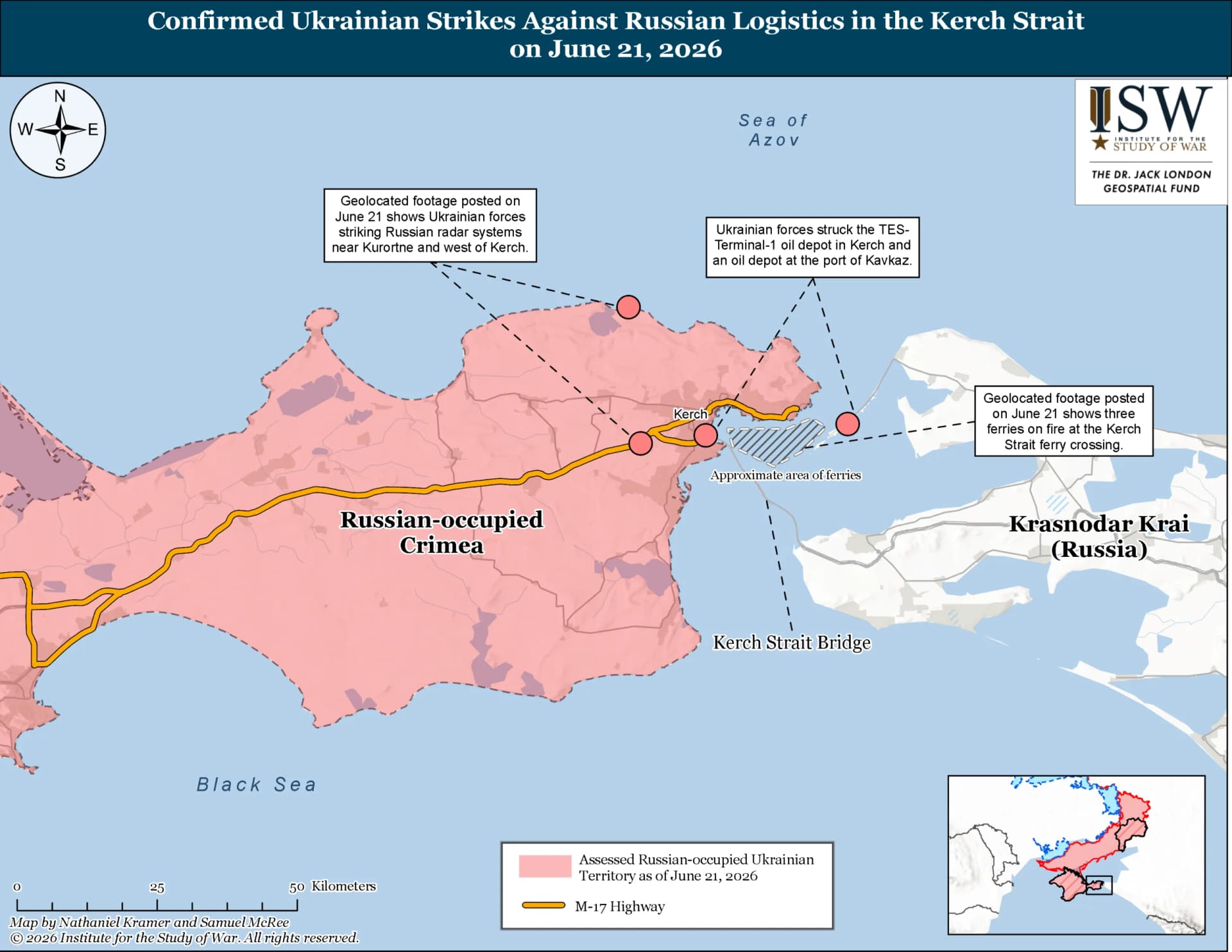
Ukraine is trying to do more than hit Crimea. By striking fuel depots, bridges, air defenses, airfields and rail links, Kyiv is aiming to make the peninsula harder and costlier for Russia to use as a military hub, a pressure campaign built around attrition rather than one dramatic blow.
That strategy showed its practical effect on June 21, when Russian-installed authorities in Crimea said four people were killed and 28 were wounded in a strike on the Russian-controlled peninsula. Other reporting put the death toll at five across Crimea and Russia’s Krasnodar region combined. By then, the fallout was already spreading beyond the battlefield: Sergey Aksyonov said civilian fuel sales were suspended at Crimean gas stations, with supplies reserved for state services, and local authorities later said children’s summer camps and tourist activities would remain suspended until September 1, 2026.

The immediate fuel squeeze followed weeks of repeated attacks on the peninsula’s logistics network. Ukraine has repeatedly targeted the Kerch Bridge, the only direct road-and-rail link between Crimea and mainland Russia, including a 2022 truck-bomb attack that killed five people and blew apart two sections of the span. Additional attacks followed in 2023 and 2025, while June 2026 strikes also damaged bridges linking Russia-held parts of southern Ukraine with Crimea, tightening pressure on the routes that move fuel, ammunition and troops.
That matters because Crimea is not just a symbol. Russia uses the peninsula as a logistics hub to move forces through the Perekop isthmus and along roads and rail lines into occupied southern Ukraine. Regional analysis says Ukraine’s strikes have pushed much of Russia’s Black Sea Fleet to Novorossiysk, and Carnegie has described the asymmetric campaign as leaving the fleet functionally useless. For Moscow, that is not merely a nuisance. It erodes the fleet’s operating freedom and forces a more defensive posture in the Black Sea.

Crimea also remains central to the politics of the war. Russia annexed the peninsula in 2014, and Volodymyr Zelenskyy has said the conflict will not be fully over until Crimea is returned to Ukrainian sovereignty and to its Crimean Tatar community. For Moscow, control of Crimea remains a strategic asset and a major obstacle in any peace settlement. Ukraine’s campaign is designed to make that asset progressively harder to hold.
This article was produced by Prism’s automated news system from verified source data, official records, and press releases, then run through automated quality and moderation checks before publishing. The system is built and supervised by the people who set the standards it runs under. Read our full AI policy.
Did this article answer your question?