Ukraine launches one of its biggest drone attacks on Russia and Crimea
Russia said it intercepted 660 Ukrainian drones overnight, as strikes spread across 12 regions, Crimea and both seas in one of Kyiv’s biggest attacks.

Russia said it intercepted 660 Ukrainian drones overnight across 12 regions, Russian-held Crimea and the Azov and Black seas, in one of the largest drone assaults since its full-scale invasion began more than four years ago. The attack showed how far the war’s aerial front has widened, with long-range strikes now reaching deep into Russian territory and the peninsula Moscow annexed in 2014.
The barrage came as Ukraine and Russia continued a sharp exchange of missile and drone fire that has made air defense a daily strain on both countries. Russia’s Defense Ministry said the drones were intercepted over a wide swath of territory, underscoring the pressure on radar systems, interceptors and crews trying to cover a sprawling battlespace that now includes the coastlines and interior regions far from the front lines.
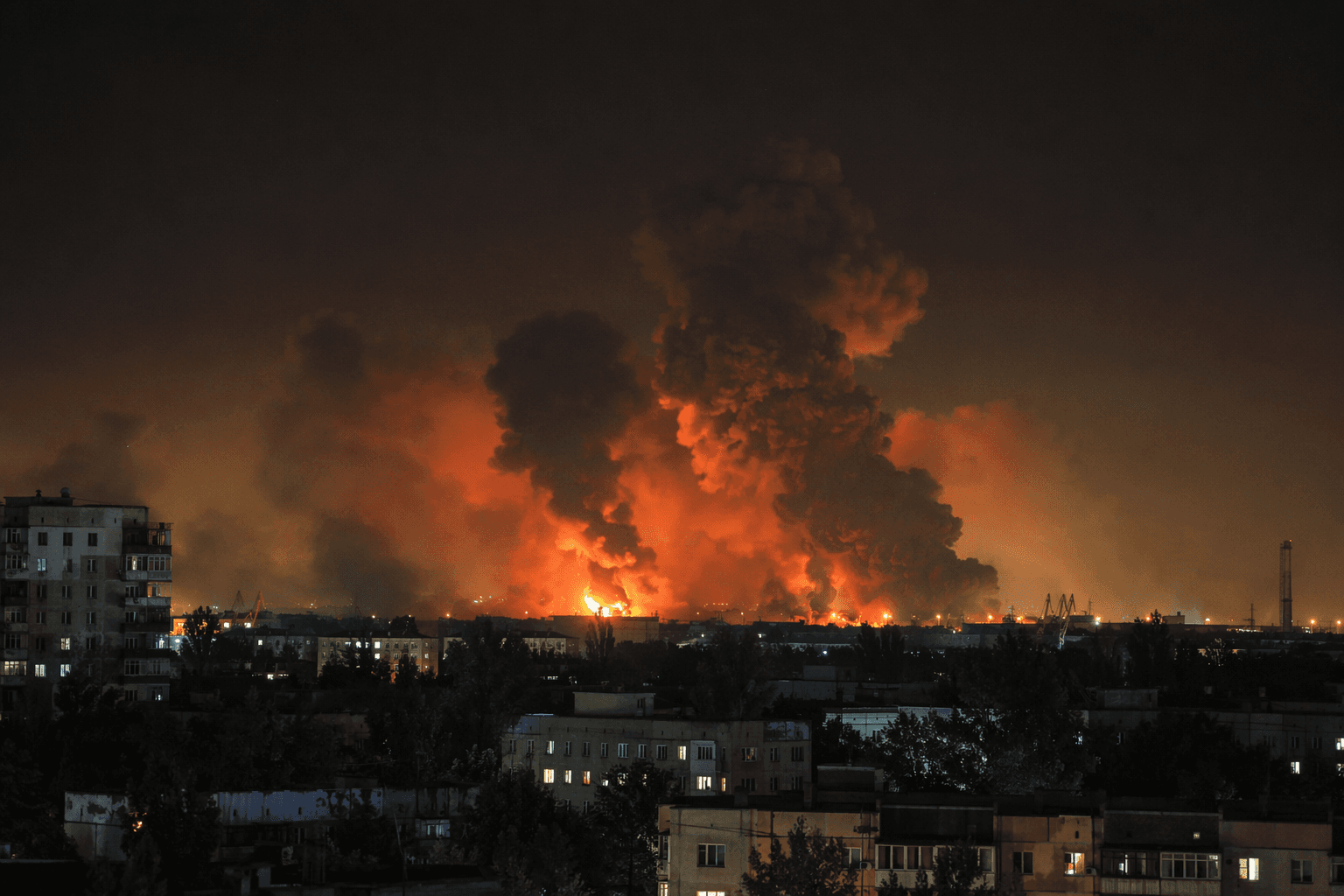
The strike followed comments from Volodymyr Zelenskyy on June 25, when he said he had approved a 40-day Security Service of Ukraine operation "to influence" Russia and press for an end to the war. The timing suggested a further escalation in Ukraine’s campaign against Russian targets, including energy and military infrastructure that Kyiv has increasingly treated as legitimate targets in a war of attrition.
The attack also built on a recent pattern of Ukrainian strikes in and around Crimea. Ukrainian drones knocked out power in Sevastopol, the largest city in Russian-held Crimea, on June 24, adding to the peninsula’s supply stress. Russian shortages and limits on purchases of some staples have already exposed the strain on transport and fuel routes that link Crimea to the Russian mainland.
Ukraine has also intensified strikes on Russian oil refineries, depots and supply routes in 2026, extending the conflict beyond the front line and into the logistics network that sustains it. That campaign has helped normalize attacks on infrastructure once considered safely behind Russian defenses, while Russia has kept up its own large missile and drone strikes on Ukrainian cities. The result is a widening air war that increasingly exposes civilians, energy systems and local economies on both sides to the costs of a conflict that is no longer confined to eastern and southern Ukraine.
This article was produced by Prism’s automated news system from verified source data, official records, and press releases, then run through automated quality and moderation checks before publishing. The system is built and supervised by the people who set the standards it runs under. Read our full AI policy.
Know something we missed? Have a correction or additional information?
Submit a Tip