Ukraine Sent Interceptor Drones and Specialists to Guard U.S. Bases in Jordan
Zelenskiy says Kyiv dispatched counter-drone teams to Jordan after a U.S. request, offering hard-won expertise against Iranian-designed attack drones.

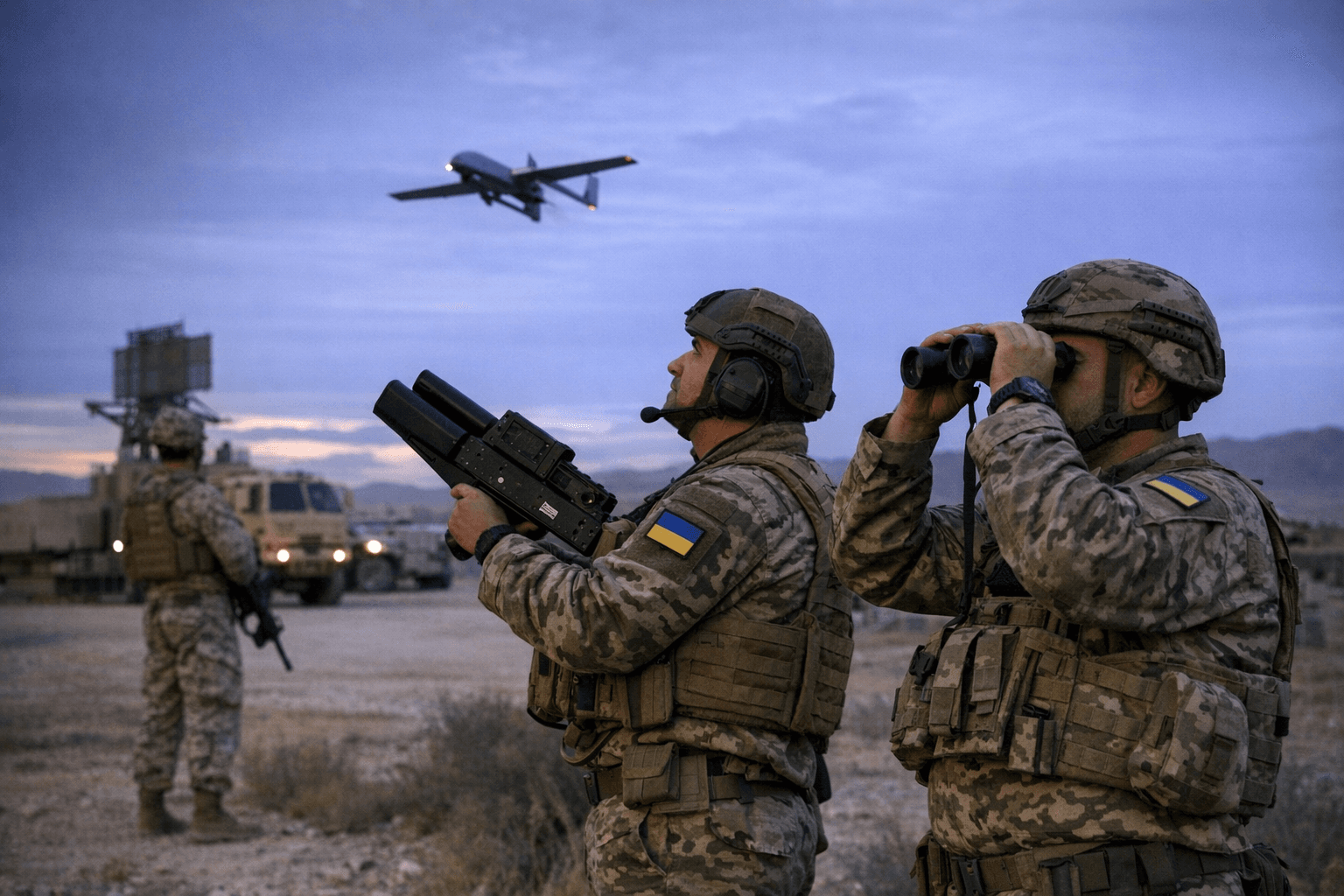
Ukrainian President Volodymyr Zelenskiy disclosed that Kyiv dispatched interceptor drones and a team of drone specialists to protect U.S. military bases in Jordan, revealing a quiet but significant extension of Ukraine's counter-drone expertise into the Middle East theater.
Speaking to The New York Times in an interview published Monday, Zelenskiy said the United States made the request on March 5 and Ukraine moved within 24 hours. "We reacted immediately," he said. "I said, yes, of course, we will send our experts." The Ukrainian team was expected to arrive in the region imminently, though no official confirmation of their arrival had been reported.
The White House, the U.S. Department of Defense, and Jordanian authorities had not publicly confirmed that any request was made or accepted. That silence matters: the deployment, as described solely by Zelenskiy, represents an unverified but strategically significant claim about cooperation between a wartime European nation and U.S. forces operating in a volatile Middle Eastern theater.
The backdrop is Iran. Since the escalation of Iranian retaliatory strikes against U.S. bases, diplomatic facilities, and civilian targets across the region, American forces have faced precisely the kind of threat Ukraine has been fighting since 2022: waves of Iranian-designed Shahed-type attack drones. Ukraine has developed relatively inexpensive interceptor drones designed to destroy incoming attack drones mid-air, and Ukrainian officials describe the systems as among the most effective of their kind. That operational record, built on four years of defending Ukrainian cities and infrastructure, is now being offered as a transferable asset.
Zelenskiy's outreach extends beyond Jordan. He said the U.S., European partners, and eleven nations bordering Iran had requested guidance on countering the explosive unmanned aerial vehicles. "There is clear interest in Ukraine's experience in protecting lives, relevant interceptors, electronic warfare systems, and training," he wrote on X.
The deployment also carries a transactional dimension Kyiv is not hiding. Ukraine faces acute shortages of U.S.-made PAC-3 interceptor missiles used in Patriot air defense systems, and Zelenskiy has proposed that Gulf allies consider exchanging some of their air defense missile stocks for Ukrainian counter-drone technology and expertise. He warned that a prolonged conflict in the Middle East risks further straining already tight global supplies and disrupting deliveries to Ukraine. Zelenskiy, citing his own estimate reported by the New York Post, suggested Middle Eastern nations consumed more than 800 PAC-3 missiles in the early days of the regional conflict, a figure that has not been independently verified.
Zelenskiy made the comments aboard a train returning from eastern Ukraine, according to the Kyiv Independent and Kyivpost, and spoke again on the subject after meeting Dutch Prime Minister Rob Jetten. The Netherlands has pledged approximately $870 million to the PURL initiative, a European-led program that purchases U.S.-made weapons for Ukraine, underscoring how closely Kyiv's military needs remain tied to Western political relationships.
The geopolitical calculus is layered. Escalation with Iran threatens to divert international attention and resources from the war in Ukraine, yet it simultaneously gives Kyiv leverage: a chance to demonstrate indispensable value to Washington at a moment when relations between Zelenskiy and the Trump administration remain strained. Deploying specialists to protect American soldiers is a pointed demonstration that Ukraine can be a security contributor, not merely a recipient of aid.
Whether the U.S. formally acknowledges the arrangement will determine how far that argument carries in Washington.
This article was produced by Prism’s automated news system from verified source data, official records, and press releases, then run through automated quality and moderation checks before publishing. The system is built and supervised by the people who set the standards it runs under. Read our full AI policy.
Did this article answer your question?