Ukraine turns to mobile interceptor drone crews to stop Shahed attacks
Four soldiers in a van, watching red and yellow dots, now help Ukraine chase down Shahed drones in a defense race built on speed and improvisation.
In a foggy field in northeast Ukraine, four soldiers sat in the back of a van and stared at red and yellow dots on a screen, waiting for the moment to launch their interceptor drones. The scene captured how Ukraine’s air defense has shifted toward small, mobile crews that can move fast, act locally and try to stop Russian Shahed attacks before they reach cities, energy sites or military infrastructure.
The crew was part of a network of about 1,000 similar teams spread across Ukraine. Their job has become more urgent as Russian forces have intensified long-range drone strikes. Ukrainian air force data cited in the reporting showed that Russia launched about 6,500 long-range drones in the previous month, and more than 1,000 made it through Ukrainian defenses. March 2026 was even harsher, with 6,462 Shahed-type UAVs and related strike and decoy drones launched, averaging 208 a day.
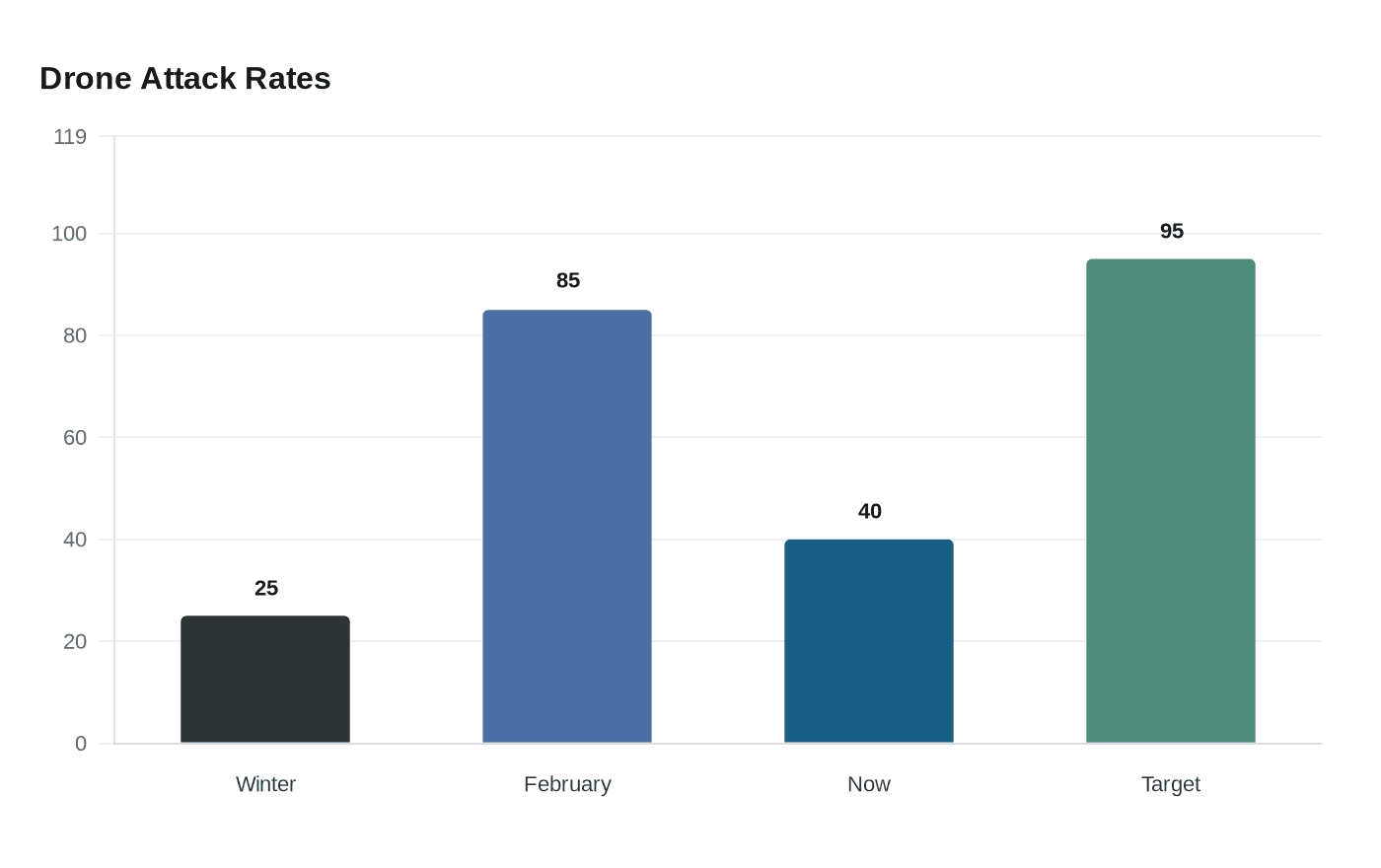
Russia has also kept changing the weapon itself. The Shahed design has been adapted with improved navigation, stronger engines and larger warheads, forcing Ukraine to keep revising its own response just to preserve its interception rate. In February, Ukraine’s interception rate was just over 85 percent. Mykhailo Fedorov has set a target of neutralizing 95 percent of Shahed and other long-range attack drones, a benchmark that underscores how central air defense has become to keeping the country functioning.
Borys, the crew commander, said the math makes the effort worthwhile. “Even if you use 50 drones to shoot down one Shahed, it’s worth it,” he said, arguing that a single Shahed can destroy something far more valuable than the cost of a swarm of interceptors. Borys, a former TV news producer before the war, is one of many civilians who have been folded into a new kind of frontline specialist.
The defenses are not limited to mobile drone crews. Ukrainian F-16 fighter jets are also being used against Shaheds, and air force spokesman Yurii Ihnat said one jet can bring down as many as 10 Shaheds in a night. Ukraine’s Unmanned Systems Forces also reported in April 2026 that an interceptor drone launched from an unmanned surface vessel destroyed a Russian Shahed, a sign that drone-on-drone warfare is spreading beyond the air and into the sea-air domain.
Interceptor drones now bring down about 40 percent of Russia’s Shahed-style weapons and other long-range attack UAVs, up from around 25 percent in winter. That progress is significant, but the scale of the assault remains immense. The contest has become a race between cheap attack drones and an equally distributed, lower-cost defense, and Ukraine’s ability to sustain that race may help determine how long its cities, power grid and front-line logistics can endure.
This article was produced by Prism’s automated news system from verified source data, official records, and press releases, then run through automated quality and moderation checks before publishing. The system is built and supervised by the people who set the standards it runs under. Read our full AI policy.
Did this article answer your question?


