Ukraine Withdraws From Siversk, Keeps Fire Control Over Town
Ukraine's General Staff said its forces withdrew from Siversk on December 23 to preserve soldiers and unit combat readiness, after weeks of intense fighting and sustained Russian pressure. The move is framed as a tactical repositioning that keeps Russian gains contested, with implications for the broader Donetsk front and the safety of the few civilians who remain.

Ukraine's General Staff says its defenders have withdrawn from positions inside the town of Siversk in Donetsk Oblast, telling the public the move was taken "in order to preserve the lives of our soldiers and the combat readiness of units." The announcement on December 23 followed weeks of sustained Russian pressure and what Kyiv described as heavy fighting along a sector that has taken on outsized strategic significance in the campaign for eastern Ukraine.
Kyiv said the pullback came after "heavy enemy pressure" and local advances by Russian forces despite those units "suffering significant losses." Ukrainian commanders attributed the shift in ground to a "significant numerical advantage" held by the attackers and "constant pressure from small assault groups in difficult weather conditions." The General Staff added that Ukrainian defensive operations had "exhausted the enemy" and that "every meter of the town was costly for them."
Although Ukrainian troops relinquished positions inside the settlement, military leaders emphasized that Siversk remains under Ukrainian fire control. Kyiv said it continues to target Russian units reported to be operating within the town, to disrupt their supply lines, and to block movements that would enable further advances. Officials framed the withdrawal as a preservation of combat capability rather than a collapse, repeating that the measure was taken "to preserve the lives of soldiers and maintain the combat capability of the units."
Siversk sits on approaches that lead toward Sloviansk and Kramatorsk, cities that anchor Ukraine's defensive hub in the Donbas. The town was a prewar logistics node with a population of roughly 10,000. Local officials say Siversk has been largely depopulated since the full scale invasion, with only several hundred residents estimated to remain. That civilian depletion complicates immediate humanitarian needs but underscores the wider human cost of protracted frontline fighting.
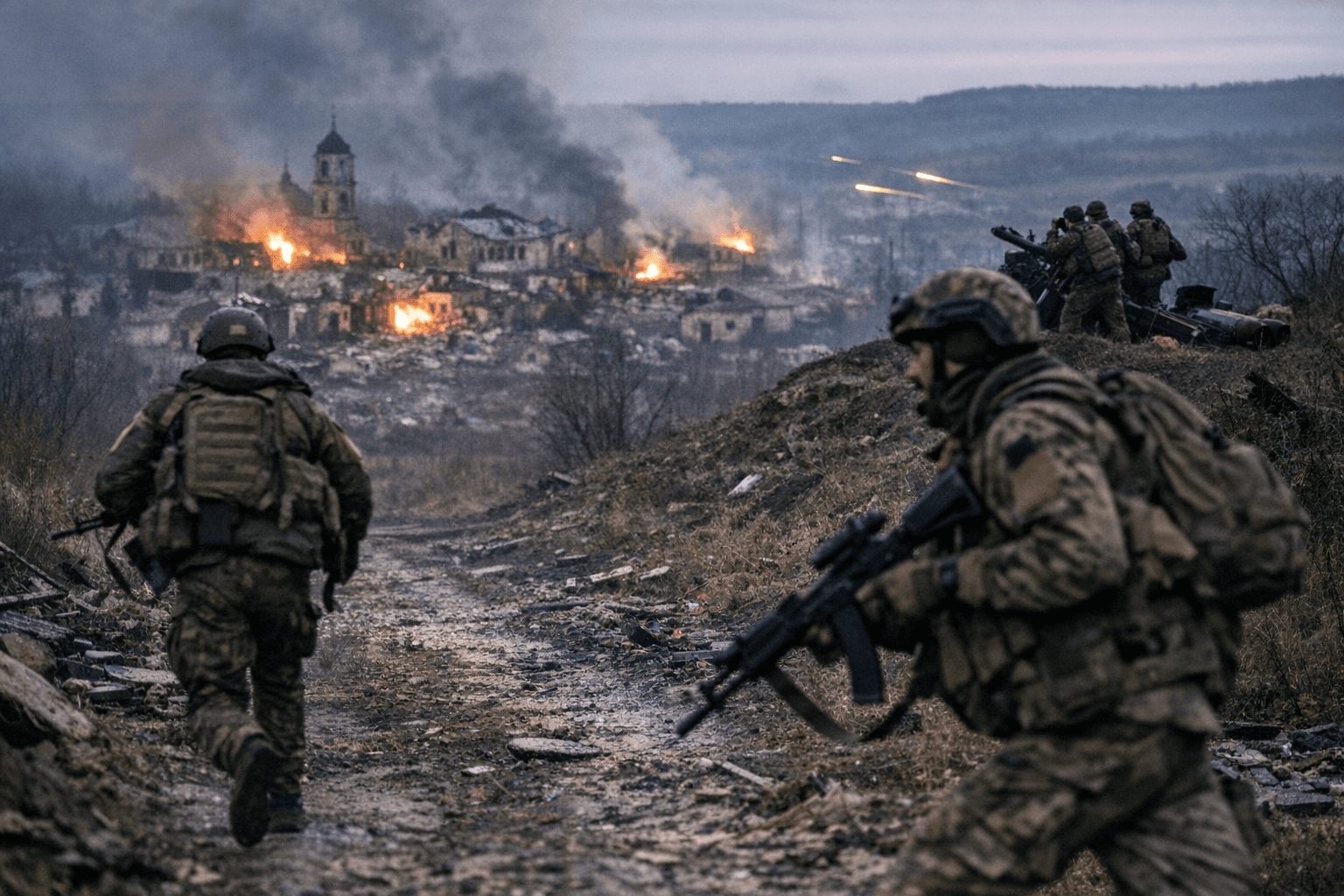
Ukrainian forces described attempts by Russian units to cross the Siverskyi Donets River near the town, and reported fierce combat on adjacent axes including around Pokrovsk, where Kyiv said it recently repelled a major mechanized attack. The local balance of forces, with Russian superiority in manpower and equipment at this point of contact, appears to have driven the limited territorial concessions despite high Russian casualties.
Internationally the withdrawal is likely to reverberate through capitals weighing continued military and logistical support for Kyiv. For Western suppliers, the episode will be parsed as evidence of both Ukrainian resilience and the acute pressure Kyiv faces where Moscow concentrates force. Diplomats are also likely to scrutinize the humanitarian dimensions as winter deepens in a largely depopulated town and displaced civilians remain vulnerable.
The General Staff statement reconciles prior contradictory claims about control of Siversk by confirming the Ukrainian pullback from urban positions while insisting that Russian claims of full capture remain contested. As the conflict approaches its fourth year, commanders on both sides show readiness to incur steep costs for small but strategically placed towns, a dynamic that will shape military planning and international responses in the months ahead.
This article was produced by Prism’s automated news system from verified source data, official records, and press releases, then run through automated quality and moderation checks before publishing. The system is built and supervised by the people who set the standards it runs under. Read our full AI policy.
Did this article answer your question?