Ukraine’s F-16s ran critically short of U.S. missiles for weeks
Three sources say Ukraine lacked U.S.-made air-to-air missiles for more than three weeks, curbing intercepts and exposing supply and cost vulnerabilities for Western defense aid.
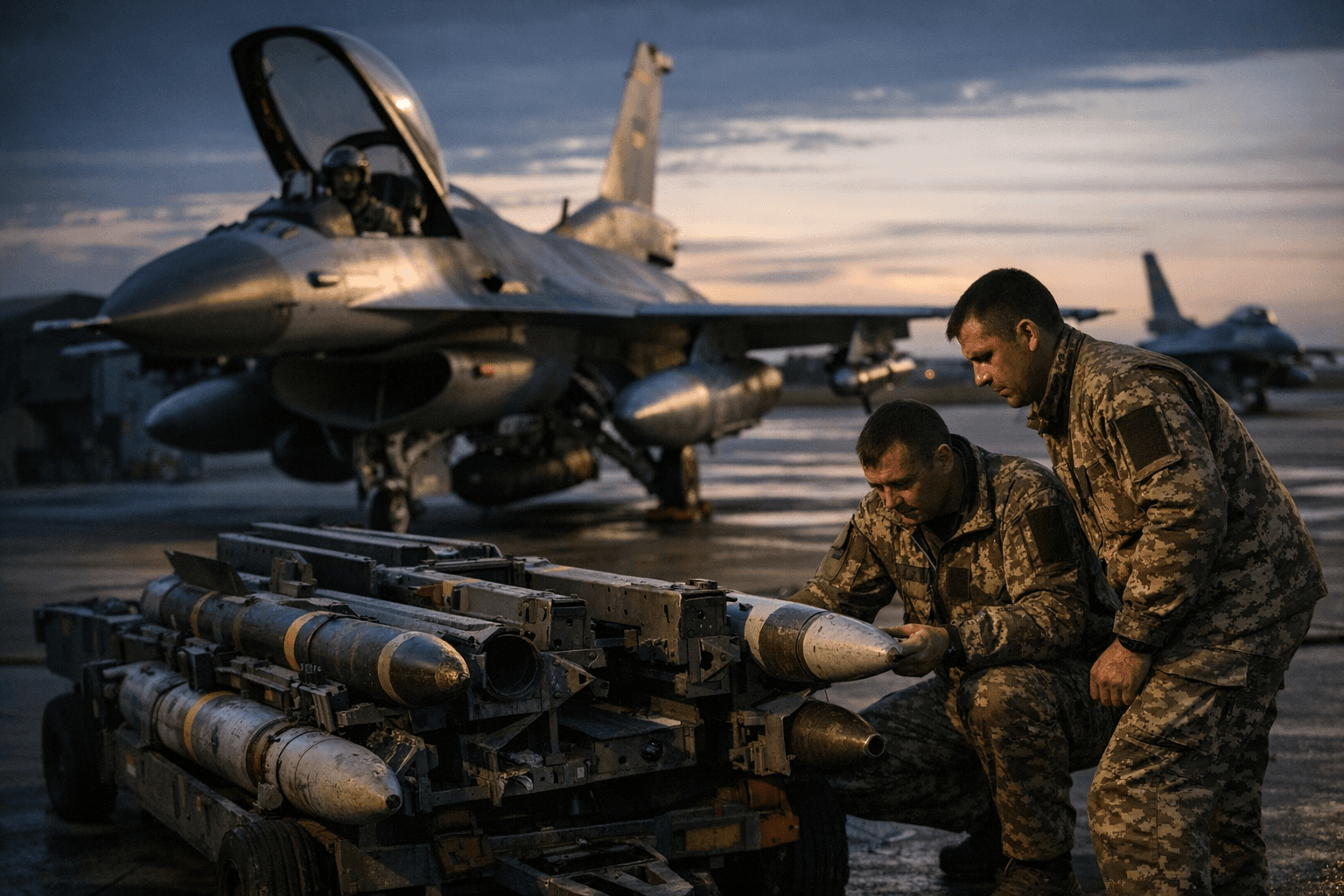
Three sources with direct knowledge said Ukraine's F-16 fighter jets "didn't have enough missiles to shoot down Russian drones and missiles for more than three weeks after supplies from Kyiv's partners dried up just as Moscow was preparing a massive winter air campaign." The acute shortfall, reported as occurring from late November to mid-December, constrained frontline air defenses at a politically sensitive moment and compounded pressure on Western suppliers.
The squeeze was not limited to jet armaments. The three sources said Ukraine "only had a handful of U.S.-made AIM-9 'Sidewinder' air-to-air missiles for its entire squadron of F-16s when supplies stopped." More capable AIM-120 missiles, produced by Raytheon, are used by F-16s and by Norwegian-made NASAMS medium-range surface-to-air systems. One source said "Those missiles are also used in Ukraine's Norwegian-made NASAMS surface-to-air systems, meaning that during the supply squeeze their operations were curtailed," and that there had been "a shortage of U.S.-made RIM-7 missiles which Ukraine has used in modified Soviet-era air defence systems since the 2022 invasion."
Two of the three sources emphasized the economic strain driving tactical choices: "Each AIM-120 missile costs well over one million dollars," they said, "meaning they are not typically used at scale to counter cheaply produced Russian attack drones." The mismatch between expensive Western interceptors and low-cost swarm threats highlights a cost-per-engagement problem that has real budgetary and operational consequences as Kyiv seeks to preserve stocks for higher-value targets.
The United States and NATO partners have supplied aircraft and training since authorizations in 2023; allied transfers included jets from Denmark and the Netherlands, with pledges from Belgium and Norway. A U.S. Air Force spokesperson said the department "has supported the sustainment of European donated F-16s to Ukraine by providing disused and completely non-operational F-16s to Ukraine for parts." The spokesperson added, "These F-16s were retired from active US use and are not flyable," and "Importantly, they lack critical components, such as an engine or radar, and could not be reconstituted for operational use." Open-source tracking and imagery have shown shrink-wrapped F-16 airframes moved from Arizona toward a logistics hub in Poland, indicating complex transatlantic logistics for both parts and whole aircraft.
Manufacturers and export controls are central to the supply bottleneck. Raytheon's AIM-120 is a key node in that supply chain; the producer referred questions to the U.S. government. Kyiv has rebuked periodic shortfalls for more than four years of war while trying to maintain diplomatic support from a U.S. administration it has courted cautiously.
The operational impact is clear: with limited stocks of AIM-9 and AIM-120, pilots and air-defence commanders face tradeoffs between conserving expensive interceptors for high-value targets and accepting greater risk from lower-cost drones and cruise missiles. The shortage also underlines strategic competition for munitions as conflicts in the Middle East add demand for the same Western defensive systems.
Critical questions remain unanswered: exact missile counts, which partners paused shipments and why, and whether production increases or alternative intercept technologies can close the cost gap. Kyiv has acknowledged receiving additional F-16 shipments in March but has not publicly detailed current missile inventories. With no end to the conflict in sight, the episode spotlights how fiscal costs, industrial capacity and export policies can shape battlefield outcomes as much as the hardware itself.
This article was produced by Prism’s automated news system from verified source data, official records, and press releases, then run through automated quality and moderation checks before publishing. The system is built and supervised by the people who set the standards it runs under. Read our full AI policy.
Did this article answer your question?


