Ukraine's small FPV drones: 3,000 strikes in January remade battlefront
Cheap FPV drones, often costing a few hundred dollars, have forced tactical shifts, destroyed high-value equipment and now dominate large swaths of Ukraine's front lines.
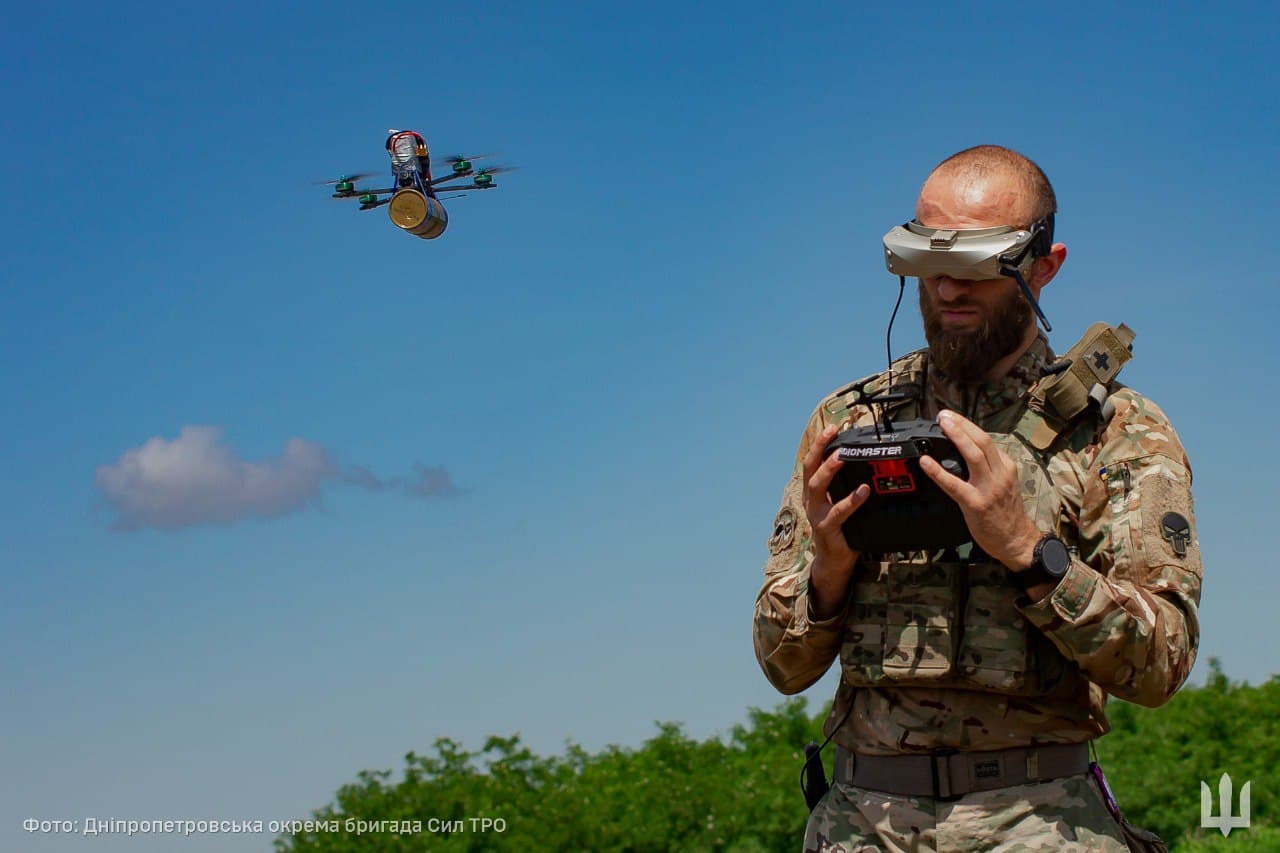
Four years into Russia’s full-scale invasion of Ukraine, small, low-cost first-person-view drones and a growing roster of longer-range unmanned systems have become central to frontline fighting, forcing immediate tactical changes and raising battlefield lethality. The shift is measurable: “this past January, there were 3,000 verified FPV drone strikes in Ukraine, although the actual figures might be higher,” The Economist reported via Ploughshares.
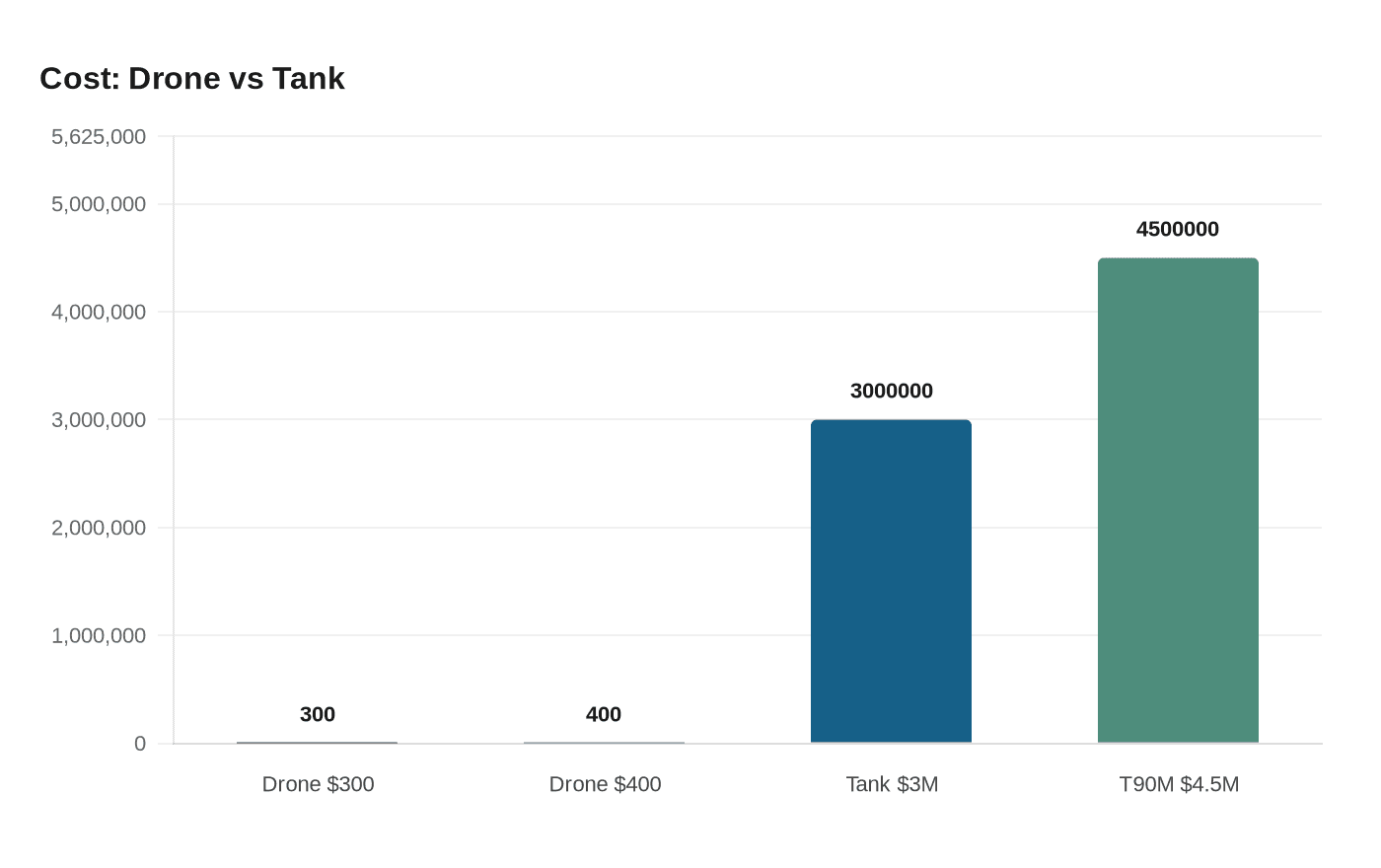
The cost asymmetry is stark and reshaping decisions at squad and brigade level. Prices reported across analysts range from roughly $300 to under $500 per unit. “A simple FPV drone can cost as little as $400 dollars,” The Economist said. The Dignitas Fund added that “even a small drone costing only $300 can destroy a tank or other military vehicle that costs 3 million USD or more.” Military analysts and battlefield videos underline the disparity: Business Insider documented “a video emerged of first-person-view (FPV) drones slamming into what appeared to be a Russian T-90M, an advanced Russian tank worth as much as $4.5 million by some estimates, significantly more than the price of the drones, likely only a few hundred dollars apiece.”
Technically, the platforms are simple adaptations of hobby racing craft into improvised loitering munitions. Business Insider described them as “basically amateur loitering munitions, and they can pack a punch,” noting that many “have five- to nine-inch frames and carry a payload weighing between 0.5 and three kilograms.” Operators fit makeshift warheads ranging from shaped charges to rocket-propelled grenades, turning commercially available parts into battlefield effects.
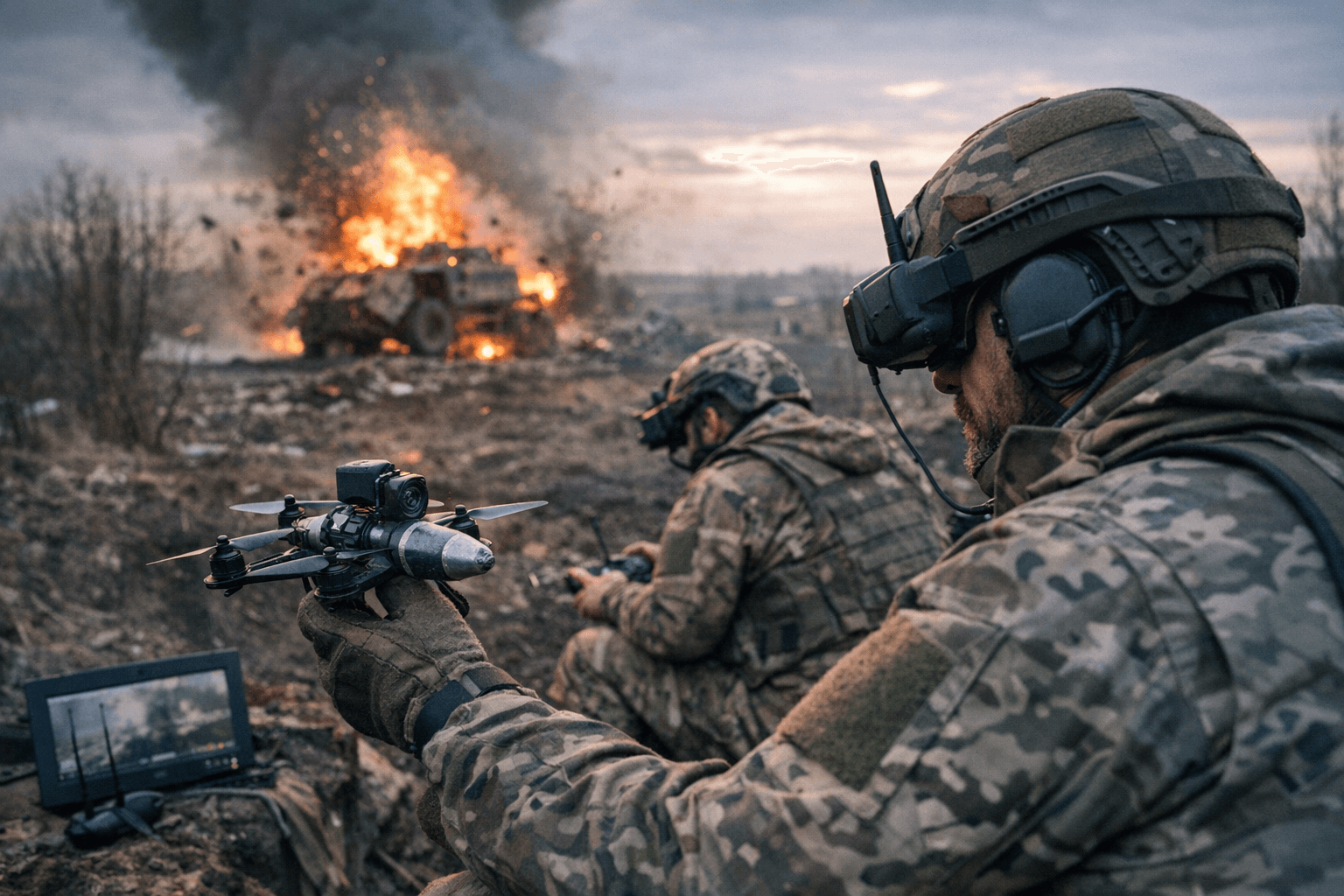
Operators and organizers have developed a resilient production and training ecosystem inside Ukraine. Ploughshares noted Ukraine “began producing its own” drones and modifying commercial models to meet combat needs. The Dignitas Fund says it “recognized the initiative of FPV drone technology at the beginning of 2023 and relentlessly popularized these types of drones,” running a training program called “Victory Drones” and holding “5 big showcase events in Ukraine called ‘Demo Days’” to boost small-scale manufacturing.
The operational model favors dispersed, low-profile teams. The Atlantic Council observed that “by far the most prevalent type of drone on the Ukrainian battlefield is the First Person View (FPV) drone, a type that our company sells in Ukraine and elsewhere,” and that FPV pilots “typically serve in specialized teams located around two to five kilometers away from the front line.” The council added that since control is remote, “only the antenna transmitting between the drone and operator needs to be exposed. The remaining equipment and the team can conduct their operations from the safety of a bunker or basement.”
Adversaries have adapted quickly. Defenceukraine called FPVs “a great strategic 'levelling' agent in this conflict” but warned of new Russian innovations, notably “Fibre-Optic Drones: This has been Russia's most significant innovation in the FPV domain.” Those systems, the analysis claims, unspool a fiber-optic tether to evade radio-frequency jamming and direction-finding.
The result is a battlefield where small-unit attrition, constant aerial threat and improvised manufacturing matter as much as traditional armored formations. Ploughshares urged that as these systems proliferate, Ukraine “take the lead in establishing and enforcing clear policies and oversight on deploying increasingly autonomous drone systems in line with international humanitarian law and human rights law.” Other states watching Kyiv’s experiment may follow, making the lessons learned in Ukraine consequential far beyond its borders.
This article was produced by Prism’s automated news system from verified source data, official records, and press releases, then run through automated quality and moderation checks before publishing. The system is built and supervised by the people who set the standards it runs under. Read our full AI policy.
Did this article answer your question?


