Ukrainian Drones Strike Russian Oil Refinery, Triggering Fires and Fuel Leak
Fires erupted at Lukoil's NORSI refinery near Nizhny Novgorod and fuel leaked at Baltic port Primorsk after Ukrainian drones hit Russian energy infrastructure overnight.
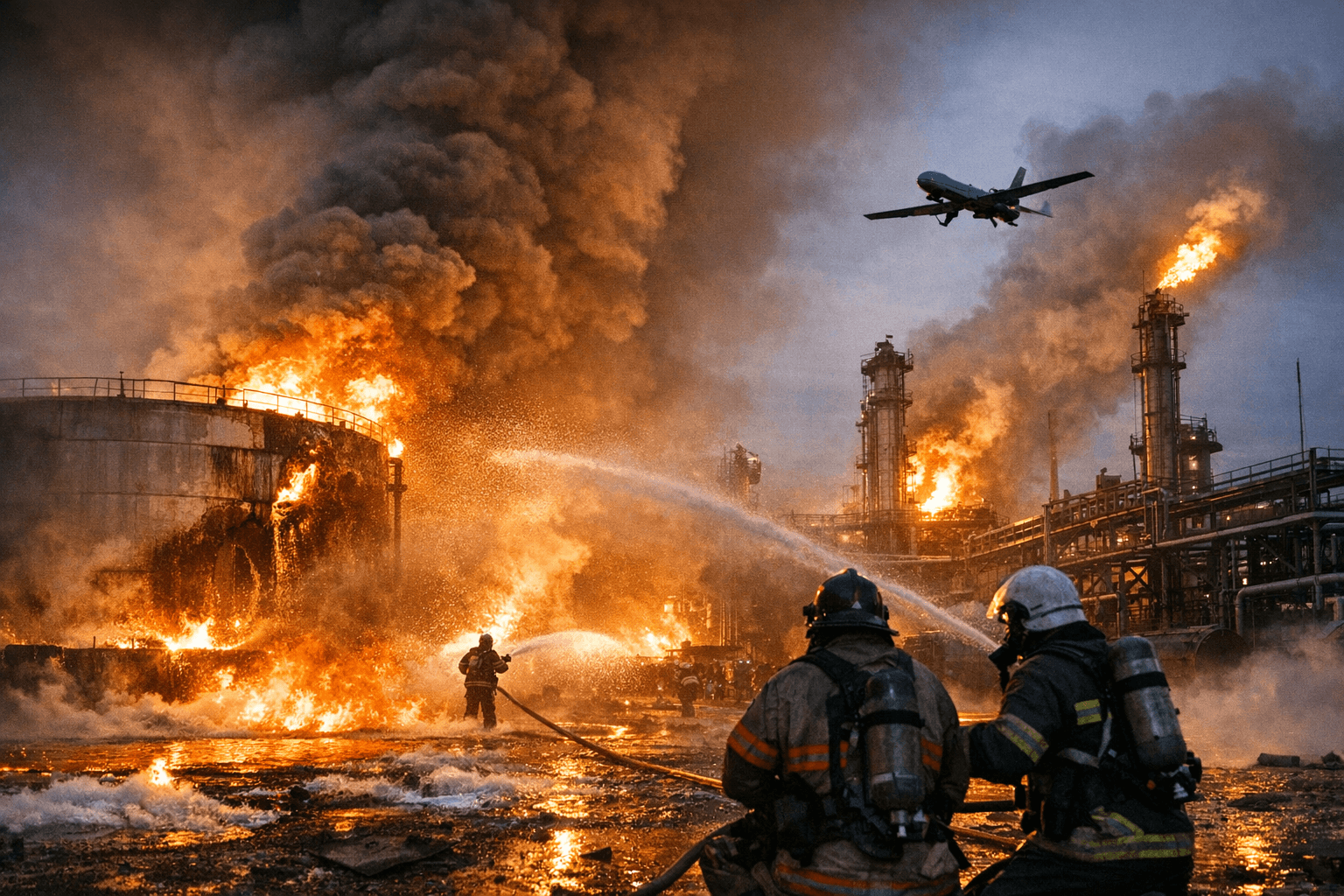
Fires broke out at Lukoil's NORSI oil refinery near Nizhny Novgorod and a fuel leak was reported at the Baltic port of Primorsk after Ukrainian drones struck Russian energy infrastructure in an overnight attack, regional officials and Ukrainian military commanders confirmed Saturday.
Gleb Nikitin, governor of the Nizhny Novgorod region, posted on Telegram that fires ignited at NORSI refinery facilities after debris from downed drones struck plant infrastructure. Beyond the refinery itself, the damage extended to a local power station and several residential buildings in communities adjacent to the plant. Nikitin said preliminary reports indicated no fatalities.
At Primorsk on the Baltic Sea, a storage tank struck by falling debris triggered a fuel leak at the port's infrastructure. Ukrainian drone-forces commanders later confirmed their unmanned systems had targeted both the fuel sites and port infrastructure at Primorsk, framing the strikes as part of a deliberate campaign to undercut Russia's oil-export capabilities and sever the revenue streams Moscow relies on to sustain its war effort.
NORSI is among Russia's larger refining operations, and any operational disruption there carries downstream consequences for regional supply chains and export shipments. Bloomberg analysts warned that the latest strikes are amplifying volatility in global oil markets already strained by supply concerns tied to conflict in the Middle East. Even localized and physically limited damage can force costly rerouting, temporary shutdowns, and logistical recalculations across the industry.
The strikes fit a pattern that has intensified in recent weeks, with Ukrainian forces repeatedly hitting Russian energy nodes including ports and refineries. For international shipping firms and energy traders, each new incident compounds the complexity of insuring and routing cargoes through a conflict zone where infrastructure is an explicit military target. For governments tracking global supply, the repeated targeting of export hubs like Primorsk introduces a sustained layer of uncertainty that no single incident alone can fully capture.
Russia has consistently accused Ukraine of cross-border attacks on civilian and economic infrastructure; Ukraine frames the energy campaign as legitimate military pressure on an adversary's war-funding apparatus. As long as both positions hold, the refineries, terminals, and pipelines threading through Russia's energy export network will remain in the crosshairs.
This article was produced by Prism’s automated news system from verified source data, official records, and press releases, then run through automated quality and moderation checks before publishing. The system is built and supervised by the people who set the standards it runs under. Read our full AI policy.
Did this article answer your question?


