UN Chief Proposes Deep Cuts, Eliminates Eighteen Percent of Posts
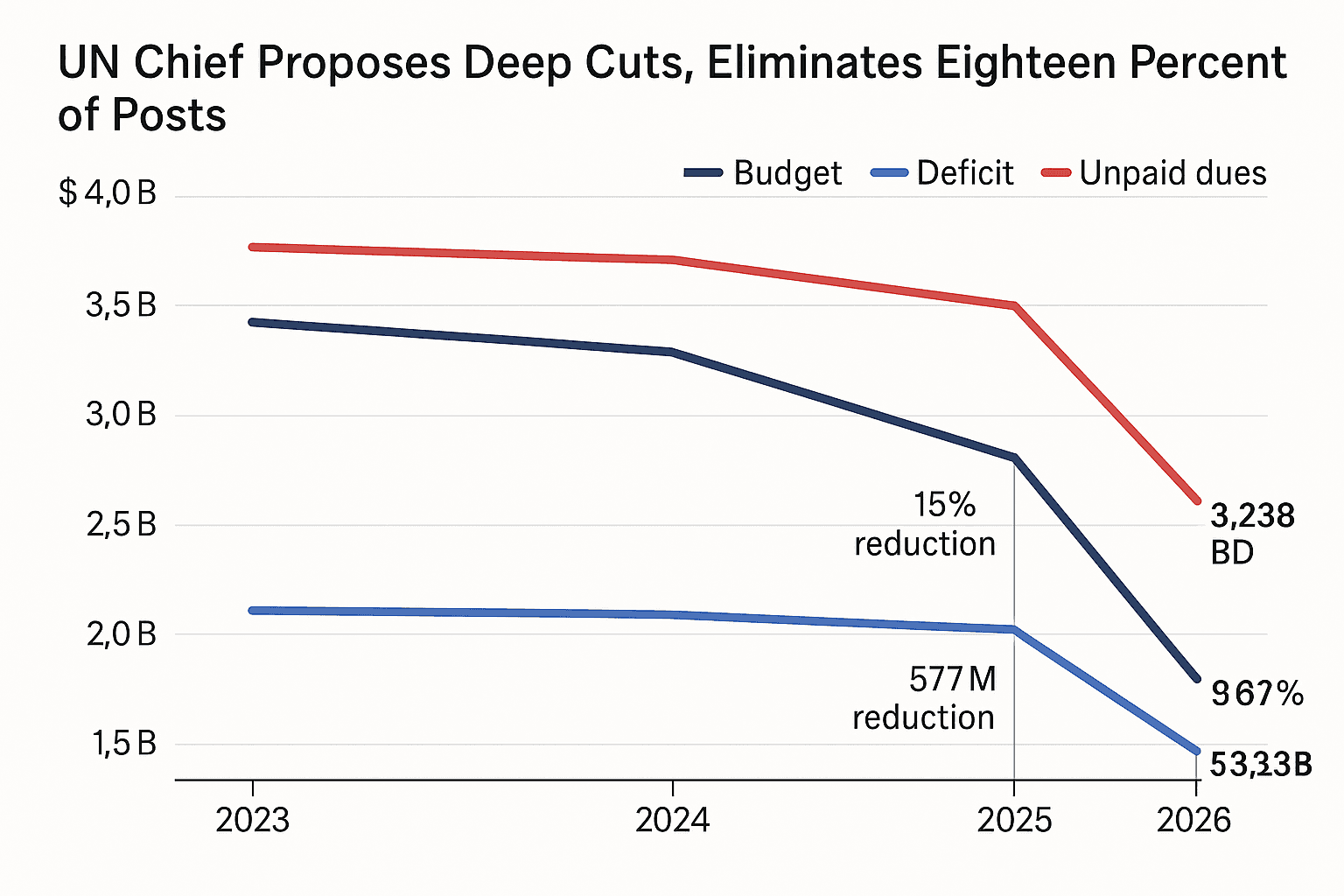
United Nations Secretary General António Guterres on December 1 presented a 2026 core budget that would reduce spending by about $577 million, roughly 15 percent, and eliminate more than 18 percent of current posts. The proposal responds to chronic liquidity shortages and almost $1.6 billion in unpaid member contributions, and it raises urgent questions about the U N capacity to sustain core political, humanitarian and disarmament functions.
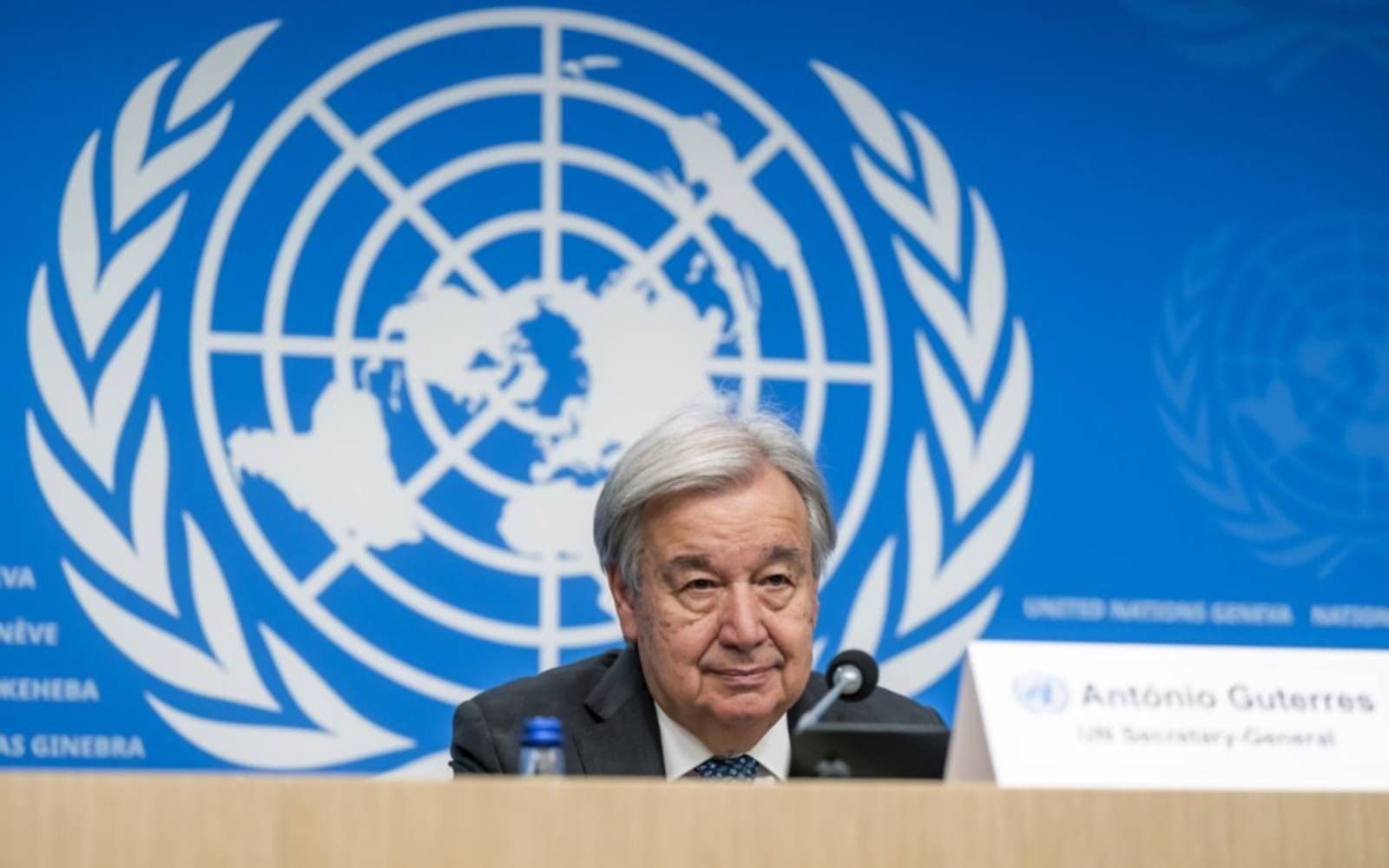
On December 1, United Nations Secretary General António Guterres unveiled a proposed 2026 core budget that would shrink spending to $3.238 billion, a reduction of roughly $577 million from the prior year and about 15 percent in real terms. The plan would eliminate more than 18 percent of current posts across the Secretariat, a cut Guterres framed as an emergency response to persistent liquidity shortages and large arrears in member contributions.
The United Nations has been carrying nearly $1.6 billion in unpaid dues, a shortfall that has constrained the organization’s ability to meet payroll and contractual obligations and limited its capacity to respond to crises. The proposed budget seeks to preserve essential political, humanitarian, disarmament, economic and communications functions, while imposing what the secretary general described as painful staff and program reductions. He also launched a reform task force to identify efficiency gains and structural changes intended to stabilize U N finances over the medium term.
The measures reflect a broader tension within the international system. The U N's core budget covers administrative and normative work that underpins diplomacy, treaty implementation and many of the technical services that member states and vulnerable populations rely on. Cuts at that level can ripple outward, weakening the Secretariat’s ability to convene mediations, provide policy expertise, and support multilateral coordination in humanitarian emergencies.
Diplomatically the proposal will test political will among member states. Many capitals have in recent years reduced or delayed assessed contributions, arguing budgetary pressure at home or contesting aspects of U N management. Under the Charter, member states are obliged to pay their assessments, but political dynamics and domestic pressures have increasingly translated into arrears and withheld payments. If significant contributors do not move to clear arrears or to provide supplementary funding, the organization faces continued financial fragility that the secretary general warned could necessitate further cuts.
The human impact could be concentrated in smaller offices and technical units that depend on core funding. Programs in economic development advice, disarmament verification, and public information operations often draw on core resources to leverage voluntary funds. That leverage may be reduced if the Secretariat must curtail non mandatory activities and reduce staff numbers, potentially slowing projects that are less visible but essential for long term stability in fragile regions.
Reforming U N financing is politically fraught. Options under discussion include stricter discipline on assessed payments, incentives for timely payment, and internal reorganization to reduce duplication and overhead. The reform task force will need to reconcile competing demands from member states that want both a leaner organization and robust global public goods.
As the General Assembly budget committee begins review, the choices made will reveal how much governments are prepared to support collective institutions at a time of rising geopolitical competition and domestic fiscal strain. The outcome will shape the Secretariat’s ability to act in 2026 and beyond, and it will signal whether shared responsibility for international governance can be translated into reliable financing.
This article was produced by Prism’s automated news system from verified source data, official records, and press releases, then run through automated quality and moderation checks before publishing. The system is built and supervised by the people who set the standards it runs under. Read our full AI policy.
Did this article answer your question?


