UN General Assembly Declares African Slave Trade Gravest Crime, Calls for Reparations
Applause broke out at the UN as 123 nations declared the African slave trade "the gravest crime against humanity" and called for reparations; the US, Israel, and Argentina voted no.
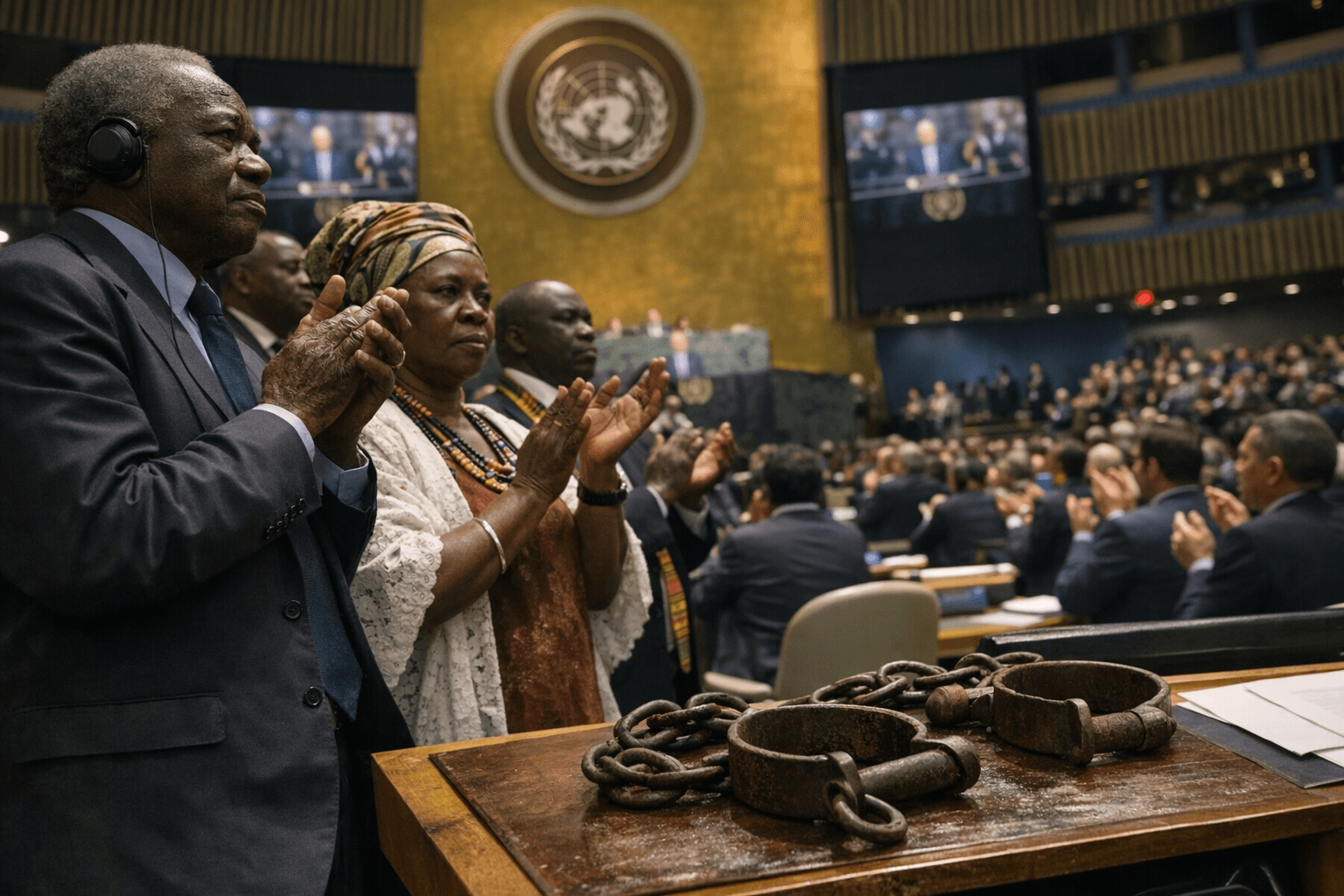
Applause erupted in the UN General Assembly hall Wednesday as member states adopted a resolution declaring the transatlantic slave trade the gravest crime against humanity. The vote was 123 in favor, with three opposed and 52 abstentions; the resolution is not legally binding but carries significant political weight.
The resolution was spearheaded by Ghana's President John Dramani Mahama, who has been at the forefront of global calls for reparatory justice for African nations and descendants of enslaved Africans. Before the vote, Mahama called the moment "a route to healing and reparative justice." "The adoption of this resolution serves as a safeguard against forgetting," he said. "Let it be recorded that when history beckoned, we did what was right for the memory of the millions who suffered the indignity of slavery." Mahama noted that the vote was taking place on the International Day of Remembrance of the Victims of Slavery and the Transatlantic Slave Trade, honoring the memory of about 13 million African men, women and children enslaved over several centuries.
The resolution goes well beyond symbolic language. It urges "the prompt and unhindered restitution" of cultural items, including artworks, monuments, museum pieces, documents and national archives, to their countries of origin without charge. Member nations are called upon to engage in talks on reparatory justice, defined in the text to include a full and formal apology, measures of restitution, compensation, rehabilitation, satisfaction, guarantees of non-repetition and changes to laws, programs and services to address racism and systemic discrimination. The text also encourages voluntary contributions to promote education on the transatlantic slave trade and asks the African Union, the Caribbean Community and the Organization of American States to collaborate with UN bodies and other nations on reparatory justice and reconciliation.
The resolution "unequivocally condemns the trafficking of enslaved Africans and racialized chattel enslavement of Africans, slavery and the transatlantic slave trade as the most inhumane and enduring injustice against humanity," affirming that addressing those historical wrongs must be done in a manner that promotes justice, human rights, dignity and healing.
Most European countries, such as Britain and France, dissociated themselves from the resolution, while the United States, Israel and Argentina all voted against it. British acting UN Ambassador James Kariuki, speaking on behalf of mainly Western nations including some that enslaved Africans, said the history of slavery and "its devastating consequences and long-lasting impacts" must never be forgotten. He committed Western nations to tackling the root causes that persist today, citing racial discrimination, racism, xenophobia and intolerance, and said "the scourge of modern slavery" must also be addressed, including trafficking, forced labor, sexual exploitation and forced criminality.
The EU's position carried its own pointed critique. The representative of Cyprus, speaking for the bloc, said the proponent of the resolution failed to "adequately reflect" concerns raised during negotiations. Cyprus' deputy UN Ambassador Gabriella Michaelidou, speaking for the EU, raised specific objections to "the use of superlatives" that imply "a hierarchy among atrocity crimes," a formulation that reflects longstanding European resistance to language that singles out one historical atrocity above all others.
Ghana led the negotiations for the nonbinding resolution over at least a year's time. Mahama serves as the African Union Champion for Reparations. The campaign for reparations has gained significant momentum in recent years: "reparatory justice" was the African Union's official theme for 2025, and Commonwealth leaders had jointly called for dialogue on the matter.
UN Secretary-General António Guterres called for confronting slavery's lasting legacies of inequality and racism, saying: "Now we must remove the persistent barriers that prevent so many people of African descent from exercising their rights and realising their potential."
The resolution carries no enforcement mechanism and sets no financial figures or implementation timeline. Whether member states convert its calls for formal apology, compensation and restitution talks into concrete action will be the measure of its lasting impact.
This article was produced by Prism’s automated news system from verified source data, official records, and press releases, then run through automated quality and moderation checks before publishing. The system is built and supervised by the people who set the standards it runs under. Read our full AI policy.
Did this article answer your question?