UN Peacekeepers Near Kafer Shouba Come Under Close Small‑Arms, Machine‑Gun Fire
The U.N. Interim Force in Lebanon (UNIFIL) reported that small‑arms and machine‑gun fire struck within about 50 metres of two patrols near Kafer Shouba on Jan. 2, 2026, prompting a formal stop‑fire request. The incidents, which UNIFIL assessed as originating from an Israel Defense Forces position south of the Blue Line, underscore growing risks to peacekeepers and raise fresh concerns about the stability of the Lebanon‑Israel frontier.
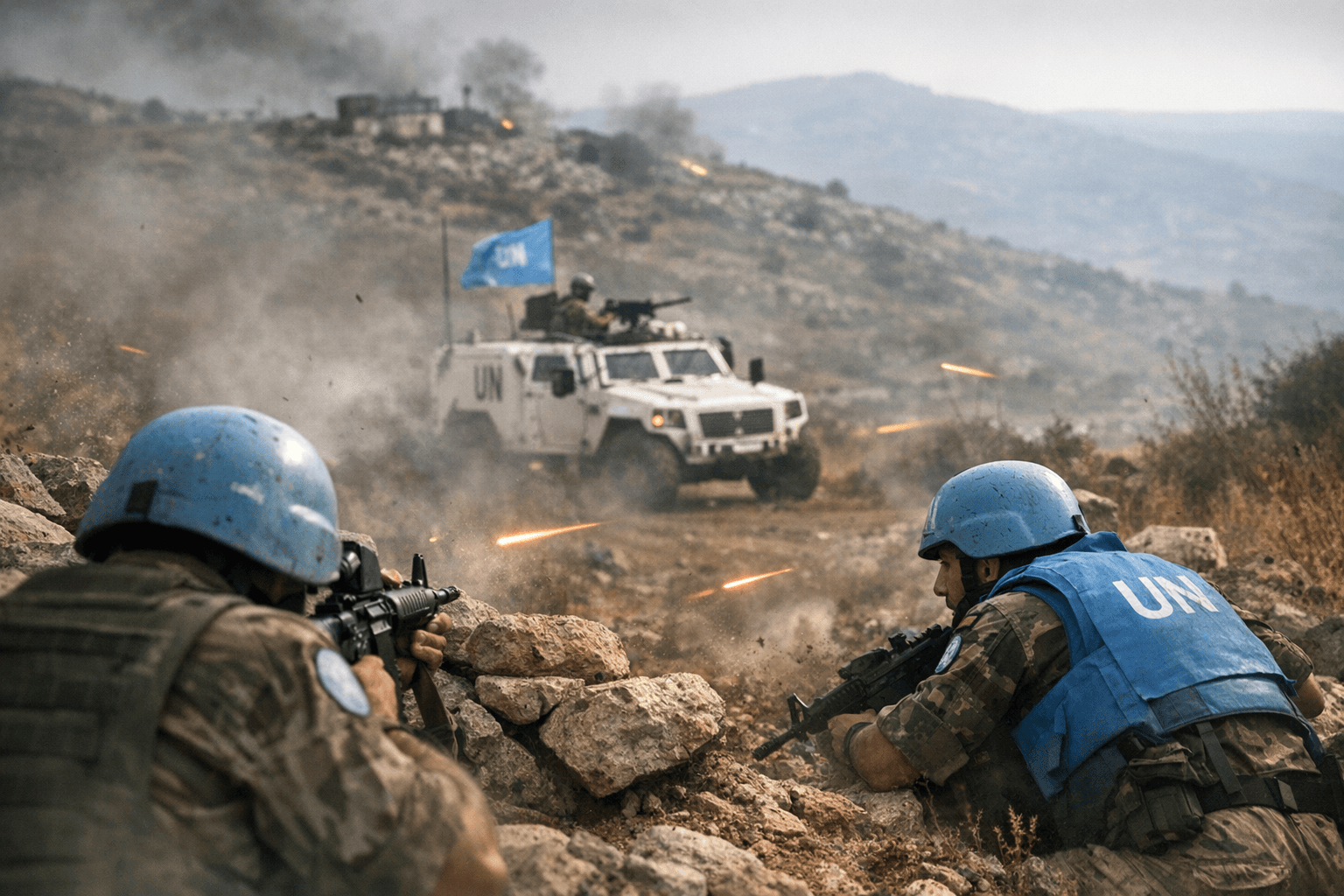
UNIFIL said on Jan. 2 that two separate episodes of gunfire struck very close to its patrols operating near Kafer Shouba in southern Lebanon along the Blue Line, the U.N. demarcation separating Lebanon and Israel. In the first incident 15 rounds of small‑arms fire landed no more than 50 metres from a patrol; less than 20 minutes later roughly 100 rounds of machine‑gun fire struck about 50 metres from a second patrol. The mission reported no damage or injuries in either episode.
The mission assessed that both bursts of fire came from a position south of the Blue Line held by the Israel Defense Forces and said it issued a “stop fire” request through established liaison channels. UNIFIL also noted that it had informed the IDF in advance of patrol activities in that area “following usual practice for patrols in sensitive areas near the Blue Line.”
Expressing alarm at the frequency of close calls, UNIFIL said, “Incidents like these are happening on a too‑regular basis, and becoming a concerning trend.” The mission invoked Security Council resolution 1701, warning that “attacks on or near peacekeepers are serious violations of Security Council resolution 1701,” and called on the IDF to “cease aggressive behaviour and attacks on or near peacekeepers working for peace and stability along the Blue Line.”
Operationally, the incidents highlight the narrow margin for error that peacekeepers face when patrolling a tense frontier. Rounds striking within roughly 50 metres create risks both of inadvertent harm and of escalation from miscalculation. UNIFIL’s rapid stop‑fire request and prior advance notifications to the IDF reflect routine deconfliction practices intended to reduce those risks, but the mission said such measures have not prevented a pattern of near misses.
The events occur amid repeated UNIFIL documentation of Israeli fire close to mission personnel in recent months. Regional reporting cited by the mission indicated that an Israeli attack the previous week had lightly wounded a peacekeeper, and one outlet reported that the U.N. Security Council has scheduled a withdrawal of some peacekeeping resources from Lebanon in 2027; those details were attributed to that outlet’s aggregation of UNIFIL material.
Beyond immediate operational concerns, the incidents carry broader political and economic implications for a fragile region. Recurrent confrontations can lift perceived geopolitical risk, prompting cautious positioning by investors and heightening volatility in regional markets, particularly energy and risk‑sensitive assets. A sustained uptick in cross‑border incidents would complicate diplomatic efforts to stabilize the frontier and could force international actors to reassess force posture and funding for U.N. operations.
UNIFIL’s Jan. 2 statement did not include a public response from the IDF. The mission said it would continue to coordinate with Lebanese authorities and with its liaison partners to manage patrols in sensitive areas and to press for the protection of peacekeepers under the U.N. mandate.
This article was produced by Prism’s automated news system from verified source data, official records, and press releases, then run through automated quality and moderation checks before publishing. The system is built and supervised by the people who set the standards it runs under. Read our full AI policy.
Did this article answer your question?


