UN warns Afghanistan crisis deepens, rights rollbacks compound humanitarian collapse
Senior UN officials told the Security Council on December 11 that Afghanistan’s humanitarian emergency is intensifying as rights rollbacks, natural disasters and severe funding shortfalls push more people into hunger, displacement and destitution. The UN called for immediate removal of restrictions that impede aid delivery, including safe access for female aid workers, and urged donors to close the widening financing gap.
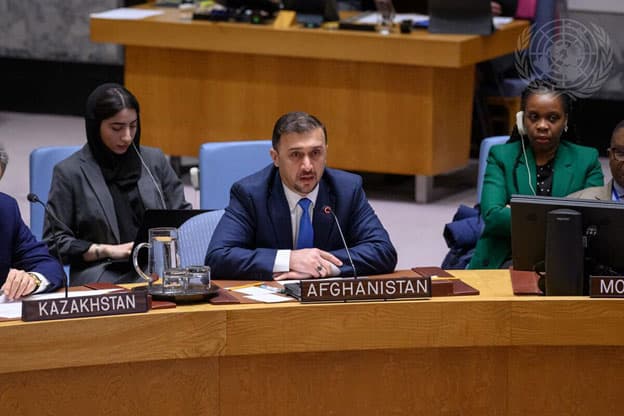
Senior United Nations officials told the Security Council on December 11 that Afghanistan’s humanitarian crisis is worsening at a scale that risks long term damage to livelihoods, health systems and regional stability. The UN presented stark figures showing more than half the population will require assistance this year amid shrinking freedoms, mass returns and a series of environmental shocks.
Office for the Coordination of Humanitarian Affairs data cited by the UN put the number of Afghans expected to require humanitarian assistance at 22.9 million. Under Secretary General and Emergency Relief Coordinator Tom Fletcher told the council that nearly 22 million people will need help next year and warned that 17.4 million are facing hunger. OCHA reporting had estimated that roughly 12.6 million people experienced crisis or emergency levels of acute food insecurity between March and April 2025.
Those needs are rising while operational space for aid is contracting. UN briefers described accelerating erosion of fundamental rights, particularly for women and girls, and systematic intrusions into private life under measures enacted by the de facto authorities. The UN repeatedly urged authorities to remove restrictions that block operations and to permit female staff to work safely. Tom Fletcher underscored that need succinctly in the council, saying, "Afghanistan needs them."
Humanitarian actors are also grappling with a cascade of shocks. Back to back earthquakes, prolonged drought and groundwater depletion have degraded basic services and livelihoods, while a deteriorating economy has constrained households that relied on remittances and informal work. The International Organization for Migration reported that more than 1.5 million Afghans returned to the country from Iran and Pakistan in 2025 after those countries carried out campaigns targeting undocumented migrants. A July 15 statement from the UN Assistance Mission in Afghanistan warned that the pace and scale of returns were overwhelming fragile support systems.
The crisis is exacerbated by a severe funding shortfall that UN agencies say has already forced reductions in health services, food assistance and other essential programs. Briefers linked major gaps to policy decisions by donor governments, including the United States decision on April 4 to suspend aid to Afghanistan, which was reported to have had a significant impact on humanitarian actors. Without additional financing, the UN warned, response capacity will continue to deteriorate as needs rise.
Delegations at the Security Council also sounded alarms about regional spillover risks. Pakistan’s ambassador Asim Iftikhar Ahmad warned that terrorism emanating from Afghanistan posed a "gravest threat" to Pakistan’s national security and sovereignty, even as he reiterated Pakistan’s commitment to dialogue and to a stable Afghanistan and noted the country had issued hundreds of thousands of medical visas since September 2023.
UN officials closed their briefings with an appeal to the international community for scaled up financing and political engagement, and a direct call to the de facto authorities to lift impediments to humanitarian work. The combination of shrinking rights, environmental shocks and dwindling funding has created a feedback loop that, unless reversed, will push millions more Afghans into protracted crisis and raise the stakes for regional stability.
This article was produced by Prism’s automated news system from verified source data, official records, and press releases, then run through automated quality and moderation checks before publishing. The system is built and supervised by the people who set the standards it runs under. Read our full AI policy.
Did this article answer your question?


