United adds headphone requirement to contract of carriage; crews may remove passengers
United Airlines updated its Contract of Carriage to require headphones for onboard audio and video; the change makes noncompliance a formal ground for removal and possible penalties.

United Airlines has amended its Contract of Carriage to require passengers to use headphones when listening to audio or watching video onboard, placing headphone nonuse among the explicit reasons cabin crews may refuse transport or remove a traveler.
The revision appears in Section 21, the contract's "Refusal of Transport" clause, where the list of behavioral and safety grounds grew to include failure to use headphones. The change elevates what many carriers treat as a courtesy into an enforceable contractual condition of travel, giving crews clearer legal backing to move passengers who do not comply.
The updated contract also spells out potential consequences tied to violations. The document notes that travelers whose actions cause the airline loss, damage or expense may be required to reimburse those costs, that the carrier can refuse future transport to violators, and that noncompliance may be treated as a material breach of the contract. Travel writer Johnny Jet characterized the issue in blunt terms, writing that "the irritation is clearly widespread."
United has not published detailed new enforcement procedures, and the airline has not provided public guidance describing how crews should apply the headphone rule in practice. AviationA2Z observed that while the placement of the requirement inside the legal contract "makes headphone use an enforceable condition of travel rather than a courtesy announcement," the carrier has not publicly outlined changes to cabin-crew protocols.
Embedding headphone use in the Contract of Carriage has operational and legal consequences. Contracts of carriage are the binding, ticketed agreement between carriers and passengers; making headphone use a contract term strengthens an airline's position to train staff, document incidents and justify removals when disputes arise. For passengers, the change joins other behavior-based grounds for refusal of transport and raises practical questions about when and how crews will intervene, how warnings will be administered, and whether enforcement will differ across domestic and international flights.
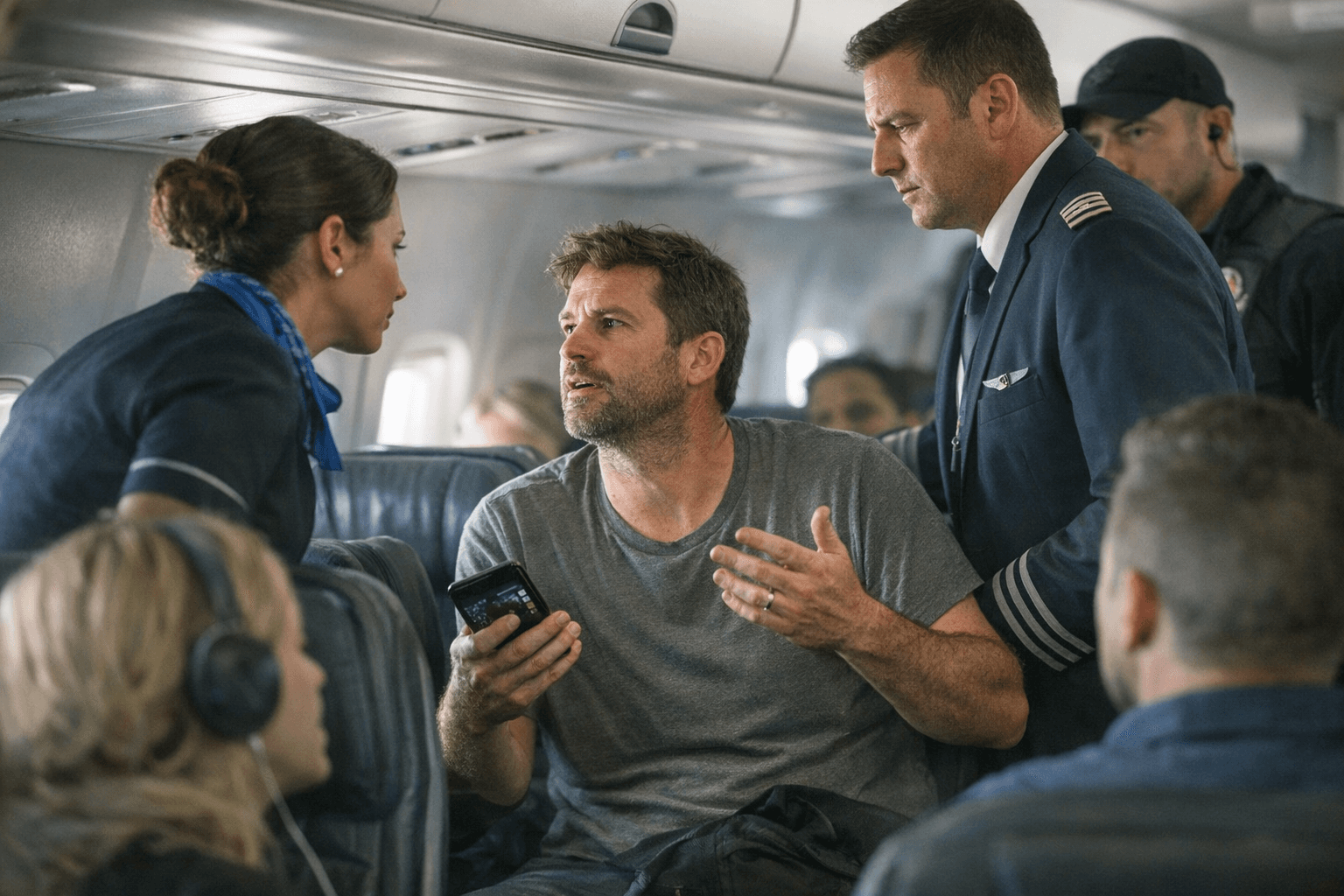
The revision also invites consumer-facing questions that the contract language does not resolve. The text does not specify exemptions or technical details such as whether bone-conduction or single-ear devices qualify, how families with young children will be handled, or how the policy intersects with accessibility devices and medically necessary equipment. Those gaps leave crews to interpret and apply the rule in real time, potentially increasing the risk of inconsistent outcomes and passenger disputes.
Public reaction has ranged from approval to incredulity. A social media commenter summed up a common sentiment: "This is without a doubt my biggest pet peeve. Speakerphone, FaceTime and watching YouTube without headphones should be criminal. So inconsiderate."
For travelers, the practical takeaway is to assume headphone use is now a contractual expectation on United flights. For regulators and consumer advocates, the move highlights how airlines can convert informal norms into enforceable ticket terms, shifting dispute points from announcements and crew discretion into legal territory. United has not published an enforcement playbook tied to the change, and the policy's operational effects will depend on how the carrier trains crews and applies the rule in everyday service.
This article was produced by Prism’s automated news system from verified source data, official records, and press releases, then run through automated quality and moderation checks before publishing. The system is built and supervised by the people who set the standards it runs under. Read our full AI policy.
Did this article answer your question?