University of Alabama Students Sue Over Suspension of Two Campus Magazines
UA students sue over shutdown of magazines for Black students and women, saying the university cited a non-binding Pam Bondi memo to justify viewpoint-based censorship.
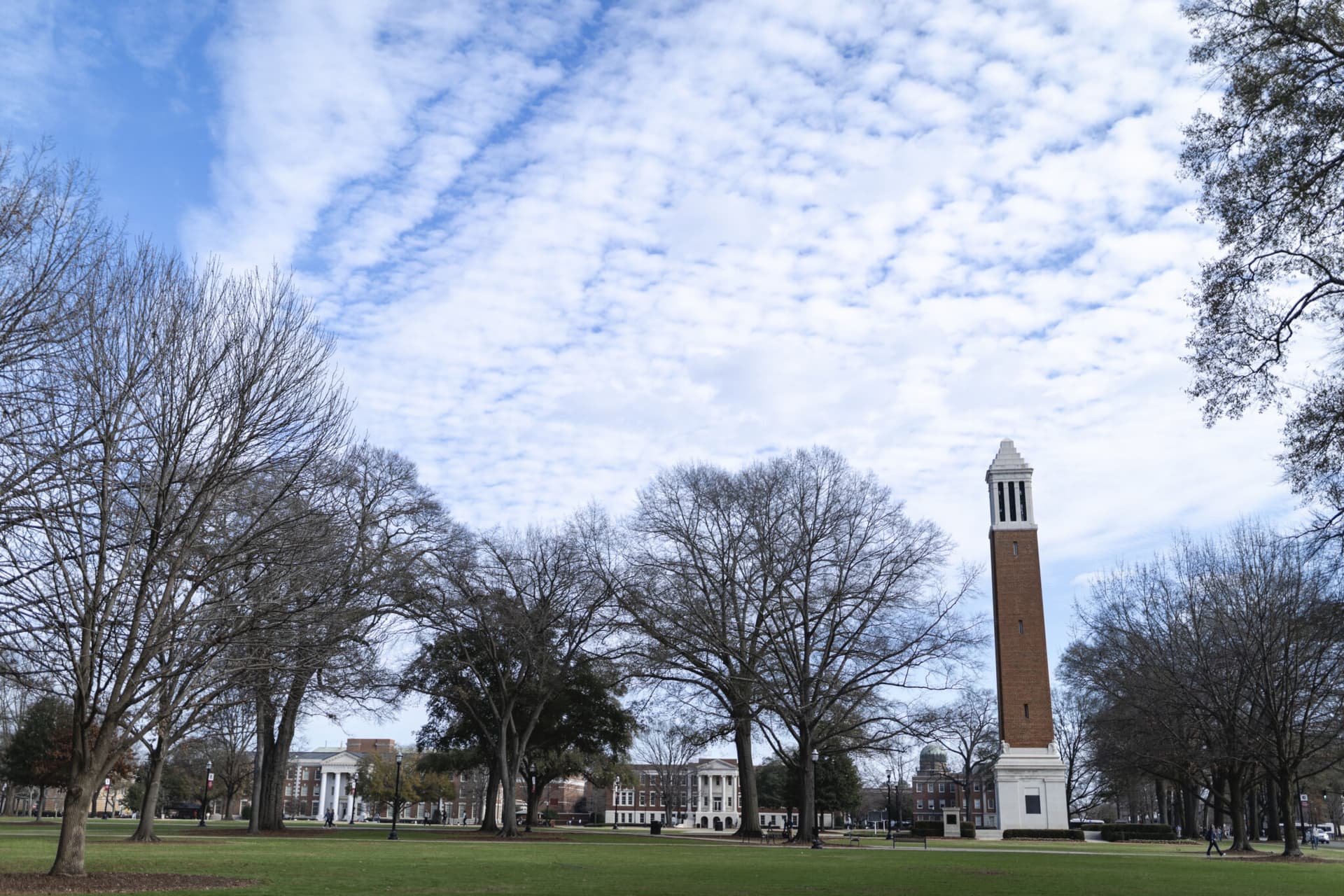
Eight University of Alabama students filed a federal lawsuit March 23 demanding the reinstatement of two campus magazines that university officials shut down in December 2025, in what the complaint calls a targeted act of viewpoint-based censorship driven by the Trump administration's war on diversity programs.
Nineteen Fifty-Six, founded in 2020, was a biannual student-run magazine focused on Black culture, Black excellence, and Black student experiences at the University of Alabama. Its name honors the year the university's first Black student, Autherine Lucy Foster, was allowed to enroll. Alice was a lifestyle, fashion and wellness magazine that produced content primarily targeted toward university women since its launch in 2015. Alice had been in publication for 10 years, with its most recent issue covering beauty content alongside political pieces on misogyny in heavy metal music and the politics of reproductive issues.
University officials in December informed the editors of both magazines that they were immediately stopping them, with a university official telling editors the problem was that the publications had a perceived target audience, and citing guidance from President Donald Trump's administration regarding diversity, equity and inclusion programs on college campuses. According to the NAACP Legal Defense Fund, the university specifically cited a non-binding memorandum released by U.S. Attorney General Pam Bondi that provides inaccurate information about "unlawful discrimination" under federal law for recipients of federal funding. The complaint states that the memorandum neither discusses nor requires the university to suspend student publications merely because of editorial perspectives on race and gender, and that the non-binding memorandum cannot override students' constitutional rights.
The complaint was filed with the U.S. District Court for the Northern District of Alabama against UA President Pro Tempore Scott Phelps and the university's board of trustees. According to AL.com, Gov. Kay Ivey is also named as a defendant. The lawsuit accuses university officials of violating the First Amendment rights of students and states that "these student magazines — unlike other student publications at the University — were suspended and defunded by UA because UA administrators disfavor their editorial perspectives related to race and gender."
Neither magazine restricted who could work on staff, and both featured contributors outside their magazine's stated demographics. Nineteen Fifty-Six had white students on its editorial board and in senior leadership, a fact the plaintiffs argue makes the university's "unlawful discrimination" rationale particularly ill-fitting.
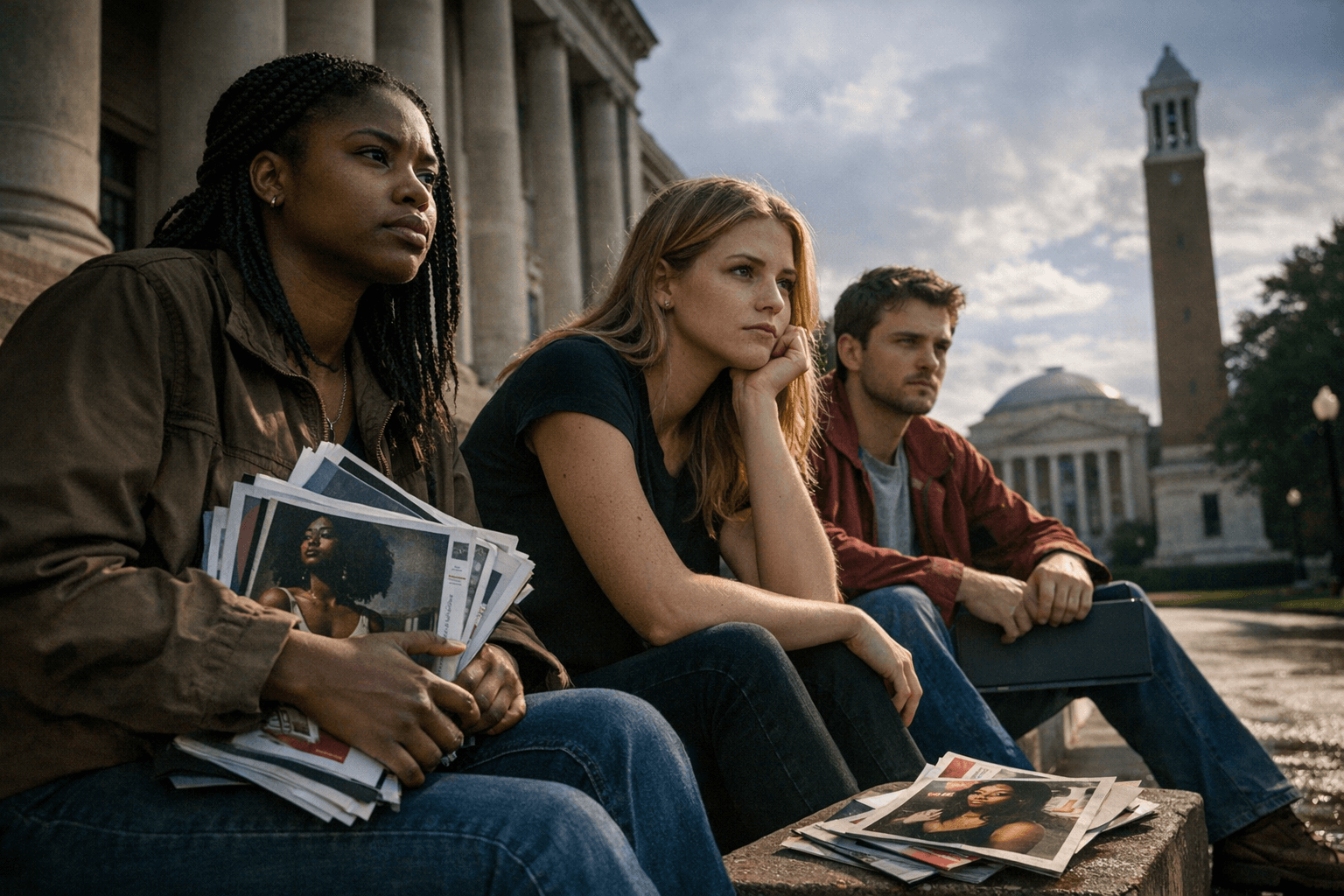
The eight plaintiffs, Rihanna Pointer, Grant Sturdivant, Timoni Taite, Jaleel Matanmi, Jermaine Ball, Sara Beth Caddell, Gabrielle Gunter, and Emmy Waugh, are represented by attorneys from the Southern Poverty Law Center, the Legal Defense Fund, and the ACLU of Alabama. Sam Boyd, a senior supervising attorney at the Southern Poverty Law Center, said the constitutional stakes are clear: "There's an important constitutional principle at stake that the university should not be able to censor and can't constitutionally censor student media."
Plaintiff Rihanna Pointer said in a statement: "I believe that freedom of expression on campus should neither be censored nor restricted because of its perceived value or audience." Gabrielle Gunter, editor-in-chief of Alice, said removing the magazines takes away student voices and argued that "marginalized students deserve the opportunity to participate in magazines and have access to the same resources and support that other publications have."
UA Associate Director of Communications Alex House declined to comment on the lawsuit. In December, House said the university remained committed to supporting all students while also complying with its legal obligations.
A fundraiser launched by alumni of the two publications has raised nearly $29,000 for the production of spring semester issues by former Alice and Nineteen Fifty-Six staff. An online petition demanding reinstatement has reached more than 3,000 signatures since launching in December. The lawsuit asks the court to declare the suspensions unconstitutional and restore both magazines' funding and operations.
This article was produced by Prism’s automated news system from verified source data, official records, and press releases, then run through automated quality and moderation checks before publishing. The system is built and supervised by the people who set the standards it runs under. Read our full AI policy.
Did this article answer your question?