University of Hawaiʻi–Maui College Hosts Free Security using GenAI Clinic
University of Hawaiʻi–Maui College is offering a free one-hour Zoom clinic for Hawaiʻi sole proprietors and small business owners to explore generative AI for security and its limits.
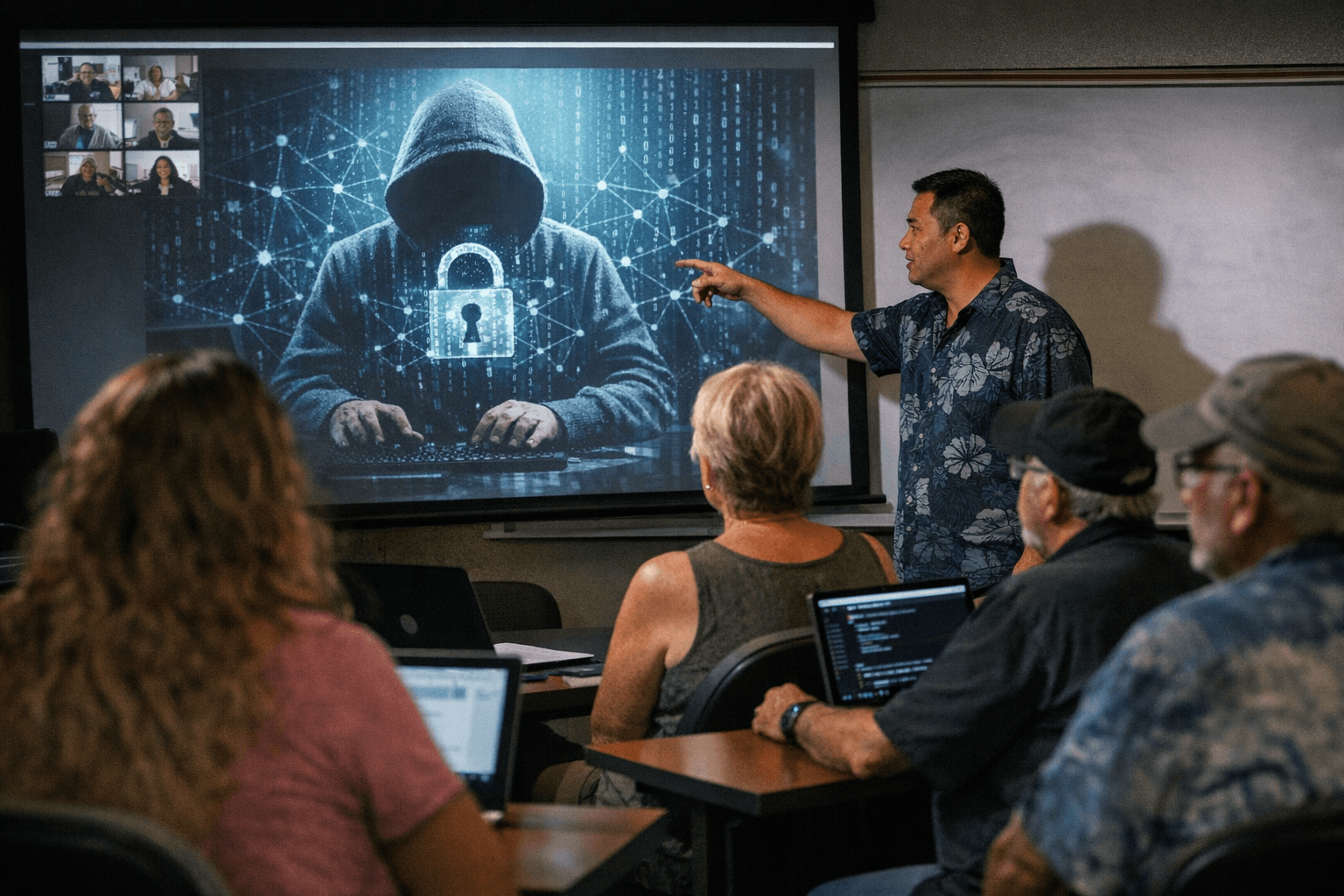
University of Hawaiʻi–Maui College is hosting a free online cybersecurity clinic for Hawaiʻi sole proprietors and small business owners titled “Security using GenAI” (noon–1 p.m. HST, Feb. 18, via Zoom). The session will be moderated by Debasis Bhattacharya (UH Maui Co
The one-hour clinic is aimed at business owners who manage their own systems and may lack in-house IT security teams. The cost-free format and online delivery lower barriers to attendance for residents of Kauai County and other islands who rely on scheduling platforms, payment processors, and customer data that can be targeted by cybercriminals.
Experts and vendors in the cybersecurity sector frame the session’s topic as timely. Darktrace emphasizes that “employing multiple types of AI in cybersecurity is essential for creating a layered and adaptive defense strategy,” and its State of AI Cybersecurity reporting highlights three primary ways AI helps security teams: improving threat detection, identifying exploitable vulnerabilities, and automating low level security tasks. Darktrace also reports that “86% of survey participants believe generative AI alone is NOT enough to stop zero-day threats,” a warning organizers may address when showing how generative tools fit into broader defenses.
Vendor materials from major technology companies underline practical approaches small businesses can consider. Microsoft describes how “machine learning in cybersecurity involves training algorithms to identify patterns in network traffic, user behavior, or system events,” and says this capability “allows machine learning systems to detect potential threats like malware, phishing, and unauthorized access with high accuracy and minimal human intervention.” Fortinet urges organizations to build an AI adoption strategy, noting that “tools built on AI technology can help security teams identify threats at early stages and take action before they escalate,” and cites Fortinet’s FortiAI as an example.
Training and hands-on skills are part of the broader ecosystem that supports AI defenses. Coursera’s “Introduction to AI for Cybersecurity” specialization includes a Course 1 length of “10 hours” and projects such as building a “metamorphic malware detector using a Hidden Markov Model” and detecting “IoT botnet activity in network traffic.” IBM describes commercial offerings that use AI for visibility and response, and its case study with United Family Healthcare shows a deployment that “increased visibility and sped up its time to detect, contain and respond to ransomware attacks through the use of AI.”
For Kauai small-business operators, the clinic is an entry point into understanding both opportunities and limits of AI in security - from automated detection and email-filtering models to identity protections and device management tools. Organizers have posted the event notice; interested residents should contact University of Hawaiʻi–Maui College for registration details, the full moderator affiliation for Debasis Bhattacharya, and the session agenda.
What comes next: attendees can expect a practical hour that situates generative AI within a layered defense strategy, and local businesses should follow up by verifying technical steps and vendor claims before adopting specific tools.
Sources:
Know something we missed? Have a correction or additional information?
Submit a Tip