Updated Hawaiʻi plant checklist highlights threats and local stakes
Bishop Museum released an updated, freely available plant checklist that maps extinctions, invasions and island occurrences; it matters for Kauaʻi's watersheds, farms and cultural practices.
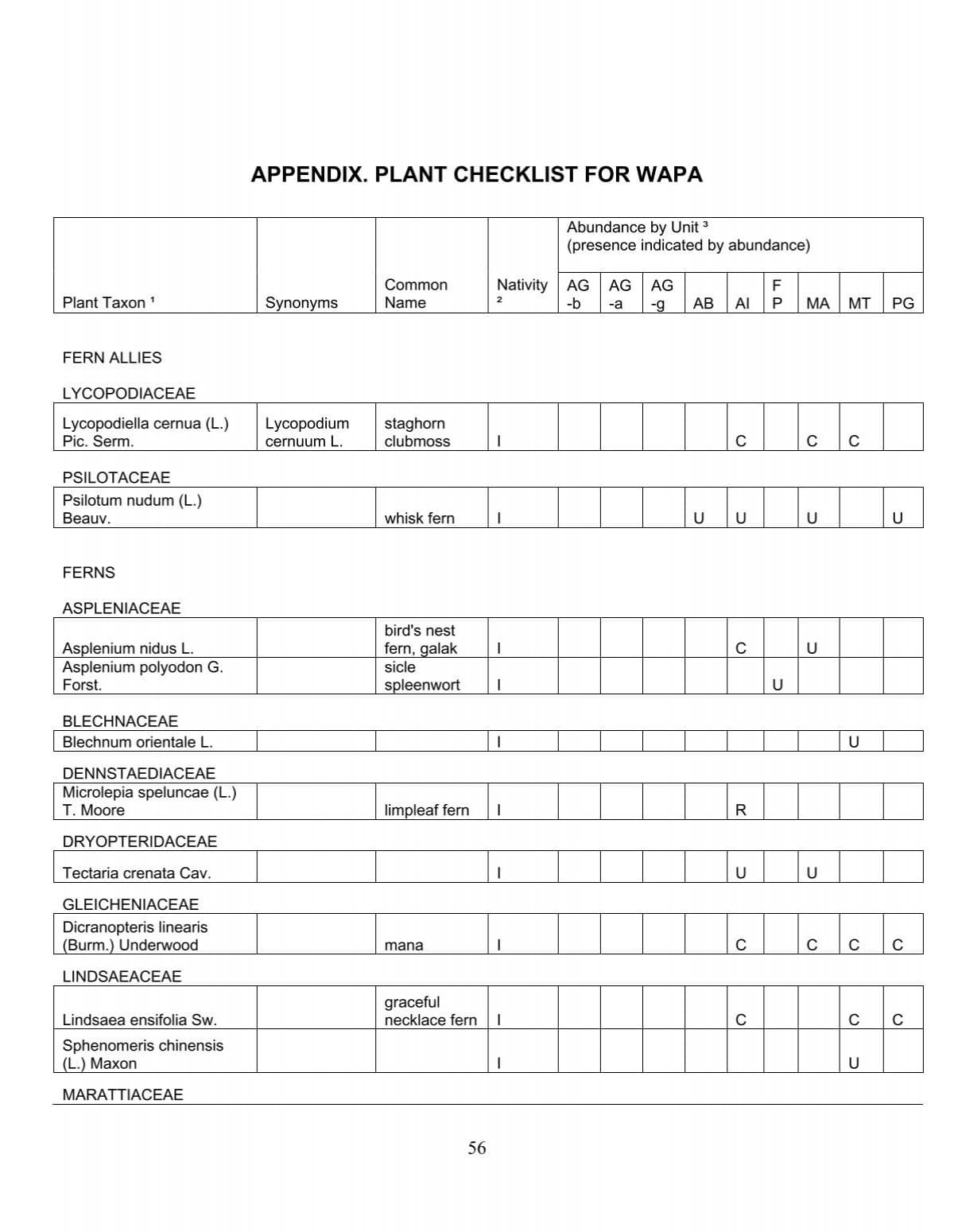
Bishop Museum released an updated botany checklist on Jan. 11, 2026, compiling more than 3,100 vascular plant records for the Hawaiian Islands and making the data freely available through the Plants of Hawaiʻi website. The update catalogs island-level extirpation status, common names, native versus non-native classifications, conservation status and island occurrences, creating a single reference for scientists, land managers, conservationists and citizen naturalists.
The checklist confirms two stark trends: a high proportion of endemic species across the islands and a substantial number of recorded extinctions or extirpations, alongside an ongoing flow of newly documented non-native species becoming naturalized. Tied to the museum’s Hawaiʻi Biological Survey and Herbarium Pacificum collections, the database links field specimens to distribution records, improving the island-scale picture of which plants remain mauka, which are now only makai, and which have vanished from particular ahupuaʻa.
For Kauaʻi residents the implications reach beyond academic inventories. Native forests and riparian corridors on Kauaʻi underpin drinking water catchments, erosion control and the cultural practices of kānaka ʻōiwi who rely on native plants for medicines, crafts and ceremonial use. Each extirpation chips away at those services and deepens inequities for communities who depend on close ecological knowledge and access to native species. Conversely, the growing list of naturalized non-natives alters habitat structure, can increase wildfire risk by changing fuel profiles, and may introduce allergens or pest pathways that affect public health and agriculture.
The checklist is a practical management tool for county planners and conservation partners. Island-specific occurrence data can guide priority setting for invasive species control, restoration plant lists, and permit conditions on development projects that affect native habitats. For community groups and volunteers, the database offers a vetted reference to verify field identifications and to document recoveries or fresh invasions for coordinated response.
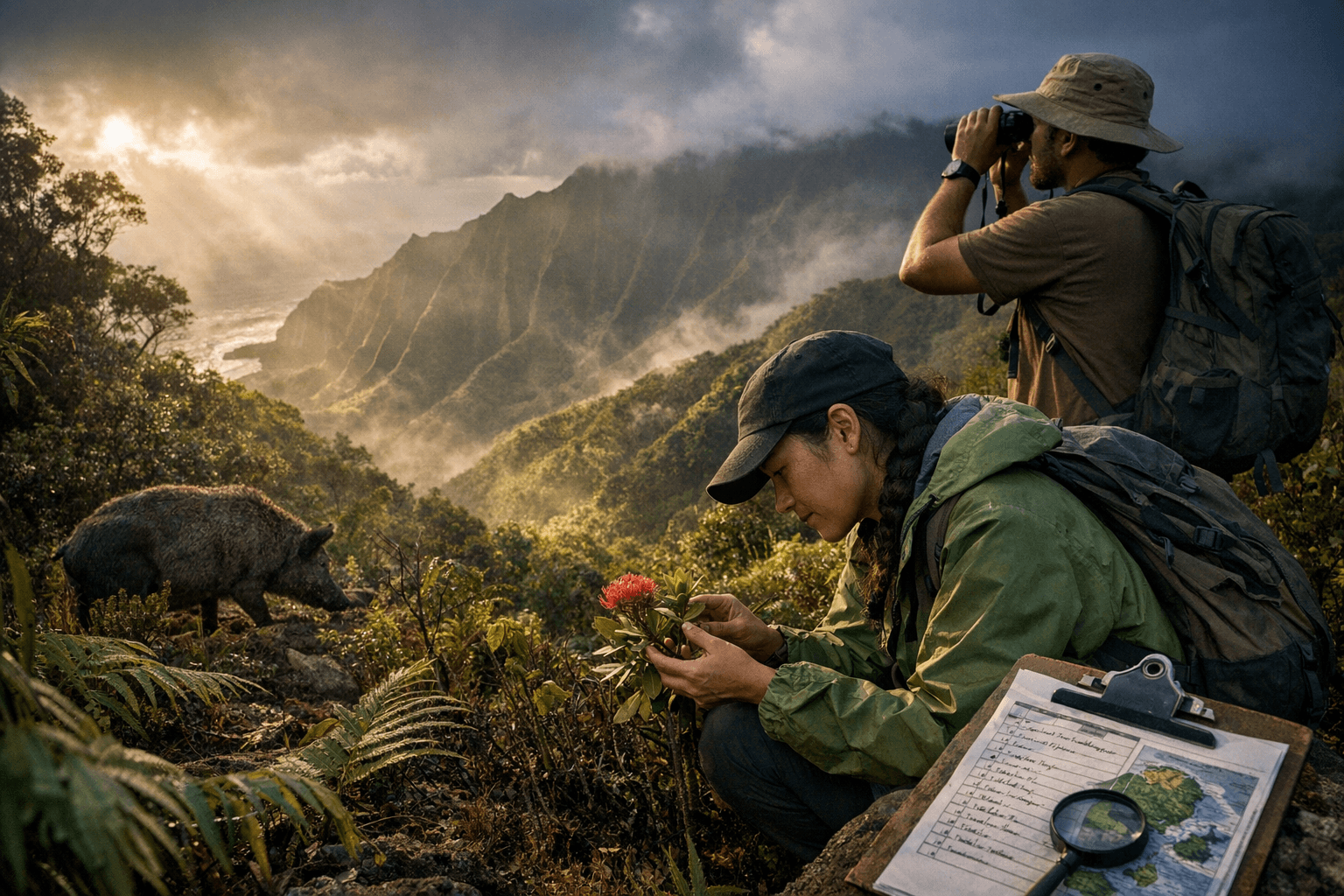
Policy choices will determine whether the updated information translates to stronger protections rather than only better records. County resources for watershed restoration, invasive species suppression and culturally informed stewardship remain limited; the checklist makes a clearer case for targeted funding, community monitoring programs and partnerships with the Herbarium Pacificum to reconnect specimen records with on-the-ground action.
Our two cents? Use the Plants of Hawaiʻi checklist before planting, permitting or launching a volunteer restoration effort — it’s a good first step to avoid planting potential invasives, to prioritize native seeds for restoration, and to report unusual sightings to the appropriate agencies. Protecting Kauaʻi’s flora is also about protecting water, food and cultural resilience for our communities — and that's a kuleana we all share.
Sources:
Know something we missed? Have a correction or additional information?
Submit a Tip