Updated pasta machine buyer's guide: rollers, extruders, and attachments
A January 2026 update ranks manual rollers, electric extruders, and stand-mixer attachments and explains tradeoffs. Practical buying tips help readers match machines to household size and pasta goals.

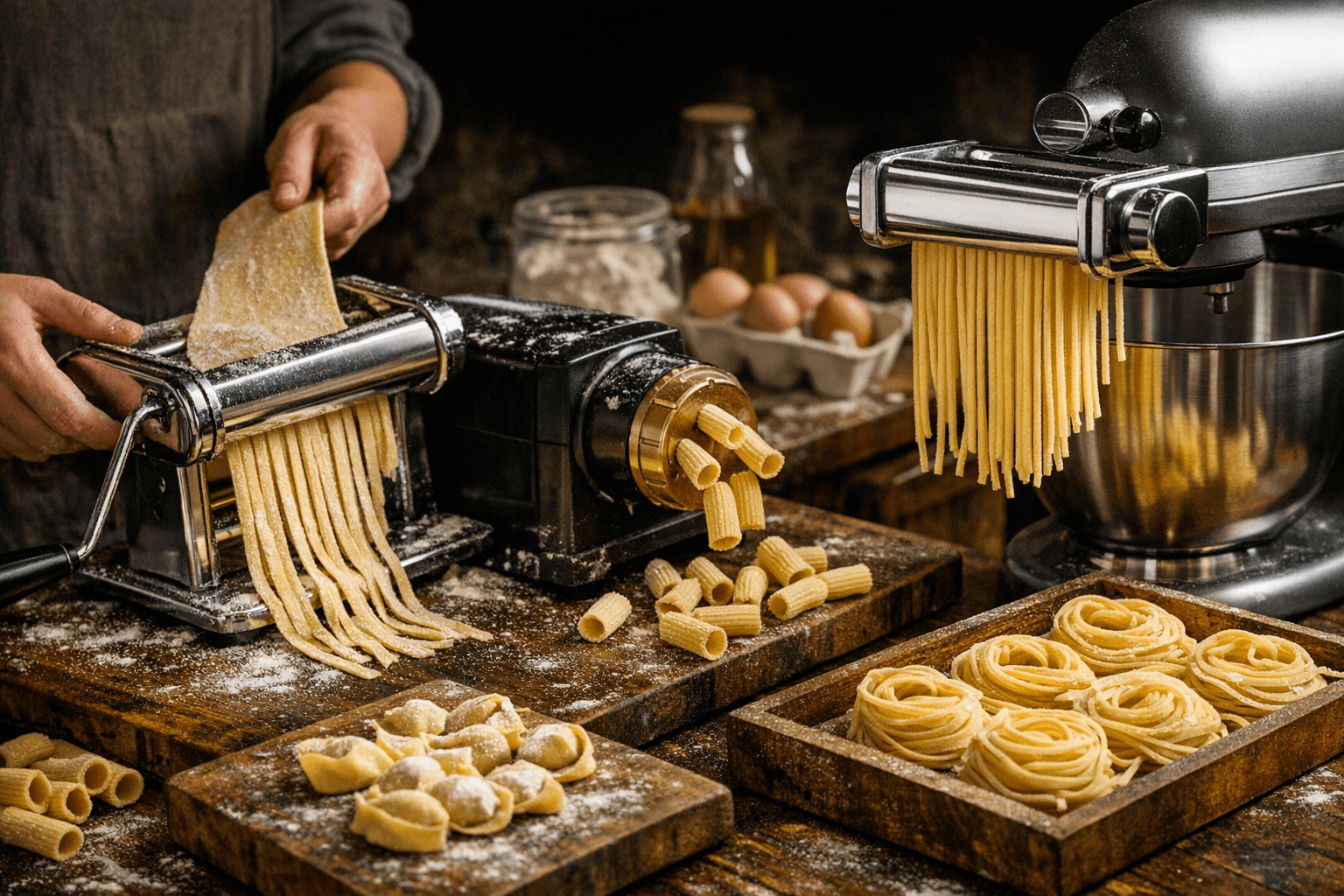
Home cooks deciding between a classic roller, an automatic extruder, or a stand-mixer attachment face three distinct paths to fresh pasta. The updated January 2026 guide names the Marcato Atlas family as the enduring manual-roller favorite for durability and hands-on control, Philips-style automatic electric machines for near-hands-free mixing and quick shape variety, and KitchenAid pasta attachments for cooks who already own a compatible stand mixer and want flexible cutter and roller options without another appliance.
Manual rollers excel when texture and thickness control matter. The Marcato Atlas and similar hand-crank machines let you sheet and cut dough by hand, ideal for lasagne, tagliatelle, and other broad shapes where you want fine control over thickness. They are built to last, with robust Italian-made hardware that many hobbyists prize for longevity. Manual rollers demand more elbow grease and attention during kneading and sheeting, but they also teach technique, valuable for anyone who wants to master dough hydration and thickness by feel.
Electric extruders are the time-savers. Automatic models combine mixing and extruding so you can press a button and come back to a finished batch. These machines shine when you need multiple relatively small shapes quickly or when you prefer minimal hands-on kneading. Expect faster turnaround for family-sized batches and consistent results across runs, though extruders use dies and internal components that require disassembly and more careful cleaning.
Stand-mixer attachments strike a middle ground for existing KitchenAid owners. Attachments let your mixer do much of the work while offering the familiar roller and cutter options without buying a dedicated appliance. They are convenient if you already invested in a mixer and want the flexibility to switch between pasta and other mixer tasks.
Cleaning and maintenance vary by type. Manual rollers are straightforward to keep functional with routine care and flour cleanup, while electric extruders have more small parts and replacement dies to manage. Stand-mixer attachments follow the care profile of other mixer accessories. Common accessories worth considering include extra dies for shape variety and spare cutters or replacement parts to extend a machine's service life.
Choosing the right machine comes down to household size, frequency, and learning goals. Start with a simple roller to learn thickness control and the basics of dough handling. If you want hands-off convenience or need larger or more varied weekday batches, an electric extruder fits better. If you already own a stand mixer, attachments are the most economical route to added capability. Keep extra dies for shape variety and size your purchase to how often you plan to make pasta.
For readers ready to buy, weigh hands-on technique against automation, factor expected batch sizes, and plan for routine maintenance and spare parts. The right tool turns pasta making from an occasional treat into a repeatable, satisfying ritual.
Know something we missed? Have a correction or additional information?
Submit a Tip