Updated Top 10 Homebrewing Essentials for Beginners and Advanced Brewers
Learn the ten must-have pieces of gear for brewing at home, from basic 1-gallon kits to stainless steel conicals and smart ways to save.

1. Fermenter
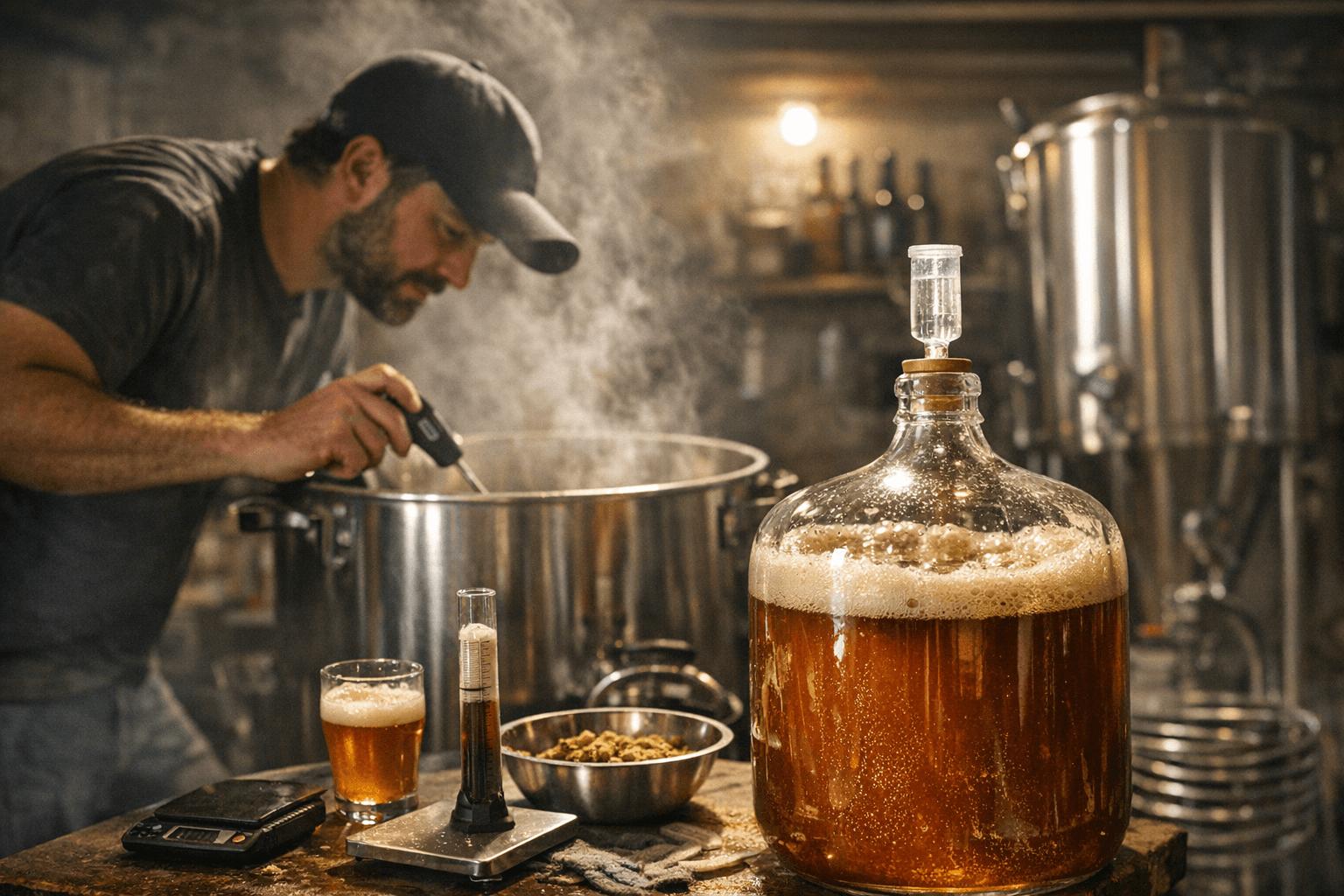
A fermentation vessel is the foundation of every batch, "A Fermentation Vessel is a must-have. It should be airtight and easy to clean. Look for one that is made of food-grade material. This ensures safety during the brewing process." For beginners, a plastic bucket or 1‑gal/5‑gal glass or plastic carboy with an airlock and stopper will do; for advanced brewers consider a conical stainless steel option like the Ss Brewtech Brew Bucket for easier yeast dumping and greater durability (7‑gallon models are common). Prioritize airtight seals, easy-to-clean surfaces, and food‑grade construction so your yeast can do the work without contamination.
2. Brewing kettle / stockpot
Your kettle is where wort becomes beer in spirit, and you need the right size. "Aim for a size that fits your batch needs. A larger kettle allows for better evaporation. However, it can also be cumbersome. Balancing size and usability is vital." A practical rule: allow at least 3 gallons (11.4 L) of extra headspace for every 5 gallons (19 L) you plan to brew so you don't boil over. For one-gallon extract batches a simple stockpot is fine; for full all‑grain you'll want a heavy, corrosion‑resistant kettle sized to handle post‑mash and boil volumes safely.
3. Thermometer / temperature control
"A thermometer is essential for monitoring the temperature of your wort during the boiling process, as well as during fermentation. It’s important to keep an eye on the temperature of your beer, as it can affect the flavor and alcohol content of the final product." Precise temps matter, heat strike water or steep grains to about 155°F, and cool wort to roughly 75°F before pitching yeast to avoid stressing it. Invest in a reliable digital or stainless clip-on thermometer for durability; a glass lab thermometer is common in starter kits but upgrade as you move up.
4. Hydrometer and gravity testing tools
"A hydrometer is also a useful tool for measuring the specific gravity of your wort. This will help you determine the alcohol content of your beer, as well as the amount of sugar that is present." Test gravity on brew day and again at bottling to calculate ABV and confirm fermentation completion. Accurate readings prevent overcarbonation (and exploding bottles) and help you troubleshoot stalled or under‑attenuated ferments.
5. Wort chiller
Cooling wort quickly is both a sanitation and quality move, "Immersion Wort Chiller – Quickly cools your wort (unfermented beer) to yeast-safe temperatures after brewing. Faster cooling = reduced contamination risk." An immersion or coldbreak-style chiller reduces time in the temperature danger zone and helps you hit the pitching temperature for healthy fermentation; Hopculture lists a Coldbreak Wort Chiller as a solid mid‑range option (Buy: $65). Faster chill = cleaner beer and fewer off-flavors.
6. No‑rinse sanitizer and cleaning tools
"Sanitation is the #1 rule of brewing." Every piece of gear that touches wort or beer must be clean and sanitized to avoid infections that ruin batches. Use a no‑rinse sanitizer for vessels, tubing, and bottling gear; keep a carboy brush and appropriate cleaners on hand to remove gummy residue before sanitizing. The small time you invest cleaning saves large‑format heartbreak (and wasted ingredients).
7. Bottling equipment: bottles, caps, and capper
You need a way to package the beer once fermentation’s done, bottles, caps, and a reliable capper are essential. Start with sturdy bottles and new caps (or a Cornelius keg setup later), and practice safe priming/carbonation procedures to avoid overpressurizing glass. For small runs, a bottling bucket and a sanitized bottling wand speed the job and reduce oxygen pickup while filling.
8. Transfer and racking gear (racking cane, tubing, auto-siphon, carboy brush)
Moving beer cleanly between vessels and out of trub requires simple but specific tools. A racking cane with food‑grade tubing or a Mini Auto‑Siphon gets most transfers done without splashing; "A few pumps of this tool will get a siphon started in a snap." Keep a carboy brush for inside-cleaning and an extra transfer bucket on hand for clarity work and bottling setup. Proper transfer gear minimizes oxygen pickup and keeps sediment where it belongs.
9. Measuring and accessory kit (digital scale, funnel with screen, mesh filters)
Small tools make a huge difference: a digital pocket scale for hop and yeast weights, a funnel with a filter screen for grain and dry-hopping work, and specialty filters if you’re kegging (for example, a 300 Micron Filter Stainless Steel Mesh Cornelius keg dry hopper). Hopculture recommends compact tools like the Smart Weigh pocket scale (Buy: $9) to dial in recipes and repeatability. These accessories help you be precise, save ingredients, and keep a tidy brewday.
10. Ingredients, starter kits, budgeting, and buying strategies
Gear is only part of the equation, quality ingredients and smart purchasing keep the hobby sustainable. "For beginners, getting the right equipment is crucial. Home brewing can be both fun and challenging." Starter kits like Craft a Brew 1 Gallon Beer Making Kits include basics (glass lab thermometer, pre‑measured sanitizer) and are a low-friction way to begin. Budget realistically, "Reports show that initial expenses can range from $100 to $1,000, depending on the equipment chosen", and consider used gear to save upfront; "Many seasoned brewers sell their unused gear at a fraction of the cost." When you’re buying malt and hops, bulk purchases can trim costs, reports indicate savings of 20% to 30% on larger quantities. Plan kit vs. upgrade purchases around how serious you are about scaling to all‑grain batches.
Closing practical wisdom Start with a compact, clean setup that matches your brewing plans and budget: a sanitized fermenter, a kettle with sensible headspace, a thermometer, and gravity tools will get you reliably to delicious beer. As you rack up batches, prioritize upgrades that solve repeat pain points, faster chilling, a better fermenter, or scales for precise hopping, and remember that buying used or in bulk can stretch your budget farther. Brew with patience, keep sanitation obsessive, and treat each batch as a test batch: you'll learn faster, waste less, and enjoy the results more.
Know something we missed? Have a correction or additional information?
Submit a Tip