U.S. allows minimal Nvidia H200 chip shipments to China, Hong Kong
A tiny flow of Nvidia H200 chips has resumed into China and Hong Kong, even as U.S. officials keep saying access to advanced AI hardware remains tightly controlled.
A very small number of Nvidia H200 artificial-intelligence chips have now reached China and Hong Kong, even as Washington says access to advanced AI hardware remains tightly controlled. Jeffrey Kessler, the Commerce Department’s under secretary for industry and security, told Congress that shipments had begun but called the volume “very small” and “minimal.”
The restart is narrow enough to underscore how carefully the U.S. is drawing the line. The Bureau of Industry and Security revised its policy on January 13, 2026, to review H200 export licenses to China on a case-by-case basis, and Kessler said the department still evaluates each application against national-security requirements and can deny requests when necessary. That means the flow of chips is controlled, not broadly reopened, even after approvals were issued.
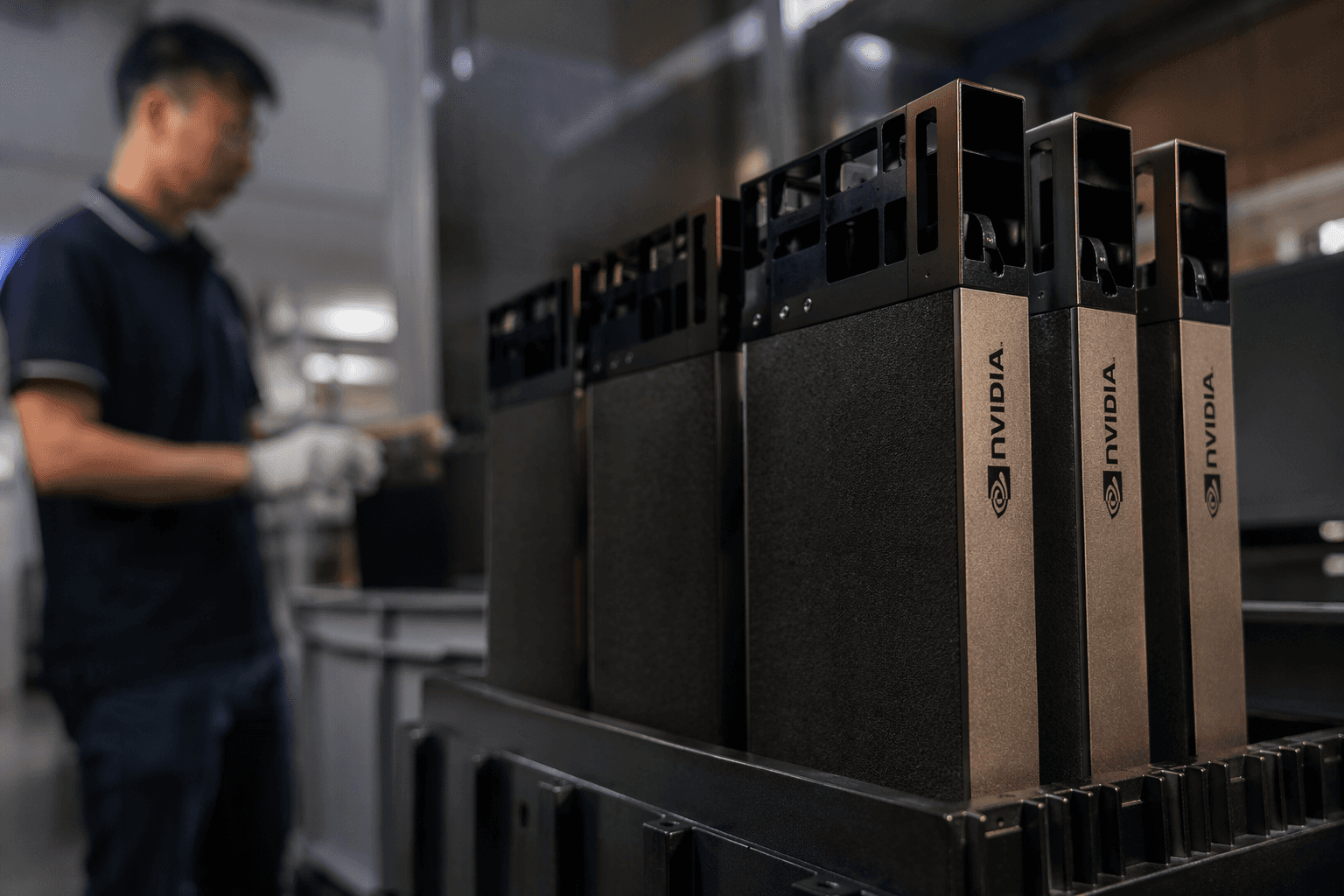
The H200 sits near the top of Nvidia’s lineup. Nvidia says the chip is based on its Hopper architecture and carries 141GB of HBM3e memory with 4.8TB/s of bandwidth, giving it a major edge for large language models and other generative AI workloads. It is Nvidia’s second-most powerful AI chip, behind newer products, and the company has long described China as a major market for its data-center business.
The approvals have been slow to translate into deliveries. By May, around 10 Chinese firms had been cleared to buy H200s, but no shipments had gone out then. U.S. approval has since continued selectively, with a unit of ZTE Corp. and two other Chinese firms among the latest entities cleared to buy advanced AI chips. The pattern suggests Washington is allowing only tightly limited access rather than restoring the broader sales channel that Nvidia once had in China.
The policy has also been pulled into wider U.S.-China trade tensions. President Donald Trump said on December 8, 2025, that H200 sales to approved Chinese customers would be allowed in exchange for a 25% revenue payment to the U.S. government. That arrangement framed the chips as both a commercial asset and a bargaining chip in Washington’s effort to keep advanced computing capacity out of Chinese hands.
For Nvidia, even a trickle matters because China remains one of the world’s biggest AI markets. But the company has also warned investors to expect little or nothing from China AI-chip revenue, reflecting the uncertainty created by export controls. If H200 shipments stay scarce, Chinese buyers are likely to lean harder on domestic alternatives such as Huawei’s Ascend line, extending the technology split between the two countries rather than closing it.
This article was produced by Prism’s automated news system from verified source data, official records, and press releases, then run through automated quality and moderation checks before publishing. The system is built and supervised by the people who set the standards it runs under. Read our full AI policy.
Did this article answer your question?