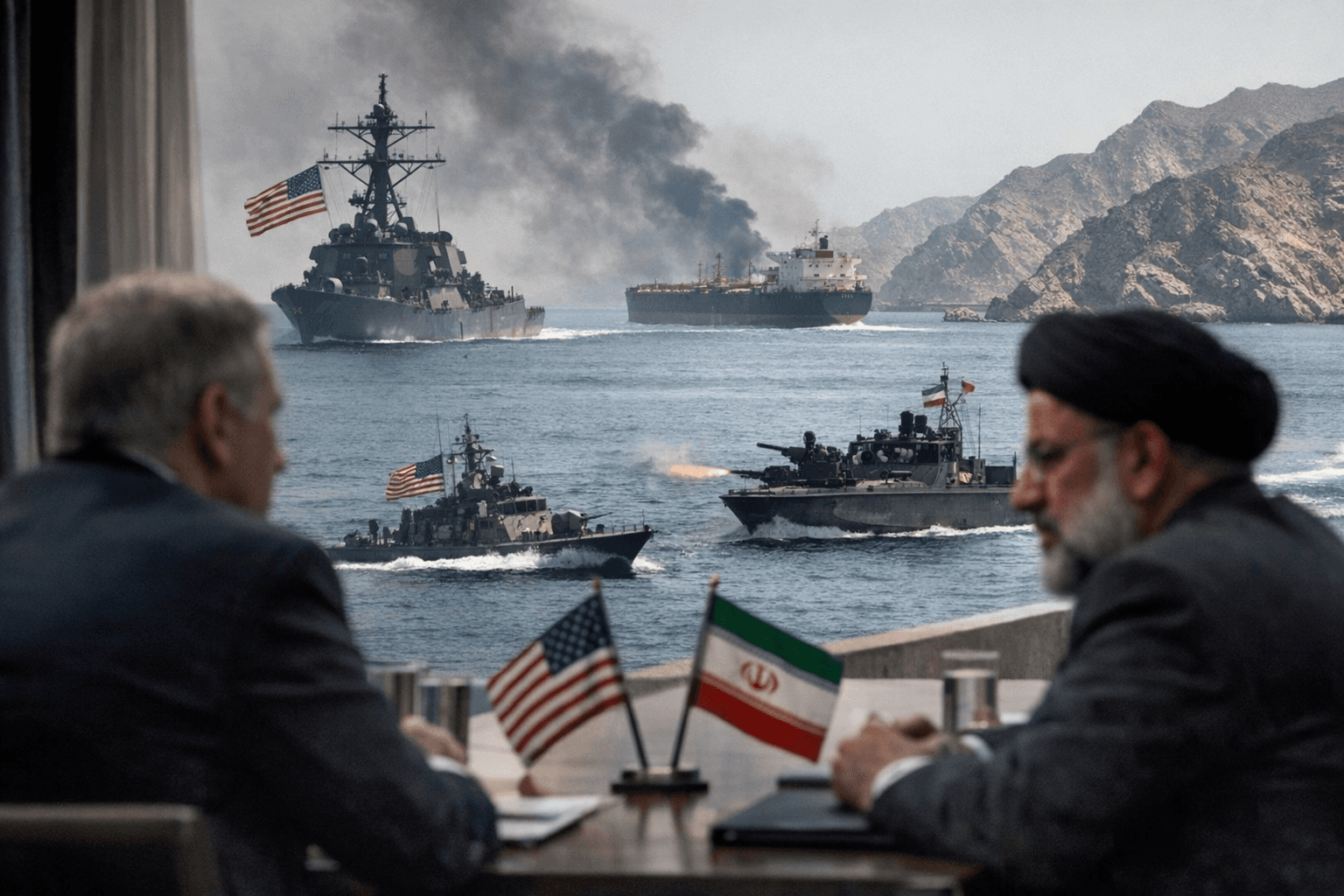
US and Iran fail to reach deal after 21-hour Pakistan talks
After 21 hours in Islamabad, Washington leaves with fewer options, as sanctions, deterrence and the risk of wider escalation again define its Iran policy.

The collapse of 21-hour talks in Islamabad leaves the United States with a narrower and more dangerous set of choices. With no agreement to extend a fragile two-week ceasefire, Washington now has to decide whether to lean harder on sanctions, prepare for renewed deterrence, or accept a real risk that the conflict spills back across the region.
Vice President J.D. Vance led the American delegation in Pakistan, joined by special envoy Steve Witkoff and senior adviser Jared Kushner. On the Iranian side, Parliament Speaker Mohammad Bagher Ghalibaf and Foreign Minister Abbas Araghchi took part in the face-to-face meeting, which ran from April 11 into early April 12 before U.S. negotiators left without a deal. Pakistan’s prime minister, Shehbaz Sharif, and foreign minister, Ishaq Dar, hosted the talks and kept the channel open as a rare venue for direct engagement between the two sides.
The talks were designed to turn a temporary pause into something more durable after the ceasefire announced on April 7 and April 8. Instead, the central disputes remained untouched: Washington wanted a verifiable pledge that Iran would not seek a nuclear weapon and curbs on enriched uranium stocks, while Iran said the American position rested on “excessive” and “unlawful” demands. Vance said the United States “has not reached an agreement” and that Iran “chose not to accept our terms.”

That breakdown matters far beyond the negotiating table. The wider conflict began with U.S.-Israeli strikes on Iran on Feb. 28, and the fighting has already killed thousands across the region. Pentagon figures, as carried in major outlet reporting, put at least 13 U.S. service members among the dead and several hundred more wounded. Humanitarian agencies have warned of intense civilian suffering, while the ceasefire’s fate now hangs over Lebanon, where Hezbollah-Israel violence remains one of the most volatile spillover fronts.
The Strait of Hormuz also loomed over the talks. Earlier disruptions to shipping helped drive oil prices above $100 and, at points, above $120 a barrel before the ceasefire briefly calmed markets. That leverage is part of why Pakistan became the venue: it offered a channel outside the usual diplomatic corridors, and the decision to meet in Islamabad showed how much traditional U.S.-Iran diplomacy has shifted toward third-party mediation. The discussions were the highest-level direct contact between senior American and Iranian officials in decades, a reminder that even the most ambitious opening can still end with the old red lines intact.
Sources:
Know something we missed? Have a correction or additional information?
Submit a Tip