U.S. and Iran prepare to resume direct talks in Istanbul amid tensions
U.S. envoy Steve Witkoff and Iran’s Abbas Araghchi are set to meet in Istanbul as military pressure and regional mediation increase; details and scope remain uncertain.
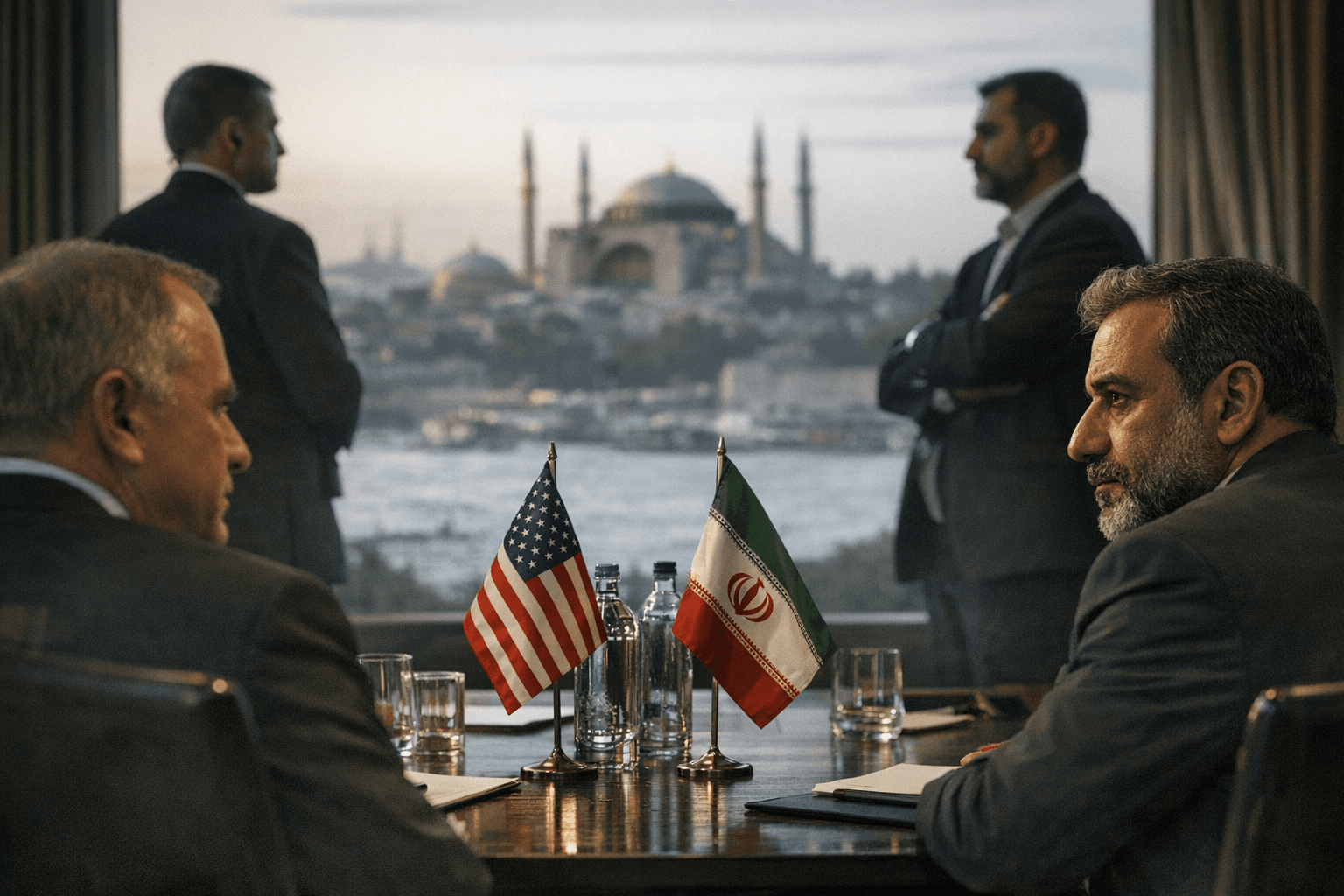
Senior diplomats and U.S. officials say Washington and Tehran are preparing to reopen a direct channel in Istanbul, with U.S. special envoy Steve Witkoff and Iran’s foreign minister Abbas Araghchi expected to meet as soon as Friday. The possible encounter reflects an urgent push for diplomacy even as military movements and regional anxieties heighten the risk of confrontation.
The scheduling remains tentative. “It’s not set in stone,” one senior Middle East diplomat said, while a U.S. official added that parties are “working toward setting up the meeting in Istanbul as soon as Friday” but that details have not been finalized. Turkish diplomacy has been prominent in the run-up to the talks, and a cluster of regional capitals has been engaged in parallel shuttle diplomacy intended to defuse the crisis.
Iran’s president, Pezeshkian, signalled high-level backing for negotiations while laying down clear conditions. “I have instructed my Minister of Foreign Affairs, provided that a suitable environment exists – one free from threats and unreasonable expectations – to pursue fair and equitable negotiations, guided by the principles of dignity, prudence, and expediency,” Pezeshkian wrote. Araghchi has repeated Tehran’s insistence that any resumption of talks must respect Iran’s security concerns. “Iran is prepared for the resumption of talks with the United States, but they should be fair and not include Iran’s defence capabilities,” he told reporters. “If negotiations are fair and equitable, Iran is ready to participate in such talks.”
At the same time, other Iranian outlets linked to the Islamic Revolutionary Guard Corps have framed the move more narrowly, reporting that the president has “ordered the start of negotiations” and saying any talks would be limited to the nuclear file. Iranian state media also reported that Araghchi held telephone consultations with counterparts in Saudi Arabia, Egypt and Turkiye as Tehran weighed competing mediation proposals from the region.
Washington’s objectives, as described by Iranian interlocutors, include stringent curbs on Iran’s nuclear activities and demands on its missile programme and regional support networks. Tehran regards any requirement to forgo its defence capabilities as a red line. That divergence over scope is a core obstacle to an agreement and a likely focus of the initial exchanges in Istanbul.
The diplomatic opening comes against a fraught security backdrop. U.S. naval assets, including the carrier USS Abraham Lincoln and guided-missile destroyers, have moved into the Middle East, increasing the sense of leverage and risk. Washington’s diplomatic effort has been intensive: Witkoff’s schedule this week is said to include meetings with the Israeli prime minister and subsequent travel to Abu Dhabi for talks with Ukrainian and Russian delegations, underscoring how the Iran file intersects with other international priorities.
Domestic developments in Iran add another layer of complexity. Iranian broadcasters quoted a local police official saying four foreign nationals were identified and arrested on suspicion of involvement in recent unrest, and that police found “four homemade stun grenades” in a bag carried by one of the detainees. Authorities did not identify the detainees’ nationalities.
For now, the talks are a tentative attempt to translate a flurry of regional mediation into a managed diplomatic process. Whether that process can bridge the gap between U.S. demands and Iran’s declared red lines, and whether it can contain the military pressures arrayed around the region, will determine whether Istanbul becomes the opening of sustained engagement or a brief detour in a slide toward escalation.
This article was produced by Prism’s automated news system from verified source data, official records, and press releases, then run through automated quality and moderation checks before publishing. The system is built and supervised by the people who set the standards it runs under. Read our full AI policy.
Did this article answer your question?


