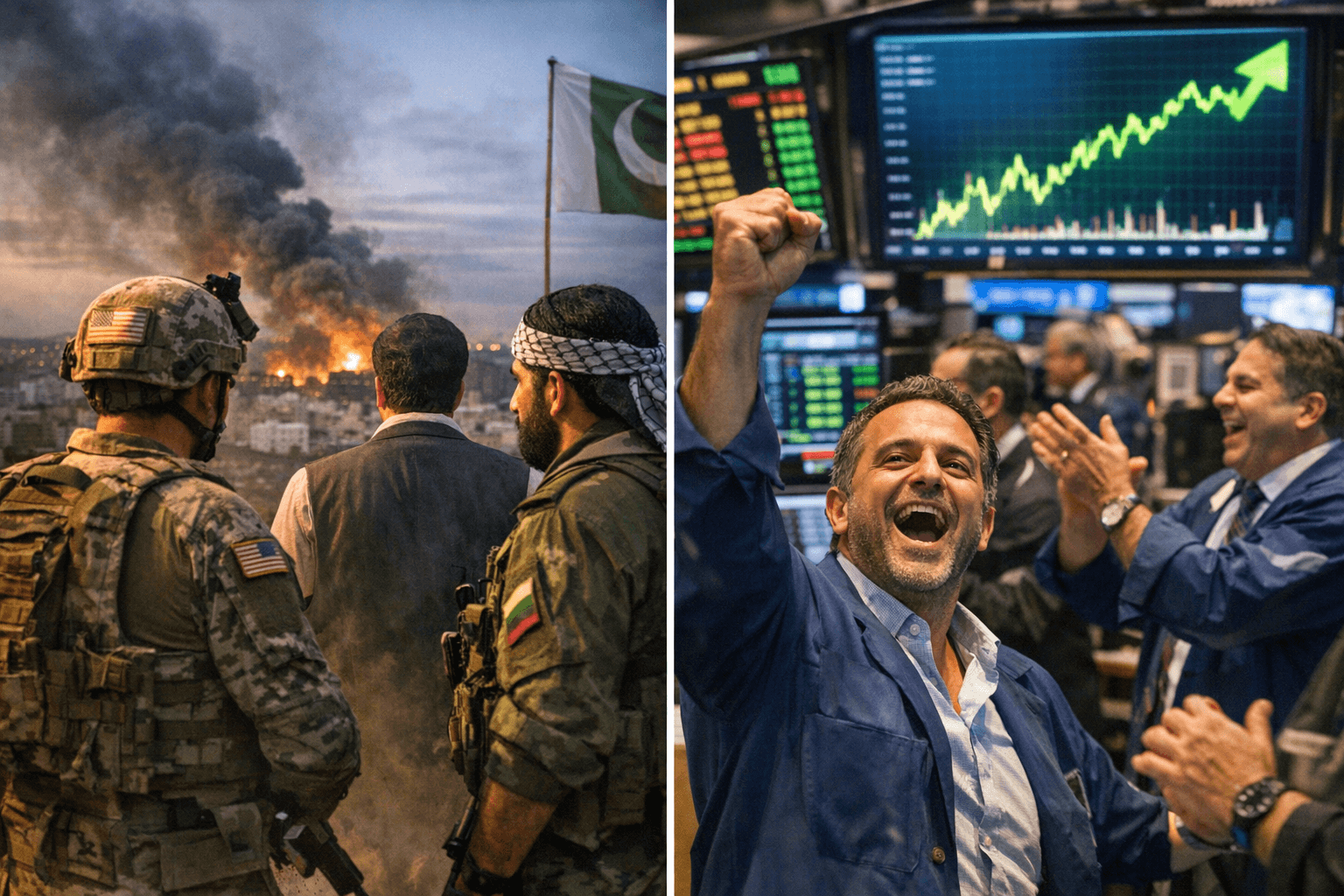
U.S. and Iran Reach Last-Minute Cease-Fire, Markets Rally
Oil tumbled more than 16% and Dow futures spiked 967 points after Pakistan brokered a two-week U.S.-Iran ceasefire, with gas prices potentially below $4 within days.
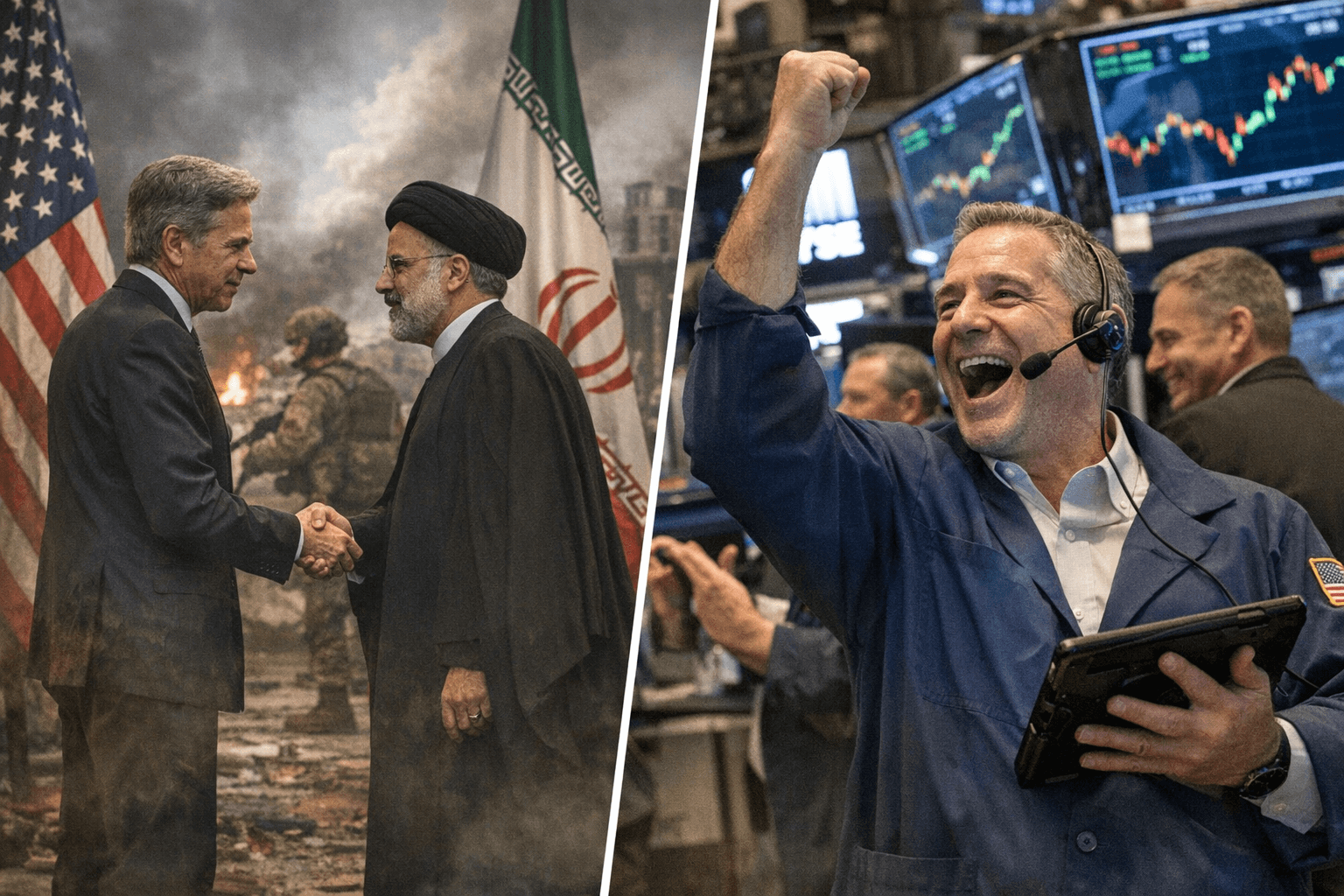
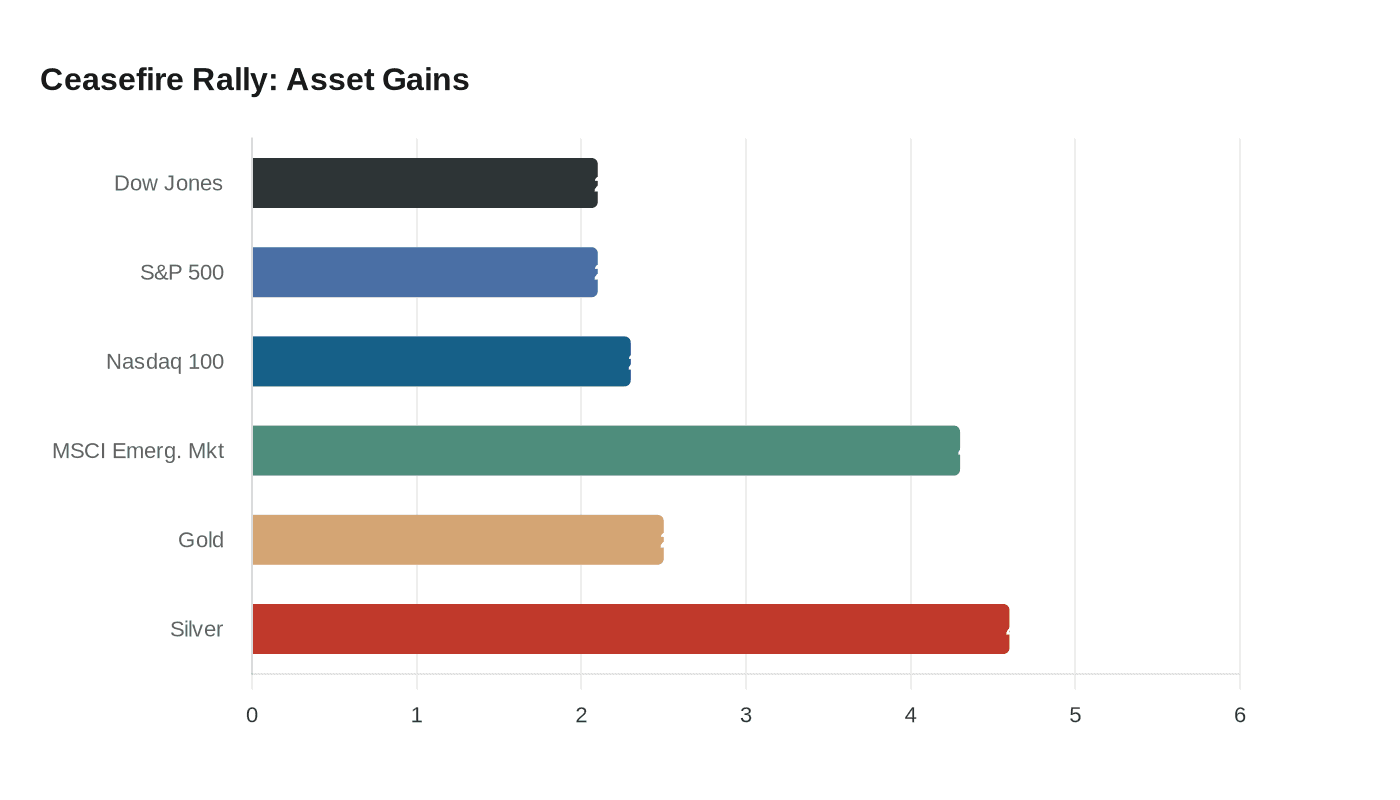
West Texas Intermediate crude collapsed more than 16 percent on Tuesday evening, falling from an intraday high of $117 to $94.47 per barrel, after President Donald Trump announced a two-week ceasefire with Iran less than two hours before his 8 p.m. ET deadline. The deal, brokered by Pakistani Prime Minister Shehbaz Sharif and Field Marshal Asim Munir, requires Tehran to allow complete and safe passage through the Strait of Hormuz in exchange for a suspension of U.S. bombing operations. Dow Jones futures surged 967 points, or 2.1 percent; S&P 500 futures climbed 2.1 percent; and Nasdaq 100 futures added 2.3 percent.
For American consumers, the more immediate calculation runs through the gas pump. The national average stood at $4.14 per gallon Tuesday, according to AAA, but Patrick De Haan, head of petroleum analysis at GasBuddy, projected prices could fall below $4 within one to two weeks if the Strait of Hormuz remains open. Diesel, which had climbed to $5.646 and was edging toward the 2022 all-time record of $5.816, may lag, De Haan cautioned, though a new record now appears unlikely. Natural gas and wholesale heating oil, a proxy for jet fuel, also traded sharply lower following Trump's announcement.
The relief for transportation companies was immediate. Airlines such as Delta Air Lines and United Airlines had been badly squeezed by elevated fuel costs, with United raising the price of checked luggage and warning that 5 percent of its routes could be cut over the next two quarters. Both carriers surged on the ceasefire news. Energy majors ExxonMobil and Chevron, which had ridden crude's climb above $115 earlier in the conflict, began retreating as analysts priced out the so-called conflict premium from crude.
Global markets broadened the rally. The MSCI Emerging Market stock gauge rose 4.3 percent, while Brent crude fell 16 percent to $91.70 a barrel at one point. Japan's Nikkei futures pointed to a nearly 3 percent opening gain. Spot gold jumped 2.5 percent and silver rose 4.6 percent. Bonds rallied broadly.
The critical question is how durable the relief actually is. West Texas Intermediate remains more than 70 percent above where it began the year, even after Tuesday's sharp drop. Henning Gloystein, managing director of energy at Eurasia Group, said it would take several months to repair oil refineries and other energy infrastructure in the Persian Gulf, and that shipping companies operating tankers in the region would need at least two months to resume operations even if the war is suspended. Kpler analysts similarly warned that even an optimistic ceasefire scenario leaves global markets facing months of strategic reserve rebuilding and energy security-driven stockpiling.
The Strait of Hormuz, the roughly 100-mile-long waterway through which about 20 percent of global oil normally flows, has been effectively halted since the beginning of March, as tankers hesitated to enter a narrow waterway so close to the Iranian coast, trapping more than 150 vessels. Any single enforcement failure, renewed proxy attack on commercial shipping, or breakdown during the two-week negotiating window would push crude swiftly back toward the triple-digit levels that Bloomberg Economics estimated were already adding roughly one percentage point to annual euro-area inflation. The clock started at 8 p.m. Tuesday.
Sources:
Know something we missed? Have a correction or additional information?
Submit a Tip