U.S. and Iran set Switzerland signing ceremony for framework deal
U.S. and Iranian officials are preparing to sign a framework deal in Switzerland, but nuclear terms still face 60 days of follow-up talks. Oil prices fell more than 4% as traders bet shipping through Hormuz could resume.
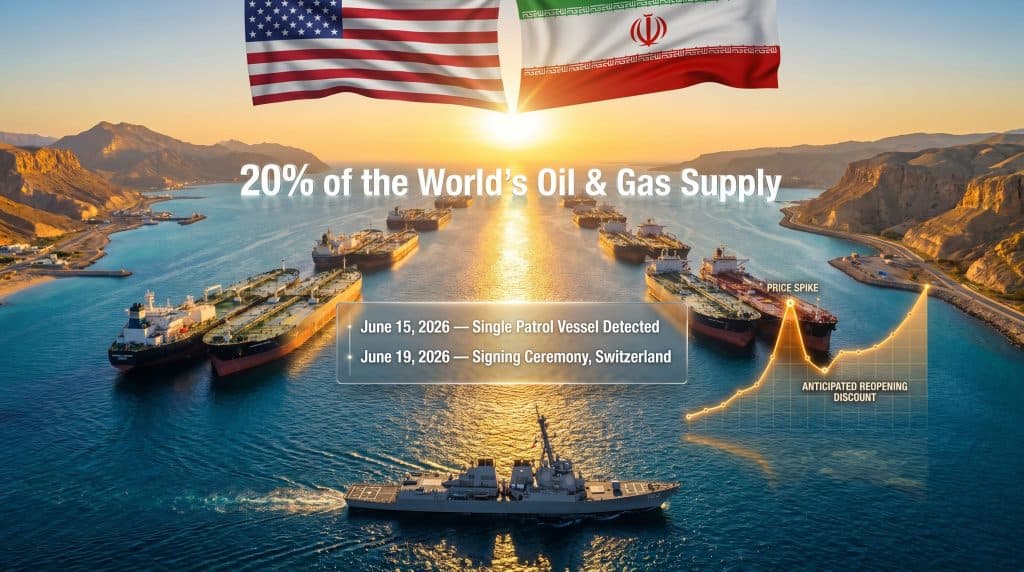
A framework agreement between the United States and Iran is headed for a signing ceremony in Switzerland on Friday, but the most sensitive issues remain open. Pakistani Prime Minister Shehbaz Sharif said the formal ceremony will take place on June 19, while U.S. and Iranian officials have described the accord as an initial deal rather than a final settlement.
Donald Trump moved to declare the talks finished, posting on Truth Social that “The Deal with the Islamic Republic of Iran is now complete.” He said he had authorized the “toll free opening” of the Strait of Hormuz and the immediate removal of the U.S. naval blockade, but the agreement still leaves Tehran’s nuclear program for further negotiation over the next 60 days.

A senior Iranian official said the draft memorandum includes reopening the Strait of Hormuz, U.S. waivers on oil sanctions and limits on Iran’s nuclear activities, including a reduction in a highly enriched uranium stockpile. Iranian officials said the commitments would take effect starting Friday, June 19, though the wider settlement is not yet locked in.
The market response was immediate. Oil prices fell more than 4% after the announcement, with Brent crude dropping sharply and U.S. benchmark West Texas Intermediate also sliding as traders anticipated a resumption of traffic through the Strait of Hormuz and less risk to global supply. The strait is one of the world’s most important energy chokepoints, carrying a large share of seaborne oil flows from the Gulf.
The tentative accord follows about four months of conflict that began in February and disrupted shipping through the Strait of Hormuz, raising costs for energy, freight and insurance markets. Pakistan and Qatar helped mediate the talks, according to officials involved in the process.
For now, the deal looks less like a completed peace and more like a narrow framework that could ease pressure on global oil markets if it holds. Its durability will depend on whether the next 60 days produce a workable nuclear agreement, enforceable sanctions relief and a lasting arrangement for safe passage through the strait.
This article was produced by Prism’s automated news system from verified source data, official records, and press releases, then run through automated quality and moderation checks before publishing. The system is built and supervised by the people who set the standards it runs under. Read our full AI policy.
Did this article answer your question?


