U.S. and Israel declare goal of fostering uprising against Tehran, raising regional stakes
Washington and Jerusalem announced they seek to pave the way for a popular uprising in Iran, a shift that intensifies risks of wider Middle East war and legal controversy.
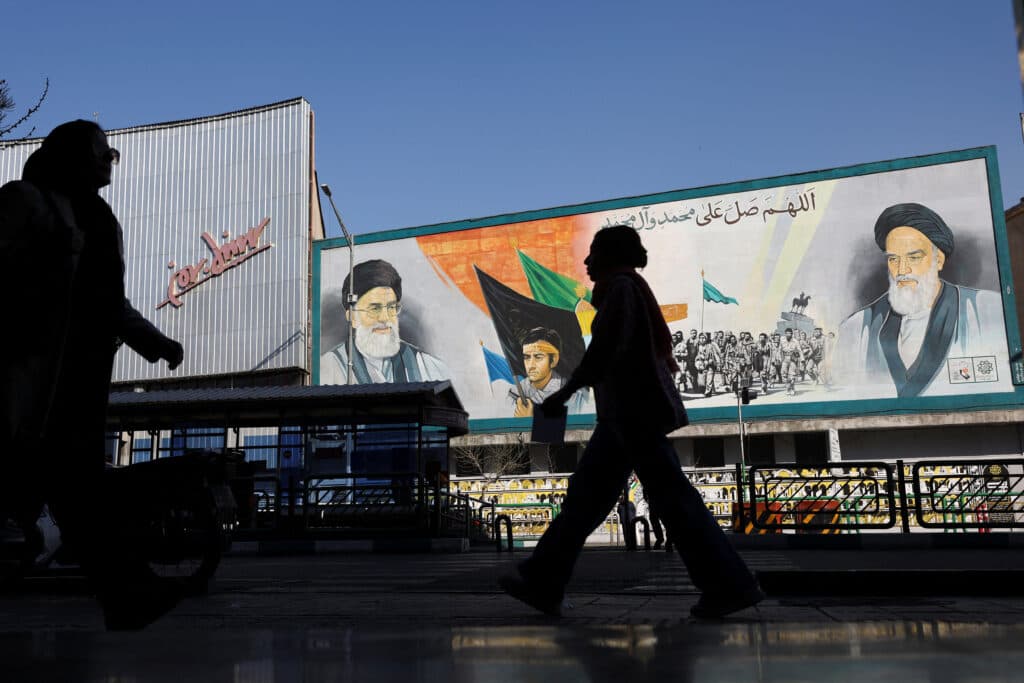
The United States and Israel have declared that their war aim is to pave the way for a popular uprising against the government in Tehran, a public shift that immediately sharpens the risk of broader regional escalation and a confrontation over international law.
By framing the campaign as enabling internal change in Iran, Washington and Jerusalem are signaling a strategy that moves beyond discrete counterterrorism and deterrence objectives to direct engagement in another state’s political future. That shift changes the calculus for allies, adversaries and Iranian society itself, and it raises new questions about the legality of open efforts to foster regime change under the U.N. charter.
Officials in Washington and Jerusalem described the objective as creating conditions for “popular” opposition in Iran to displace the ruling system. The announcement follows months of covert activity, kinetic strikes in the region and a growing cyber conflict that analysts say has already strained the norms of military engagement. The public embrace of regime change narrows diplomatic room for allies who have been cautious about escalation while increasing the likelihood of retaliatory measures from Iran and its proxies.
Tehran responded by promising to defend its sovereignty and by signaling it will marshal domestic security forces and regional partners to counter what its leadership will portray as foreign interference. That dynamic creates an immediate operational risk: Iranian-backed militias in Lebanon, Iraq and Yemen could widen attacks on Israeli and U.S. interests, and Tehran could accelerate asymmetric campaigns against shipping in the Gulf or strike at diplomatic targets. Those moves would test the ability of Western and regional powers to limit the conflict and avoid direct military confrontation between states.
International law scholars and diplomats warn that publicly adopting a policy aimed at instigating regime change challenges Article 2 of the U.N. charter, which prohibits intervention in the domestic affairs of sovereign states. The normal legal exceptions are limited to self-defense or Security Council authorization. Legal scrutiny will likely follow in capitals and at the U.N., where Russia and China are expected to condemn the announcement and could use their Security Council positions to block new measures or to impose countervailing diplomatic pressure.

The policy shift also puts European partners in an awkward position. Several EU governments have supported sanctions aimed at Iran’s nuclear and missile programs while avoiding rhetoric that could be interpreted as backing forcible change. Those capitals now face pressure to either align with a more assertive posture or to distance themselves to protect economic and energy ties, particularly as disruptions in the Strait of Hormuz could ripple through global markets.
On the ground in Iran, an externally encouraged uprising risks provoking a hardening crackdown that could nullify popular momentum and produce greater human suffering. History in the region suggests that outside support for internal movements can delegitimize opposition forces in the eyes of domestic constituencies and harden regimes that portray themselves as defenders against foreign meddling.
The announcement marks a consequential inflection point in a region already marked by proxy conflict, strategic rivalry and fragile diplomacy. If Washington and Jerusalem proceed, the international community will face a stark choice: to try to manage and limit a widening confrontation or to find new diplomatic paths that reduce incentives for both external intervention and internal repression. The stakes include not only regional stability but the integrity of the norms that govern when and how states may seek to influence another country’s political future.
This article was produced by Prism’s automated news system from verified source data, official records, and press releases, then run through automated quality and moderation checks before publishing. The system is built and supervised by the people who set the standards it runs under. Read our full AI policy.
Did this article answer your question?