U.S. and Israel launch strikes on Iran; world leaders divided
U.S. and Israel launched major combat operations early Saturday, sending smoke over Tehran and Manama and prompting emergency diplomatic meetings and looming U.S. war powers fights.

The United States and Israel launched joint strikes against targets in Iran early Saturday, President Donald Trump announced, unleashing visible smoke over Tehran and panic in Manama and triggering emergency diplomatic action across Europe and the Middle East.
Mr. Trump said the two countries had begun "major combat operations" and described the campaign in a Truth Social video as "undertaking a massive and ongoing operation to prevent this very wicked, radical dictatorship from threatening America and our core national security interests." The operation has been referred to in media accounts as "Operation Epic Fury." In the announcement the president also urged the Iranian people to "take over your government."
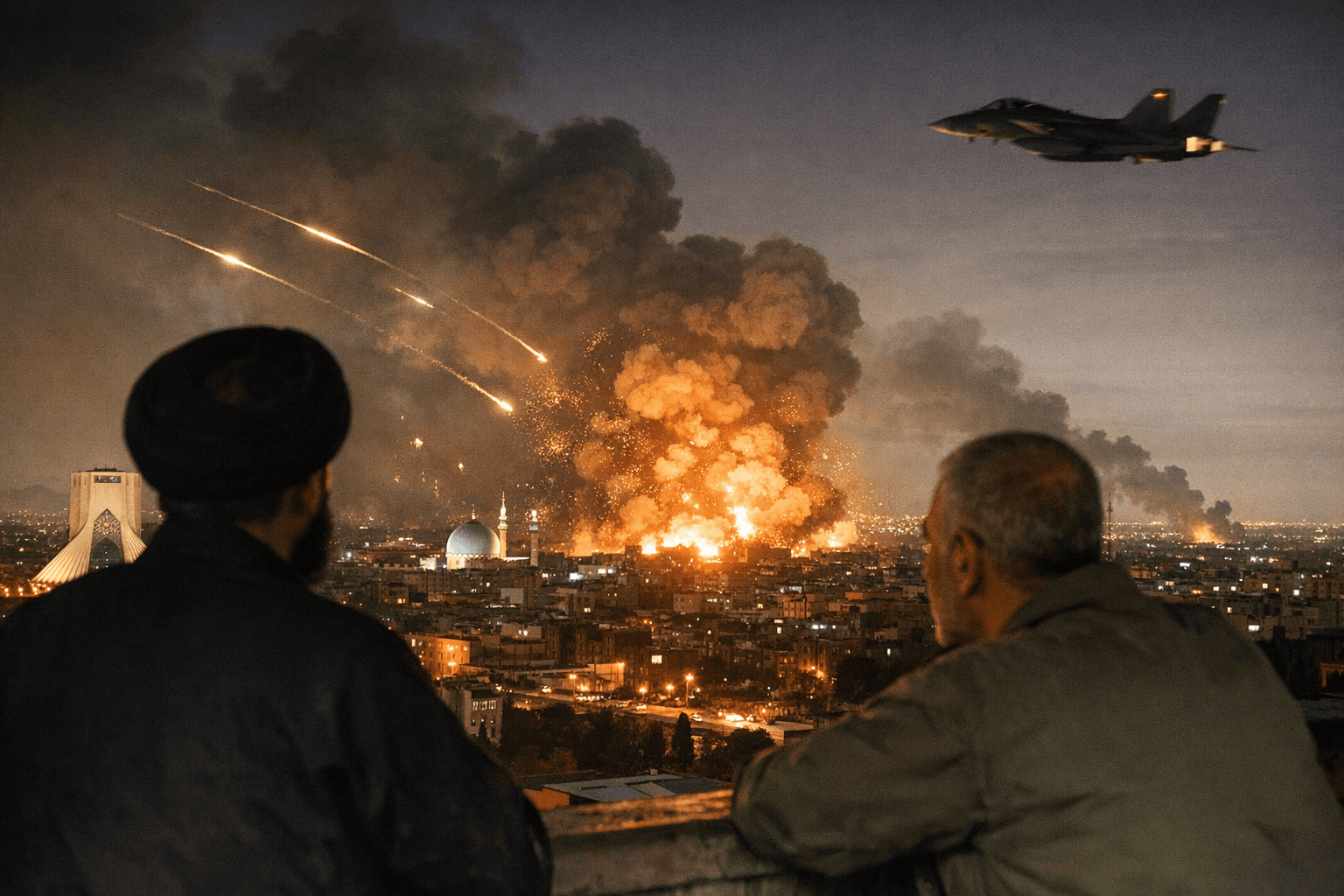
Video and aerial imagery showed a smoke cloud rising from southern Tehran after an apparent strike near offices of Supreme Leader Ayatollah Ali Khamenei. Separate footage captured explosions at a port in Manama, Bahrain, and people running in the streets as tensions spiked around a U.S. naval presence there.
Global reactions split sharply. The leaders of France, Germany and the United Kingdom issued a joint statement saying they "did not participate in these strikes" while condemning Iranian attacks in the region and calling for a resumption of negotiations. French President Emmanuel Macron wrote on X that "the outbreak of war between the United States, Israel, and Iran carries grave consequences for international peace and security" and said France stood ready to deploy resources to protect partners at their request. Prime Minister Keir Starmer said the U.K. had "no role" in the strikes and called the Iranian regime "utterly abhorrent," adding that preventing Iran from developing a nuclear weapon remained the primary aim of the U.K. and its allies.
Other capitals reacted with either endorsement or alarm. Officials in Canada and Australia indicated political backing for the action, while Pakistan's Foreign Ministry said Deputy Prime Minister Mohammad Ishaq Dar "strongly condemned the unwarranted attacks against Iran" and called for an "urgent resumption of diplomacy." Turkey's foreign minister held calls focused on "possible steps to be taken to help bring an end to the attacks," and Ukraine's president publicly linked the developments to Russia's war against his country.
European institutions moved quickly to protect staff and citizens. Governments announced evacuations of some personnel from the region and convened emergency meetings; one European government official said Berlin had been given notice only Saturday morning, and a French junior defense minister said Paris "knew something would happen, but didn't know when." Senior European diplomats described the situation as perilous and said they were working with Israeli and Arab officials to pursue negotiated options.
In Washington, political leaders raised immediate constitutional and oversight questions. House Minority Leader Hakeem Jeffries called Iran a "bad actor" that "must be aggressively confronted" for human rights abuses and proliferation threats, but he also questioned whether the president had the authority to order strikes without Congress, noting that "the framers of the United States Constitution gave Congress the sole power to declare war as the branch of government closest to the American people." Both chambers of Congress are expected to take up war powers resolutions in the coming week, a process that could constrain further military action though passage is uncertain.
Key details remain unresolved: there were no public, independent tallies of casualties or infrastructural damage, no official statements from Iranian authorities quoted in available briefings, and allied participation beyond the United States and Israel was explicitly denied by E3 leaders. Officials in Washington and Tel Aviv indicated further statements and operational assessments would follow as the international community scrambled to contain a wider regional escalation.
Know something we missed? Have a correction or additional information?
Submit a Tip